


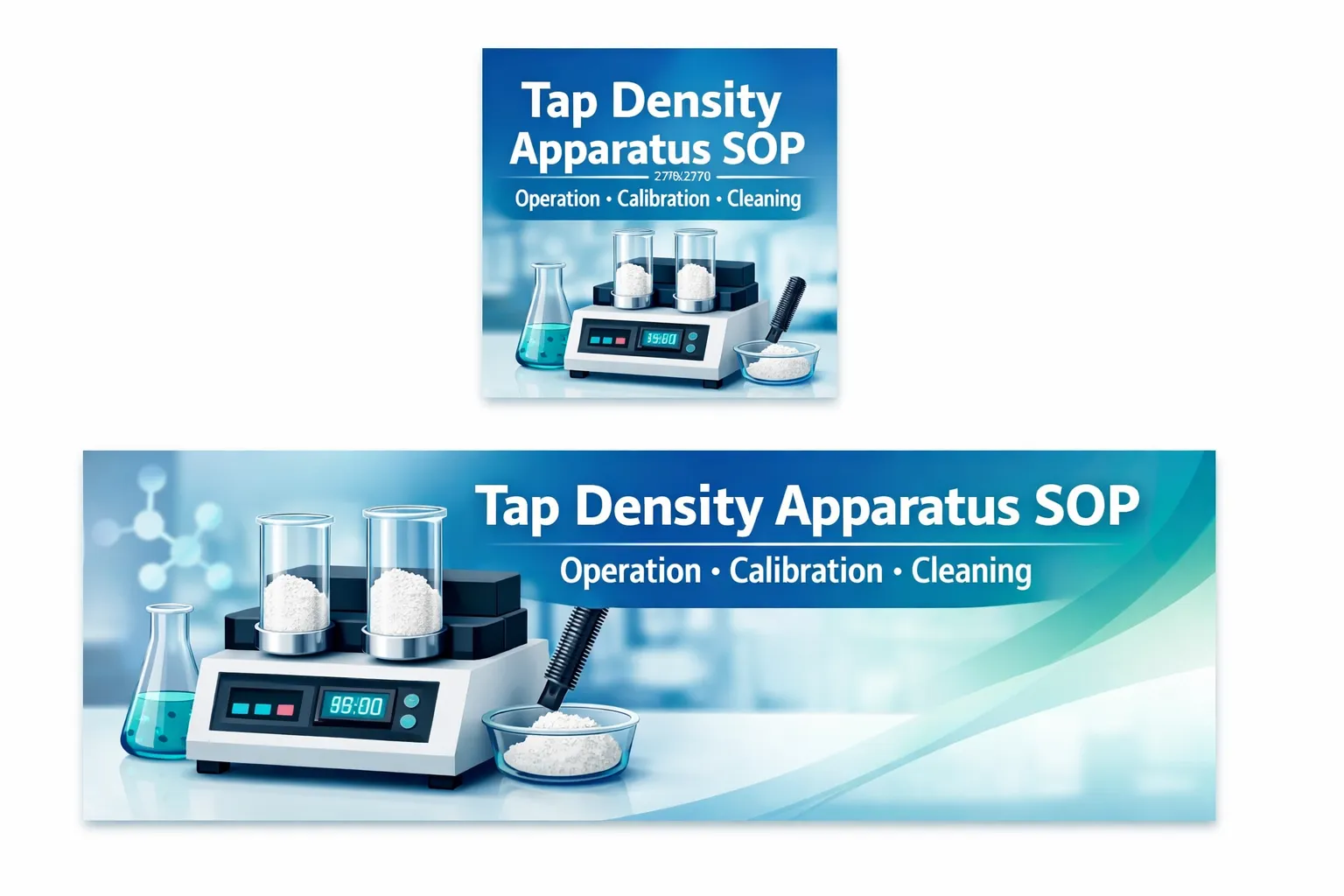

Learn tap density apparatus SOP: operation, calibration & cleaning. Ensure accurate QC results and compliance.
Introduction
In pharmaceutical quality control, even small measurement errors can impact product quality. That’s why following a proper tap density apparatus SOP is essential. This guide explains how to operate, calibrate, and clean the apparatus to ensure accurate and consistent results.
What is Tap Density?
Tap density is the density of a powder after mechanical tapping, used to evaluate flow properties and packing behavior.
Objective
To define a standardized procedure for cleaning, operation, and calibration of the tap density apparatus.
Scope
This procedure applies to the tap density apparatus installed in the Quality Control laboratory.
Responsibility & Accountability
- Technical Assistant: Perform operation and cleaning
- Executive/Manager: Check and verify
- Head of Department: Overall accountability
Equipment & Materials Required
- Tap density apparatus
- Measuring cylinder
- Tissue paper
- Cotton cloth
- Instrument log card
Operating Procedure
Step-by-Step Operation
- Ensure the apparatus is clean and properly positioned.
- Switch ON the mains power supply.
- Fix the measuring cylinder securely.
- Add the sample as per the test method.
- Set the required number of taps.
- Start the apparatus and allow the cycle to complete.
- Record the final volume after tapping.
Calibration Procedure
Steps for Calibration
- Check tap count accuracy.
- Verify drop height as per specifications.
- Ensure uniform tapping motion.
- Record results in the logbook.
- Monthly or as per SOP
- After maintenance or relocation
Cleaning Procedure (As per SOP)
Step-by-Step Cleaning
- Switch OFF the instrument.
- Switch OFF the mains.
- Remove the cylinders from the apparatus.
- Clean the cylinders using tissue paper.
- Wipe the apparatus with a clean cotton cloth.
- Record cleaning in the instrument log card.
Frequency: After every use
Safety Precautions
- Always switch off power before cleaning
- Avoid moisture near electrical components
- Handle glass cylinders carefully
- Use appropriate PPE if required
Common Mistakes to Avoid
- Skipping cleaning after use
- Incorrect tap settings
- Ignoring calibration checks
- Using damaged or dirty cylinders
- Not maintaining records
Best Practices
- Maintain consistent sample quantity
- Keep the instrument clean and dust-free
- Calibrate regularly
- Document every activity
- Train staff on SOP compliance
Abbreviations
- SOP: Standard Operating Procedure
FAQs
1. What is a tap density apparatus used for?
It measures the tapped density of powders to evaluate flow properties and packing behavior.
2. Why is tap density important in pharmaceuticals?
It helps ensure consistent formulation, filling, and product quality.
3. How often should the apparatus be cleaned?
It should be cleaned after every use to prevent contamination.
4. What is the difference between bulk and tapped density?
Bulk density is measured without tapping, while tapped density is measured after tapping.
5. How do you calibrate a tap density apparatus?
By checking tap count accuracy, drop height, and tapping consistency.
6. What are common errors in tap density testing?
Improper cleaning, incorrect settings, and lack of calibration.
7. Can environmental conditions affect results?
Yes, humidity and temperature can impact powder behavior.
8. Who is responsible for SOP compliance?
Technical staff perform tasks, managers verify, and department heads ensure accountability.
9. What precautions should be taken during cleaning?
Switch off power, avoid water contact, and handle glassware carefully.
10. How often should calibration be performed?
Typically monthly or according to internal SOP guidelines.