


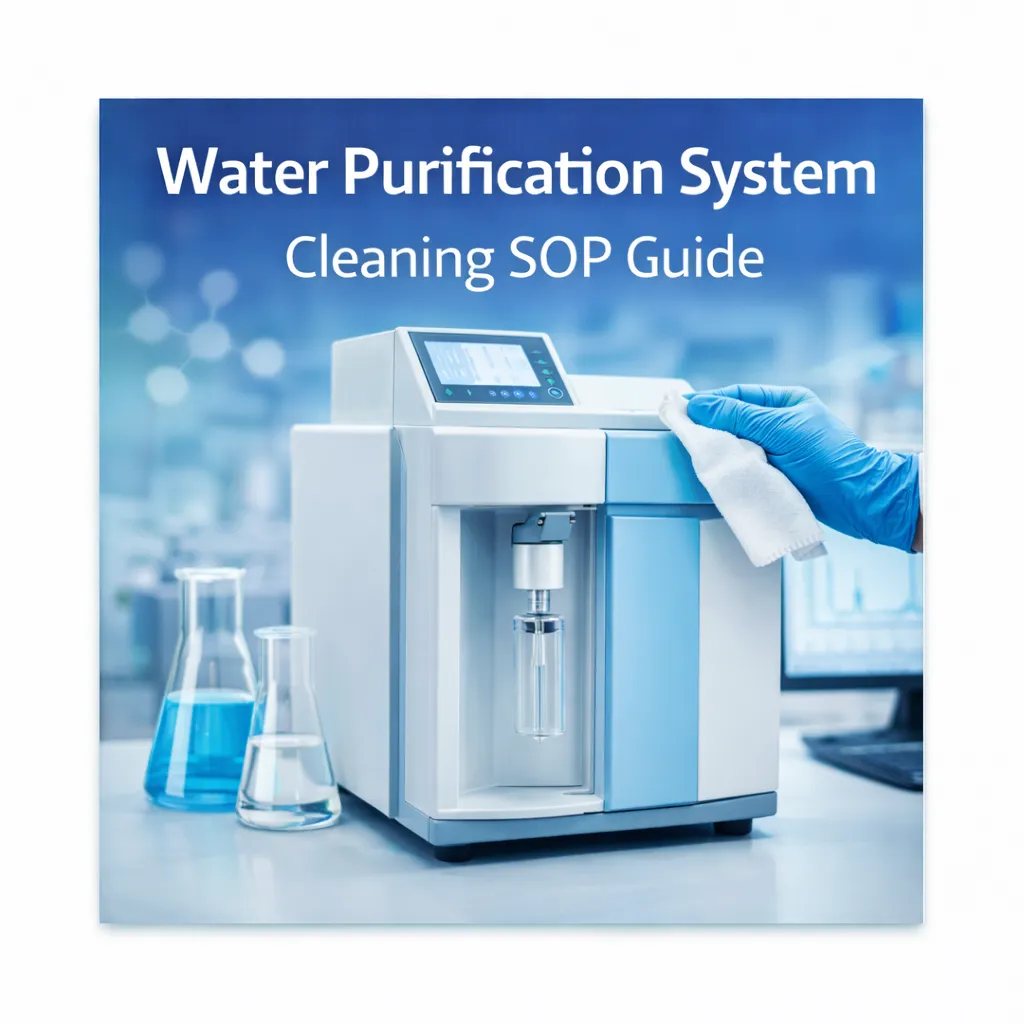

Learn SOP for operating, calibrating & cleaning water purification system in QC labs. Ensure purity & compliance.
Introduction
In pharmaceutical quality control, water quality plays a critical role in ensuring accurate analytical results. Even minor contamination can compromise testing outcomes. A well-defined water purification system SOP ensures proper operation, regular cleaning, and consistent water purity for reliable chemical analysis.
What is a Water Purification System?
A water purification system is a device that removes impurities, ions, and contaminants from water, making it suitable for laboratory and analytical use.
Objective
To define a standardized procedure for operation, calibration, and cleaning of the water purification system.
Scope
This SOP applies to water purification systems installed in the Quality Control department.
Responsibility & Accountability
- Technical Assistant: Perform operation and cleaning
- Executive/Manager: Verify compliance
- Head of Department: Overall accountability
Key Importance of Water Purification SOP
- Ensures high-quality purified water
- Prevents contamination in analysis
- Maintains instrument performance
- Supports GMP/GLP compliance
Operating Procedure
Step-by-Step Operation
- Ensure the system is clean and properly connected.
- Switch ON the mains and the instrument.
- Allow the system to stabilize.
- Check water flow and purification indicators.
- Collect purified water in a clean container.
- Monitor system performance during operation.
Calibration Procedure
Calibration Steps
- Check conductivity/resistivity of purified water
- Verify system performance against specifications
- Record calibration data
Frequency
- As per SOP schedule
- After maintenance or system servicing
Cleaning Procedure (As per SOP)
Step-by-Step Cleaning
- Switch OFF the instrument.
- Switch OFF the mains supply.
- Clean the outer surface using a dry cotton cloth.
- Disconnect the storage tank from the system.
- Drain the water completely from the tank.
- Rinse the tank thoroughly with distilled water.
- Refill the tank with fresh distilled water.
- Reconnect the tank properly.
- Record cleaning activity in the logbook.
Cleaning Frequency
- Routine cleaning: As per SOP schedule
- Tank cleaning: Periodically or when required
Safety Precautions
- Always switch off power before cleaning
- Avoid water contact with electrical parts
- Use clean and lint-free materials
- Handle components carefully
Common Mistakes to Avoid
- Incomplete draining of tank
- Using impure water for rinsing
- Ignoring calibration checks
- Poor documentation
- Improper system setup after cleaning
Best Practices
- Use only purified/distilled water
- Maintain regular cleaning schedule
- Monitor water quality parameters
- Keep proper records
- Train staff regularly
Abbreviations
- SOP: Standard Operating Procedure
FAQs
1. What is a water purification system used for?
It is used to produce purified water for laboratory analysis.
2. Why is purified water important in QC labs?
It ensures accurate and contamination-free test results.
3. How often should the system be cleaned?
As per SOP schedule or when contamination is suspected.
4. What parameters are checked during calibration?
Conductivity and resistivity of water.
5. Can impure water affect results?
Yes, it can lead to inaccurate analysis.
6. What is the role of the storage tank?
It stores purified water for laboratory use.
7. Should the system be powered during cleaning?
No, it must be switched off.
8. What are common errors in water systems?
Poor cleaning, contamination, and lack of calibration.
9. Who is responsible for SOP compliance?
Technical staff perform tasks; managers verify.
10. Is documentation necessary?
Yes, all activities must be recorded for compliance.