


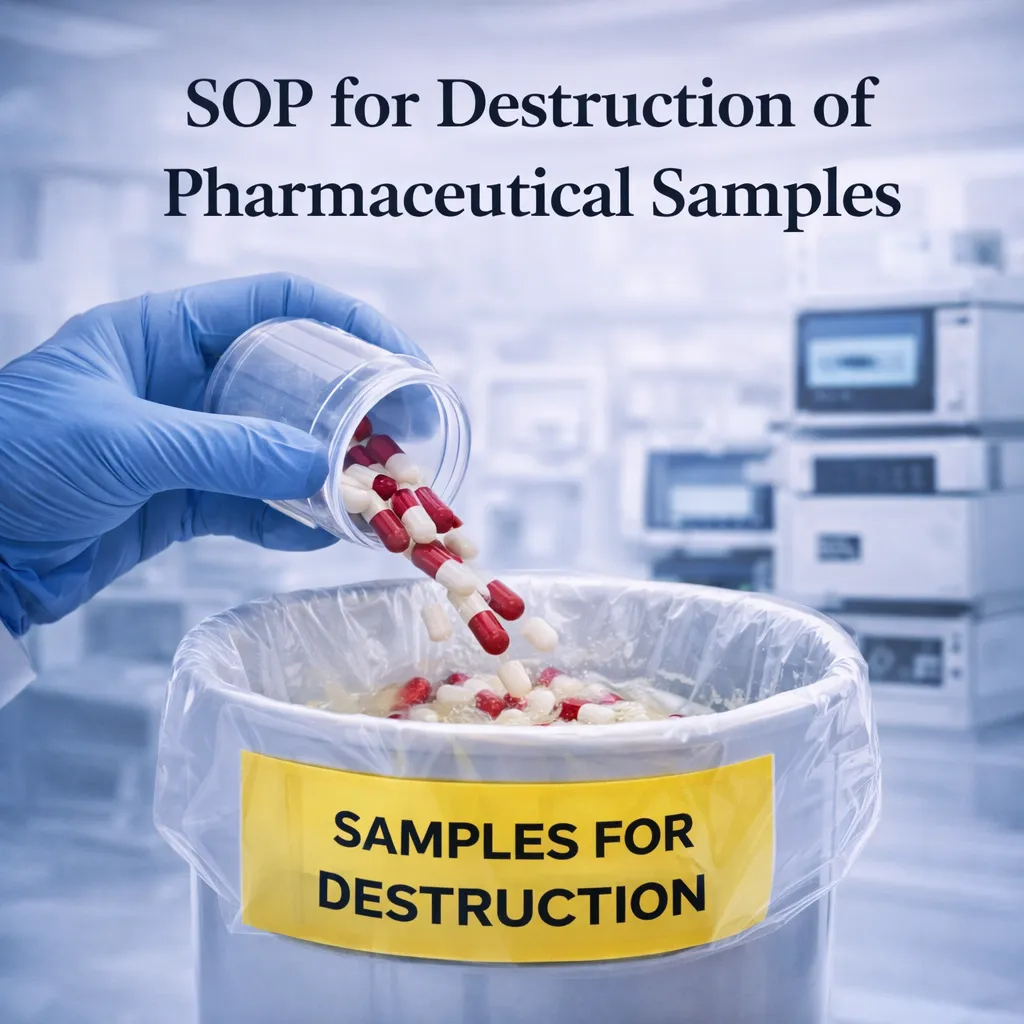

Learn SOP for safe destruction of pharmaceutical samples after analysis, including handling, documentation, and disposal procedures in QC labs.
📌 Definition
Destruction of pharmaceutical samples in Quality Control refers to a controlled process of safely discarding tested raw materials, in-process, and finished product samples to prevent misuse, contamination, or mix-ups, while ensuring regulatory compliance and traceability.
📊 Table Snippet (Data Type)
| Section | Description |
|---|---|
| Objective | Prevent misuse and mix-up of tested pharmaceutical samples |
| Scope | Applicable to all QC samples after analysis |
| Responsibility | Technical Assistant (execution), Manager (verification) |
| Accountability | Head of Department |
| Key Activities | Collection, destruction, disposal, documentation |
🔢 Step-by-Step SOP
- Collect excess samples after batch approval
- Label as “Samples for Destruction”
- Break containers and empty contents
- Soak solid samples in water
- Convert into paste and transfer to disposal bag
- Send waste for scrap disposal
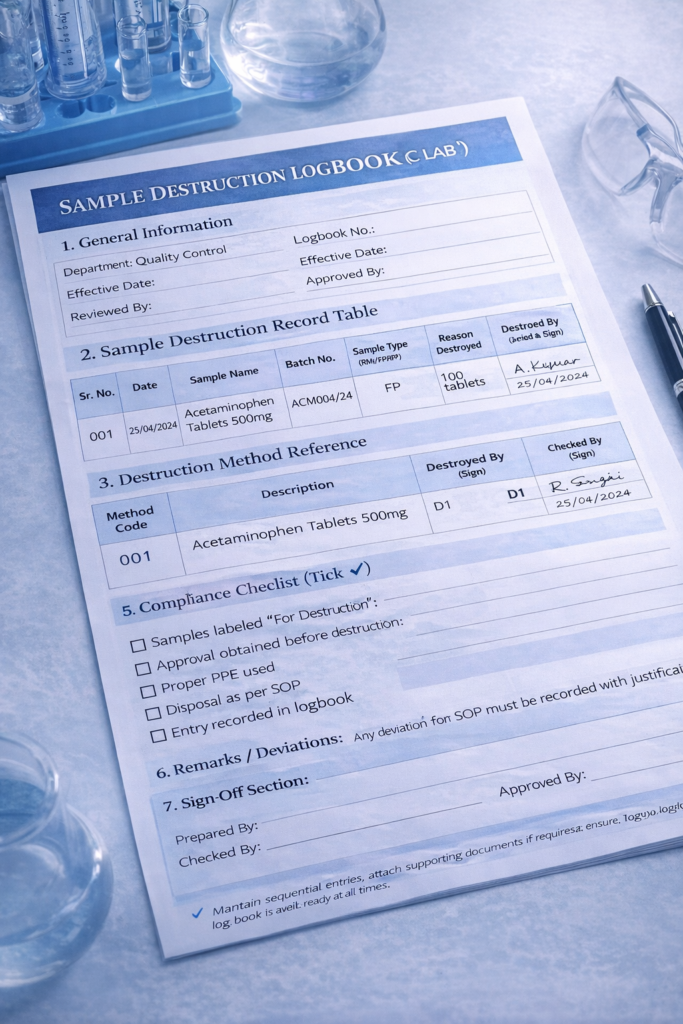
- Record destruction details in log
🔍 Introduction
In pharmaceutical Quality Control laboratories, proper destruction of tested samples is essential to prevent mix-ups, unauthorized reuse, and regulatory non-compliance. A well-defined SOP ensures safe disposal, traceability, and adherence to Good Laboratory Practices (GLP) and environmental safety standards.
🧠 Semantic Content Layer
Pharmaceutical sample destruction involves systematic collection, segregation, neutralization, and disposal of tested materials. This includes handling various dosage forms such as tablets, capsules, liquids, and raw materials. Proper documentation and controlled disposal ensure compliance, prevent contamination, and maintain data integrity in QC laboratories.
1.0 OBJECTIVE
To ensure timely destruction of in-process, finished product, and raw material samples after testing to avoid misuse or mix-up.
2.0 SCOPE
Applicable to all pharmaceutical samples (raw materials, in-process, and finished products) after QC analysis.
3.0 RESPONSIBILITY
- 3.1 Doing: Technical Assistant
- 3.2 Checking: Executive / Manager
4.0 ACCOUNTABILITY
Head of the Department
5.0 PROCEDURE
5.1 Operation (Collection & Segregation)
- After batch approval, collect all excess samples
- Store in designated area labeled: “SAMPLES FOR DESTRUCTION”
- Ensure segregation from usable materials
5.2 Destruction of Containers
- For ampoules, vials, and bottles:
- Break open containers
- Empty contents into water
- Dispose broken glass in designated bin
5.3 Destruction of Solid Dosage Forms
- Soak tablets, capsules, powders, and raw materials in water
- Allow them to soften completely
5.4 Conversion & Disposal
- Decant excess water
- Convert softened material into paste
- Transfer paste into polyethylene bag
- Send to scrap or authorized disposal
5.5 Documentation
- Record destruction details in log register
- Maintain traceability of sample disposal
- Ensure compliance during audits
5.6 Cleaning & Waste Handling
- Clean destruction area after process
- Dispose waste safely as per SOP
- Avoid environmental contamination
6.0 ABBREVIATIONS
- SOP: Standard Operating Procedure
❓ FAQs
1. Why are pharmaceutical samples destroyed after analysis?
To prevent misuse, contamination, and mix-ups.
2. What types of samples are destroyed?
Raw materials, in-process samples, and finished products.
3. How are liquid samples disposed?
They are diluted with water and discarded safely.
4. How are solid samples destroyed?
By soaking, converting into paste, and disposing.
5. Why is labeling important before destruction?
To avoid accidental use or mix-up.
6. What happens to broken glass containers?
They are discarded in designated glass waste bins.
7. Is documentation required for destruction?
Yes, it ensures traceability and compliance.
8. Who is responsible for sample destruction?
Technical Assistant performs, Manager verifies.
9. Can samples be reused after testing?
No, they must be destroyed.
10. How does this SOP ensure compliance?
By following controlled, documented disposal procedures.