


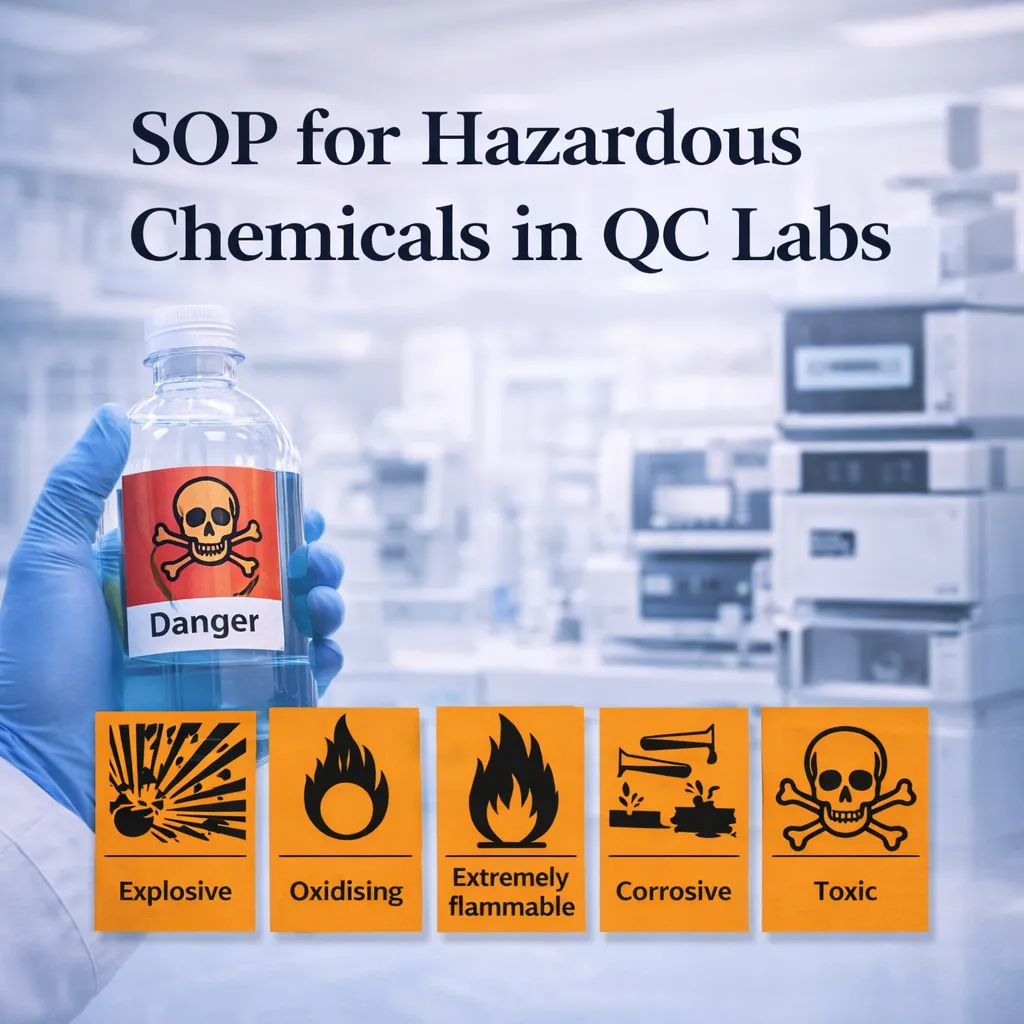

Learn SOP for safe handling and use of hazardous chemicals in QC labs, including PPE, MSDS compliance, dilution safety, and spill management.
📌 Definition
Handling hazardous chemicals in Quality Control refers to a controlled process of using, storing, and managing dangerous substances with appropriate safety measures, PPE, and MSDS compliance to prevent accidents and ensure laboratory safety.
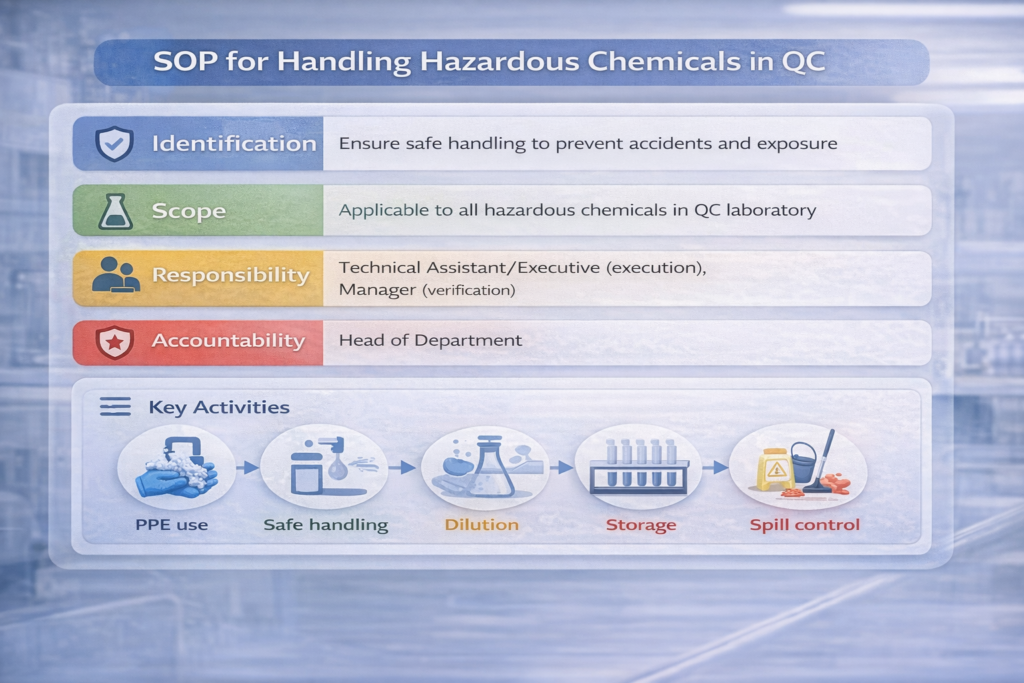
🔢 Step-by-Step SOP
- Identify hazardous chemicals by labels and symbols
- Wear PPE (gloves, goggles)
- Handle chemicals away from face/body
- Use suction bulb for pipetting
- Follow correct dilution procedures
- Keep flammable chemicals away from ignition sources
- Handle volatile chemicals carefully
- Clean spills as per SOP
- Follow MSDS guidelines
🔍 Introduction
Handling hazardous chemicals in Quality Control laboratories requires strict adherence to safety protocols to prevent accidents, exposure, and contamination. Improper handling can lead to serious health risks, fire hazards, and compromised analytical results. This SOP ensures safe usage, storage, and risk management aligned with Good Laboratory Practices (GLP).
🧠 Semantic Content Layer
Hazardous chemical management involves identification through labeling, use of personal protective equipment (PPE), safe handling techniques, and compliance with Material Safety Data Sheet (MSDS) guidelines. Proper dilution practices, spill control, and storage precautions reduce risks and ensure laboratory safety and regulatory compliance.
1.0 OBJECTIVE
To ensure controlled and safe handling of hazardous chemicals to prevent accidents.
2.0 SCOPE
Applicable to all hazardous and dangerous chemicals used and stored in the QC laboratory.
3.0 RESPONSIBILITY
- 3.1 Doing: Technical Assistant / Executive
- 3.2 Checking: Executive / Manager
4.0 ACCOUNTABILITY
Head of the Department
5.0 PROCEDURE
5.1 Operation
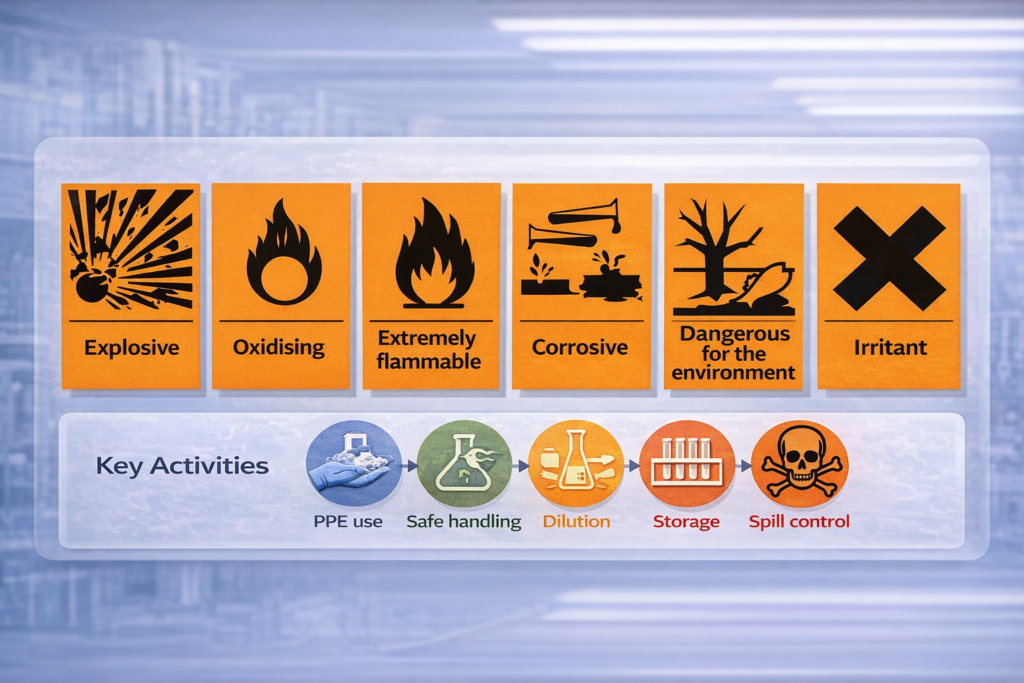
- Identify hazardous chemicals using labels and symbols
- Always use PPE (gloves, safety goggles)
- Keep safe distance while pouring or siphoning chemicals
- Use suction bulb or vacuum pipetting (never mouth pipette)
5.2 Special Handling Instructions
- For sulphuric acid dilution:
- Cool solution in ice bath
- Slowly add acid to water with stirring
- Never add water to acid
- Keep flammable chemicals away from flames and sparks
- Handle volatile chemicals like ether away from ignition sources
5.3 Calibration
- Verify chemical identity before use
- Ensure proper labeling and hazard classification
- Follow validated procedures for chemical preparation
5.4 Cleaning & Spill Management
- Clean chemical spills immediately as per SOP
- Use appropriate neutralizing agents if required
- Dispose waste safely following guidelines
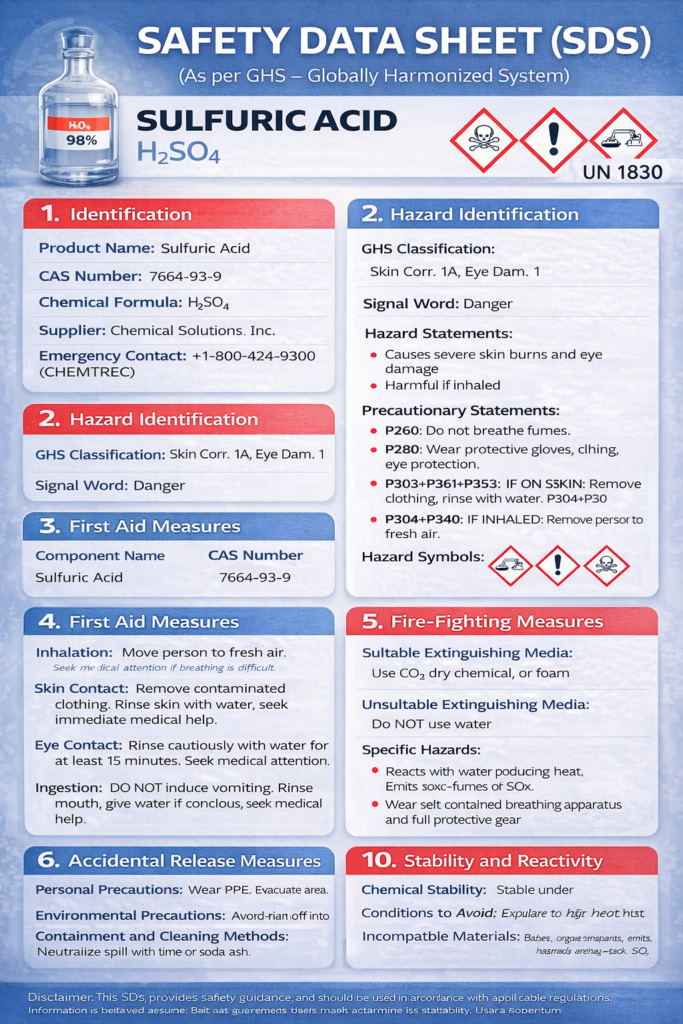
5.5 Storage & MSDS Compliance
- Follow MSDS instructions for each chemical
- Store chemicals in designated, labeled areas
- Segregate incompatible chemicals
- Maintain accessibility to MSDS documentation
6.0 ABBREVIATIONS
- MSDS: Material Safety Data Sheet
❓ FAQs
1. What are hazardous chemicals in QC labs?
Chemicals that pose risks like toxicity, flammability, or reactivity.
2. Why is PPE important in chemical handling?
It protects against exposure and accidents.
3. What is MSDS?
A document providing safety and handling information for chemicals.
4. How should sulphuric acid be diluted?
Always add acid to water, never reverse.
5. Why avoid mouth pipetting?
It prevents chemical ingestion and exposure.
6. How to handle flammable chemicals?
Keep away from flames and sparks.
7. What should be done in case of spill?
Clean immediately as per SOP.
8. How are hazardous chemicals stored?
In labeled, segregated, and controlled environments.
9. Who is responsible for chemical safety?
Technical Assistant executes, Manager verifies.
10. Why follow SOP for hazardous chemicals?
To ensure safety, compliance, and accurate results.