



Learn SOP for pharmaceutical working standards (preparation, handling, numbering, analysis, and disposal) in QC with compliance-ready guidelines.
📌 Definition
Pharmaceutical working standards are in-house reference materials prepared from certified reference standards and used for routine analysis in Quality Control laboratories, ensuring consistency, accuracy, and compliance with regulatory guidelines.
📊 Table Snippet (Data Type)
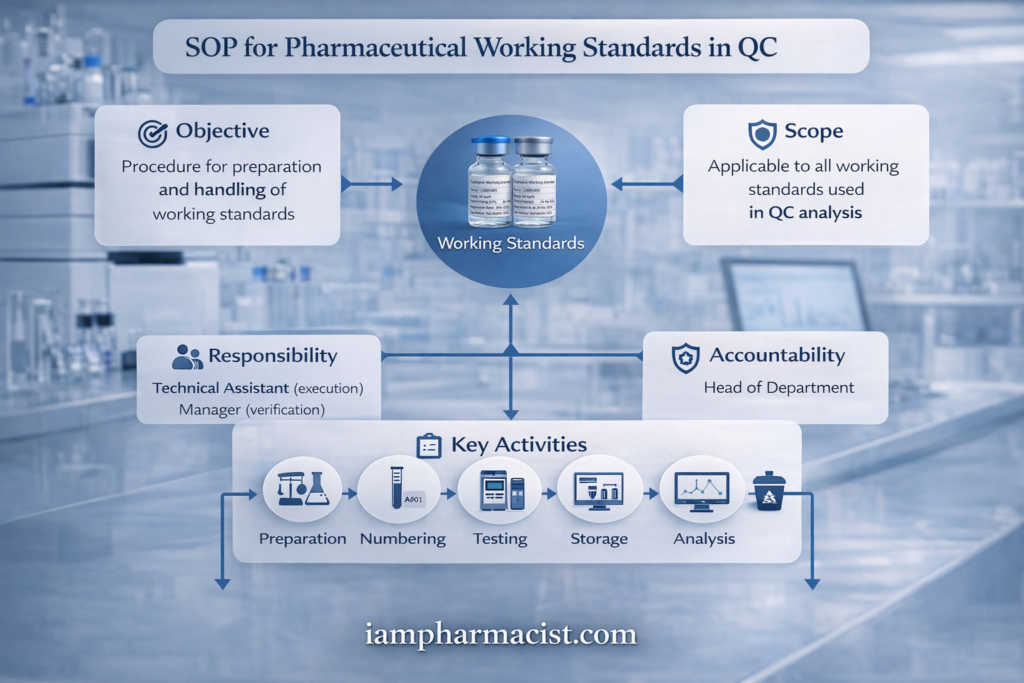
| Section | Description |
|---|---|
| Objective | Procedure for preparation and handling of working standards |
| Scope | Applicable to all working standards used in QC analysis |
| Responsibility | Technical Assistant (execution), Manager (verification) |
| Accountability | Head of Department |
| Key Activities | Preparation, numbering, testing, storage, analysis, disposal |
🔢Step-by-Step SOP
- Select high-purity raw material batch
- Assign unique reference number
- Perform assay, LOD, and purity tests
- Validate results and calculate average
- Label and store in controlled conditions
- Monitor stability and expiry
- Maintain records and issue logs
- Discard expired materials safely
🔍 Introduction
In pharmaceutical Quality Control laboratories, working standards play a critical role in ensuring the accuracy and reliability of analytical results. Proper preparation, handling, and lifecycle management of these standards are essential for maintaining compliance with regulatory requirements and ensuring data integrity.
🧠 Semantic Content Layer
Working standards are derived from certified reference standards and are routinely used in analytical testing such as assay determination, impurity profiling, and stability studies. A well-defined SOP ensures traceability, consistency, and compliance with Good Laboratory Practices (GLP). Proper numbering, validation, storage, and disposal processes minimize variability and ensure reproducibility of analytical results.
1.0 OBJECTIVE
To establish a procedure for preparation and handling of pharmaceutical working standards.
2.0 SCOPE
Applicable to all working standards used as reference standards for analysis in QC laboratories.
3.0 RESPONSIBILITY
- 3.1 Doing: Technical Assistant
- 3.2 Checking: Executive / Manager
4.0 ACCOUNTABILITY
Head of the Department
5.0 PROCEDURE
5.1 Operation (Preparation & Numbering)
- Select latest approved batch with high purity and minimal impurities
- Collect required quantity of material
- Assign reference number:
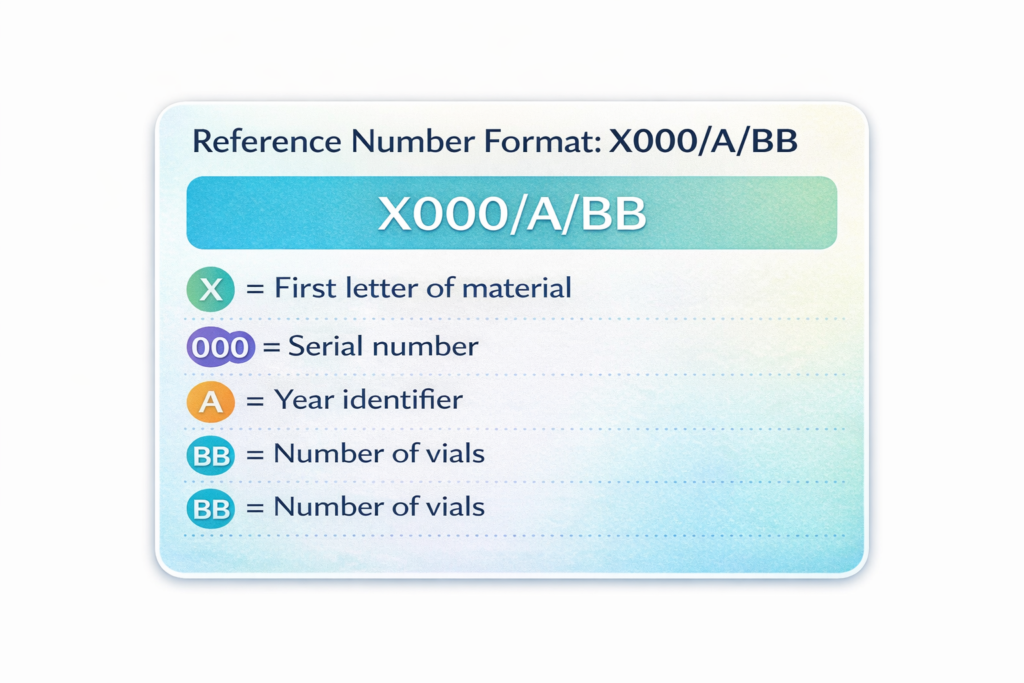
- For repeated preparation in same year: use suffix (A, B, C…)
5.2 Analytical Testing (Calibration Context)
Perform the following tests:
- Assay (6 sets by multiple chemists)
- LOD / Water content (2 sets)
- Chromatographic purity
- IR (if applicable)
- Compare assay with reference standard
- Ensure RSD limits:
- ≤1.0% (chemical)
- ≤5.0% (microbial)
5.3 Documentation & Validation
- Record results in protocol
- Attach Certificate of Analysis (COA)
- Calculate average assay value
- Maintain complete traceability
5.4 Storage & Handling (Cleaning & Control)
- Store in light-resistant glass vials with rubber bungs and aluminum seals
- Label with:
- Name
- Reference number
- Assay
- LOD
- Preparation date
- Use-before date
- Storage conditions:
- Controlled room (<27°C)
- Refrigerator (2–8°C)
- Keep one vial in working area with silica gel
- Replace vial monthly
5.5 Shelf Life & Monitoring
- Standard shelf life: 1 year
- Exceptions (6 months):
- Ranitidine HCl
- Nifedipine
- Omeprazole
- Nicorandil
- Captopril
- Re-test at expiry
- If variation >1%, inform department head
- Shelf life may be extended based on retest results
5.6 Record Keeping
- Maintain issue logs
- Track usage and inventory
- Ensure audit readiness
5.7 Disposal Procedure
- Empty contents into water-filled waste beaker
- Convert to paste and transfer to polyethylene bag
- Send to scrap
- Deface labels
- Dispose vials in broken glass bin
6.0 ABBREVIATIONS
- RSD: Relative Standard Deviation
- LOD: Loss on Drying
- COA: Certificate of Analysis
- AC: Air Condition
- %: Percentage
❓ FAQs
1. What are pharmaceutical working standards?
They are in-house standards derived from reference standards for routine QC testing.
2. Why is numbering important?
It ensures traceability and prevents mix-ups.
3. What tests are performed on working standards?
Assay, LOD, purity, and IR tests.
4. What is acceptable RSD limit?
≤1% for chemical and ≤5% for microbial assays.
5. How are working standards stored?
In light-resistant vials under controlled conditions.
6. What is shelf life of working standards?
Typically 1 year, with some exceptions at 6 months.
7. What happens if assay varies at expiry?
It is reported and evaluated for extension or rejection.
8. How are working standards discarded?
Through controlled neutralization and safe disposal.
9. Who is responsible for handling?
Technical Assistant performs, Manager verifies.
10. Why is documentation critical?
It ensures compliance and audit readiness.