


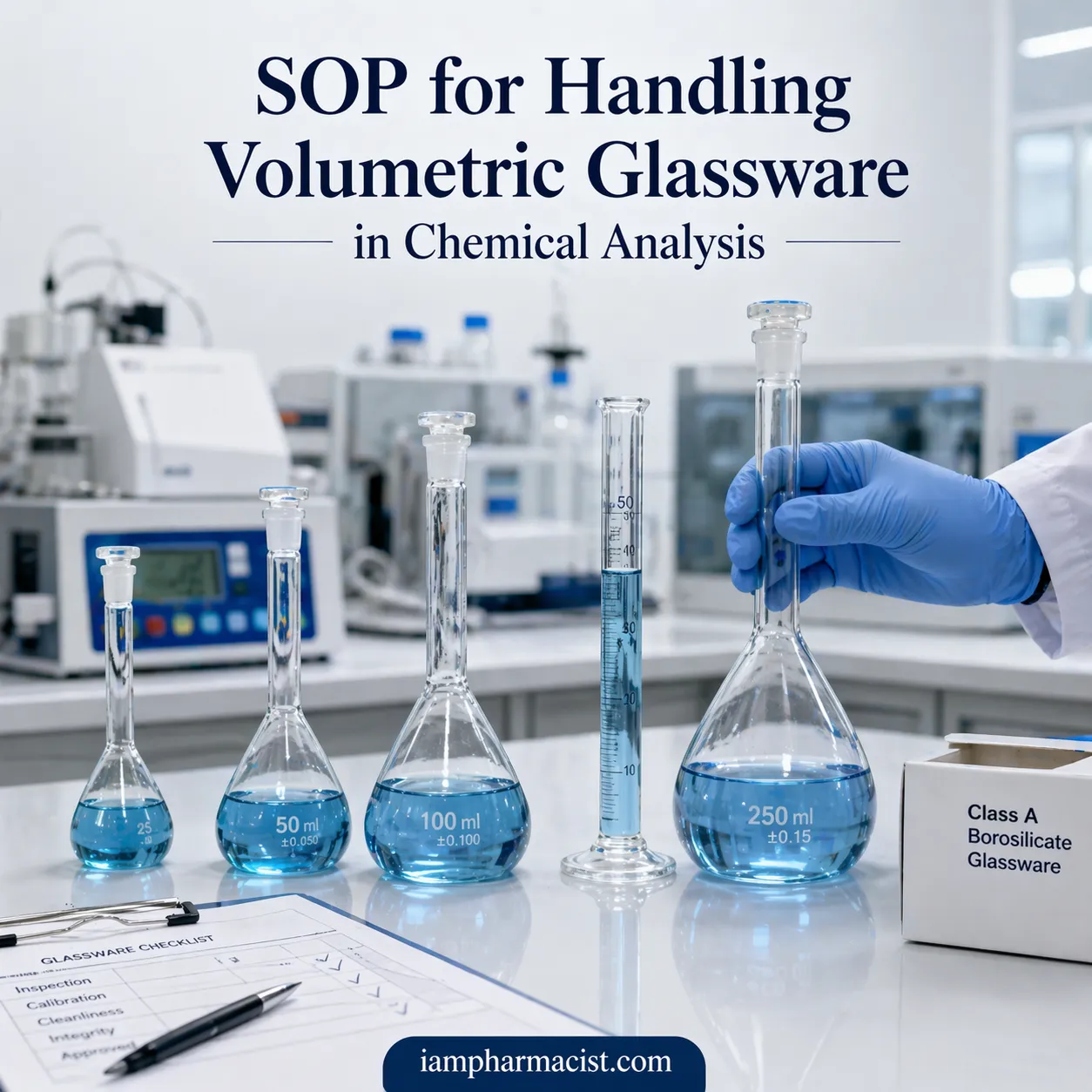

Learn SOP for handling volumetric glassware in chemical analysis with QC compliance, calibration, cleaning steps, and documentation best practices.
Definition
A standard operating procedure (SOP) for handling volumetric glassware is a structured guideline that ensures proper storage, calibration, usage, and maintenance of laboratory glassware to achieve accurate and reliable analytical results.
| Section | Details |
|---|---|
| Objective | Define safe handling procedure |
| Scope | Applicable to all lab glassware |
| Responsibility | QC Officer/Executive |
| Calibration | Before use or issuance |
| Storage | Chemical glassware cupboard |
| Documentation | Calibration records and approvals |
Step-by-Step SOP
- Inspect new glassware
- Store in designated cupboard
- Issue as required
- Handle carefully during use
- Destroy broken glassware
- Check after cleaning
- Calibrate before use
- Record and approve results
Introduction
Volumetric glassware plays a critical role in chemical analysis, where even minor deviations can compromise results. Proper handling, calibration, and maintenance are essential to ensure accuracy, compliance, and safety.
This SOP provides a comprehensive, QC-compliant framework for handling volumetric glassware in laboratories, aligned with industry best practices and audit requirements.
1.0 OBJECTIVE
To lay down the procedure for proper handling of volumetric glassware used in chemical analysis.
2.0 SCOPE
This SOP applies to all volumetric glassware used in laboratory and quality control environments.
3.0 RESPONSIBILITY
Officer/Executive – Quality Control (QC)
Responsible for handling, inspection, and documentation.
4.0 ACCOUNTABILITY
Manager – Quality Control
Ensures compliance and approves records.
5.0 PROCEDURE
5.1 Operation (Handling & Usage)
- Inspect newly received glassware for quality and defects.
- Return any broken or unsuitable glassware to the supplier.
- Store glassware in a designated chemical glassware cupboard.
- Issue glassware as required for analysis.
- Ensure users handle glassware carefully to prevent breakage.
- Destroy any broken glassware immediately as per safety guidelines.
- Re-check glassware after cleaning and drying for cracks or defects.
5.2 Calibration of Volumetric Glassware
- Calibrate glassware at the time of issuance and before use.
- Use only Class ‘A’ certified glassware or calibrated equipment.
- Follow the standard SOP for glassware calibration.
- Record calibration results in the logbook.
- Obtain approval from an authorized person.
- Ensure results are within acceptable limits before approval.
5.3 Cleaning & Storage
- Clean glassware using approved cleaning methods and solutions.
- Rinse thoroughly with purified water to avoid contamination.
- Dry completely before storage.
- Store Grade ‘A’ borosilicate glassware separately in labeled cupboards.
- Maintain segregation to avoid mix-ups and contamination.
5.4 Documentation & Compliance
- Record all calibration and handling activities.
- Maintain traceability of issued glassware.
- Ensure records are reviewed and signed by authorized personnel.
6.0 ABBREVIATION
- SOP – Standard Operating Procedure
7.0 CALIBRATION CONTROL CHECKLIST
- Glassware inspected before use
- Calibration performed as per SOP
- Results recorded accurately
- Approval obtained
- Only compliant glassware used
FAQs
1. What is volumetric glassware?
Glassware designed for precise measurement of liquids.
2. Why is handling SOP important?
It ensures accuracy, safety, and compliance in analysis.
3. What is Class A glassware?
High-precision certified glassware used in analytical labs.
4. When should glassware be calibrated?
Before use and at the time of issuance.
5. How should broken glassware be handled?
It must be destroyed safely and not reused.
6. Where should glassware be stored?
In a designated chemical glassware cupboard.
7. Who approves calibration records?
Authorized QC personnel or manager.
8. Why is drying important?
Moisture can affect analytical accuracy.
9. What type of glass is preferred?
Borosilicate glass due to durability and chemical resistance.
10. Is documentation mandatory?
Yes, for traceability and compliance.
{ “@context”: “https://schema.org”, “@type”: “Article”, “headline”: “SOP for Handling Volumetric Glassware”, “description”: “Complete SOP for handling volumetric glassware with calibration, cleaning, and QC compliance.”, “author”: { “@type”: “Person”, “name”: “SEO Technical Writer” }, “publisher”: { “@type”: “Organization”, “name”: “Quality SOP Hub” }, “mainEntityOfPage”: { “@type”: “WebPage”, “@id”: “https://example.com/sop-handling-volumetric-glassware” } } { “@context”: “https://schema.org”, “@type”: “FAQPage”, “mainEntity”: [ { “@type”: “Question”, “name”: “What is volumetric glassware?”, “acceptedAnswer”: { “@type”: “Answer”, “text”: “Glassware used for accurate liquid measurements in laboratories.” } } ] } { “@context”: “https://schema.org”, “@type”: “HowTo”, “name”: “How to Handle Volumetric Glassware”, “step”: [ {“@type”: “HowToStep”, “text”: “Inspect glassware”}, {“@type”: “HowToStep”, “text”: “Store properly”}, {“@type”: “HowToStep”, “text”: “Calibrate before use”}, {“@type”: “HowToStep”, “text”: “Handle carefully”}, {“@type”: “HowToStep”, “text”: “Record results”} ] }