


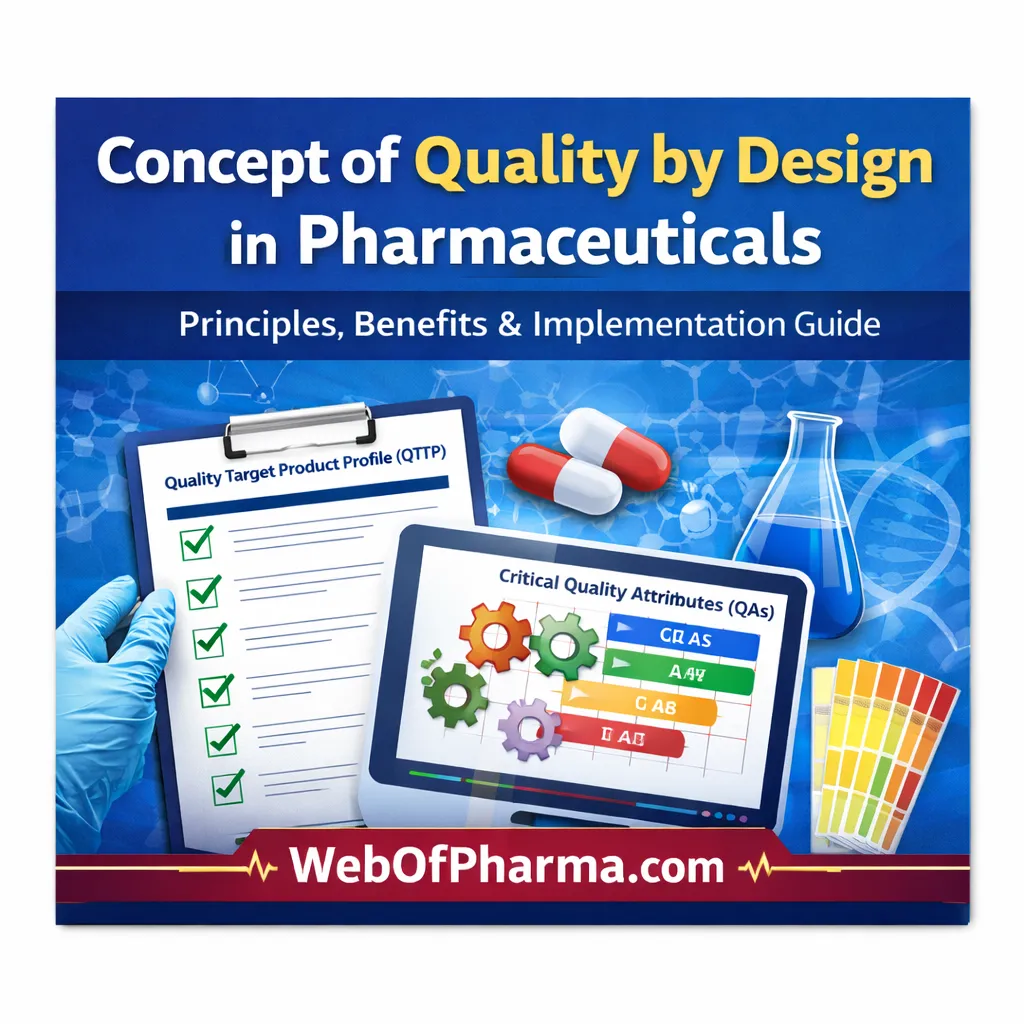

Explore the concept of Quality by Design in pharmaceuticals to improve the quality of pharmaceutical products. Learn QbD principles, benefits, key elements, and regulatory importance.
In the pharmaceutical industry, quality is not just a requirement—it is a responsibility. A medicine must be safe, effective, and free from contamination to deliver its intended therapeutic effect. This is where the concept of Quality by Design in pharmaceuticals to improve the quality of pharmaceutical products plays a crucial role.
Quality in pharmaceuticals refers to the fitness of a product for its intended use. It is assessed through in vitro and in vivo performance, ensuring that the drug consistently meets required standards.
What is Quality by Design (QbD)?
Quality by Design (QbD) is a systematic and science-based approach to pharmaceutical development. It begins with predefined objectives and focuses on:
- Product and process understanding
- Process control
- Risk management
The concept of Quality by Design in pharmaceuticals to improve the quality of pharmaceutical products emphasizes building quality into the product during development rather than testing it at the end.
In simple terms, QbD ensures that:
“Quality is designed into the product, not just tested into it.”
Relationship Between Product Performance and Quality
QbD ensures consistent in vitro product performance, which in turn provides assurance of in vivo performance. This connection highlights how product design directly impacts therapeutic outcomes.
Thus, the concept of Quality by Design in pharmaceuticals to improve the quality of pharmaceutical products is closely linked to product performance, safety, and patient satisfaction.
Why is Quality by Design Important?
Implementing QbD offers several advantages to pharmaceutical companies:
1. Improved Product Quality
QbD reduces variability and defects by enhancing product and process understanding.
2. Increased Manufacturing Efficiency
Better design leads to fewer failures, reduced waste, and optimized processes.
3. Enhanced Regulatory Compliance
Regulatory agencies like the FDA encourage QbD for robust and consistent manufacturing.
4. Better Risk Management
QbD identifies potential risks early and mitigates them effectively.
5. Faster Approval and Lifecycle Management
Improved documentation and understanding lead to quicker regulatory approvals and smoother post-approval changes.
Key Elements of QbD in Pharmaceuticals
The concept of Quality by Design in pharmaceuticals to improve the quality of pharmaceutical products includes several core components:
1. Quality Target Product Profile (QTPP)
Defines the desired characteristics of the final product, such as dosage form, strength, and stability.
2. Critical Quality Attributes (CQAs)
Physical, chemical, or biological properties that must be controlled to ensure product quality.
3. Critical Process Parameters (CPPs)
Process variables that impact CQAs and must be monitored and controlled.
4. Risk Assessment
Identifies potential risks in formulation and manufacturing processes.
5. Control Strategy
A planned set of controls to ensure consistent product quality.
6. Continuous Improvement
Ongoing monitoring and optimization throughout the product lifecycle.
Tools Used in QbD Implementation
Several tools support the successful implementation of QbD:
- Design of Experiments (DoE)
- Process Analytical Technology (PAT)
- Risk Assessment Tools (FMEA, HACCP)
- Prior Knowledge and Data Analysis
These tools help in developing a deep understanding of processes and improving decision-making.
Role of Regulatory Authorities
The FDA and other regulatory agencies strongly support the concept of Quality by Design in pharmaceuticals to improve the quality of pharmaceutical products.
Recent regulatory frameworks focus on:
- Reducing post-approval submission requirements
- Encouraging science-based approaches
- Supporting flexible manufacturing changes
This allows pharmaceutical companies to innovate while maintaining compliance.
Benefits of QbD in Pharmaceutical Manufacturing
QbD ensures:
- Robust and consistent manufacturing processes
- Reduced batch failures
- Improved product reliability
- Efficient scale-up and technology transfer
- Faster time-to-market
It also helps manufacturers identify root causes of failures and shift from reactive to proactive quality management.
Conclusion
The concept of Quality by Design in pharmaceuticals to improve the quality of pharmaceutical products has transformed the way medicines are developed and manufactured. By focusing on science, risk management, and continuous improvement, QbD ensures that quality is built into every stage of the product lifecycle.
For pharmaceutical companies aiming to deliver safe, effective, and high-quality medicines, adopting QbD is no longer optional—it is essential.
Frequently Asked Questions (FAQs)
1. What is Quality by Design (QbD) in pharmaceuticals?
QbD is a systematic approach that ensures quality is built into pharmaceutical products during development.
2. What is the main goal of QbD?
To improve product quality, consistency, and performance through scientific understanding and process control.
3. What is QTPP in QbD?
Quality Target Product Profile defines the desired characteristics of the final drug product.
4. What are Critical Quality Attributes (CQAs)?
CQAs are properties that must be controlled to ensure product safety and efficacy.
5. How does QbD improve product quality?
By identifying risks early and optimizing formulation and manufacturing processes.
6. What tools are used in QbD?
Tools include DoE, PAT, risk assessment methods, and prior knowledge analysis.
7. What is the role of FDA in QbD?
The FDA promotes QbD to enhance product quality and streamline regulatory processes.
8. How does QbD help in regulatory approvals?
It improves documentation and understanding, leading to faster and smoother approvals.
9. What is continuous improvement in QbD?
It refers to ongoing monitoring and optimization throughout the product lifecycle.
10. Why is QbD important in modern pharmaceuticals?
It ensures consistent quality, reduces risks, and improves manufacturing efficiency.