


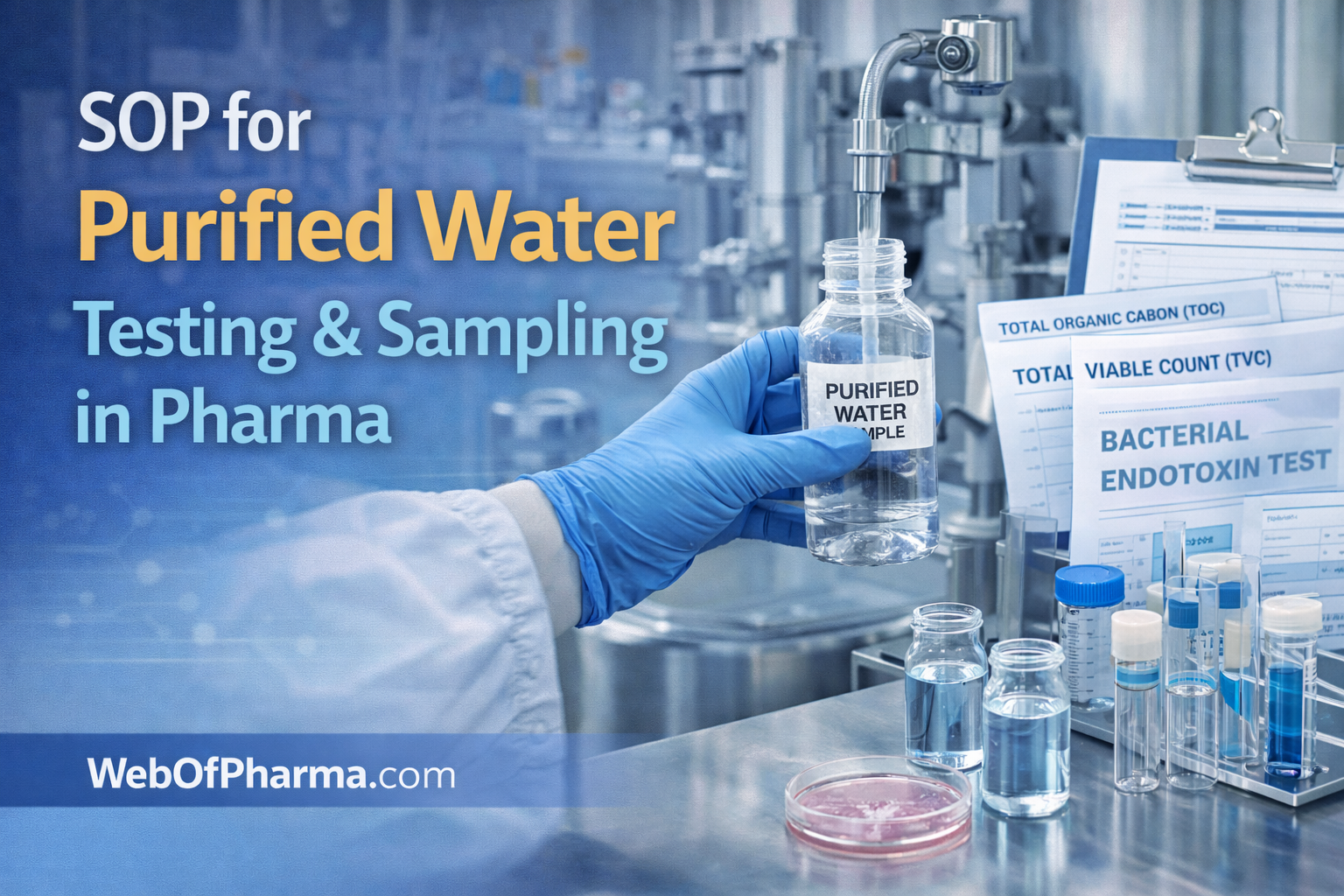

Learn SOP for purified water testing, sampling & analysis in pharma. Ensure quality & compliance.
Water is one of the most critical raw materials in pharmaceutical manufacturing. Even minor contamination can affect product quality and patient safety. That’s why a well-defined SOP for purified water testing in pharmaceutical industry is essential.
This SOP outlines the schedule, sampling locations, and types of analysis required to ensure consistent water quality and regulatory compliance.
1. Objective of the SOP
The purpose of this SOP is to:
- Define sampling procedures for purified water
- Establish testing frequency and locations
- Ensure consistent monitoring of water quality
- Maintain compliance with pharmaceutical standards
2. Scope
This SOP applies to:
- Sampling and testing of purified water
- Microbiology and QC laboratory activities
- All personnel involved in water quality monitoring
3. Roles and Responsibilities
3.1 Responsible Personnel
- Technical Assistant (Microbiologist): Performs sampling and testing
- Executive/Manager: Reviews and verifies results
3.2 Accountability
- Head of Department: Ensures SOP compliance
4. General Precautions Before Sampling
Before collecting any sample:
- Ensure sampling containers are clean and dry
- Use appropriate containers for each test
- Avoid contamination during sampling
👉 Visual inspection of containers is mandatory.
5. Sampling Procedures for Purified Water
5.1 Chemical Analysis Sampling
Follow these steps:
- Flush water from tap for 30 seconds
- Rinse sampling bottle three times with sample
- Collect ~500 ml purified water
- Fill bottle up to the neck
👉 This prevents air contamination and ensures accuracy.
5.2 TOC (Total Organic Carbon) Sampling
TOC testing requires special care.
Procedure:
- Use airtight containers
- Wash container with 2N HCl (2–3 times)
- Flush and rinse as per standard steps
- Collect 60–70 ml sample
- Close container tightly
Important Precautions:
- Prevent CO₂ contamination
- If TOC analyzer is unavailable:
- Use oxidizable substances test
5.3 Microbiological Sampling
Preparation of Container:
- Fill container with purified water
- Seal and wrap properly
- Sterilize at 121°C for 30 minutes
Sampling Steps:
- Discard water before sampling
- Collect ~15 ml sample
- Close container tightly
5.4 Bacterial Endotoxin Test (BET) Sampling
Procedure:
- Use depyrogenated glass containers
- Collect ~15 ml sample
Handling & Storage:
- Send to lab within 1 hour
- Store at 2–8°C if delayed
- Perform testing within:
- 24 hours (maximum)
6. Sampling Locations & Testing Frequency
Key Sampling Points
- UF Outlet
- User End Points
Testing Schedule
| Location | Tests Conducted | Frequency |
|---|---|---|
| UF Outlet | Chemical, pH, Conductivity, TVC, TOC | Daily |
| User End Point | TVC, pH, Conductivity, TOC | Weekly |
👉 Complete analysis must follow defined specifications.
7. Types of Analysis Performed
Chemical Tests
- pH
- Conductivity
- Impurity levels
Microbiological Tests
- Total Viable Count (TVC)
Special Tests
- Total Organic Carbon (TOC)
- Bacterial Endotoxin Test (BET)
8. Importance of Water Quality Monitoring
Proper monitoring ensures:
- Product safety and purity
- Compliance with regulatory guidelines
- Prevention of contamination
- Consistent manufacturing quality
9. Best Practices for Implementation
- Use sterile and validated containers
- Maintain sampling logs and records
- Train personnel regularly
- Calibrate testing instruments
- Follow strict timelines for analysis
10. Common Mistakes to Avoid
- Improper container cleaning
- Delayed sample analysis
- Incorrect storage conditions
- Incomplete sampling documentation
- Ignoring testing frequency
FAQs
1. Why is purified water testing important in pharma?
It ensures water quality meets standards required for safe drug manufacturing.
2. What is TOC testing?
It measures organic carbon content to detect contamination.
3. How often should purified water be tested?
Daily at UF outlet and weekly at user points.
4. What is TVC in water testing?
Total Viable Count measures microbial contamination.
5. What is BET testing?
Bacterial Endotoxin Test detects pyrogens in water.
6. How should samples be stored before testing?
At 2–8°C if not tested immediately.
7. What is the ideal sample volume for chemical analysis?
Approximately 500 ml.
8. Why should bottles be filled to the neck?
To prevent air contamination.
9. Who performs water sampling?
Technical assistant or microbiologist.
10. What happens if testing is delayed?
It may affect accuracy and compliance.