


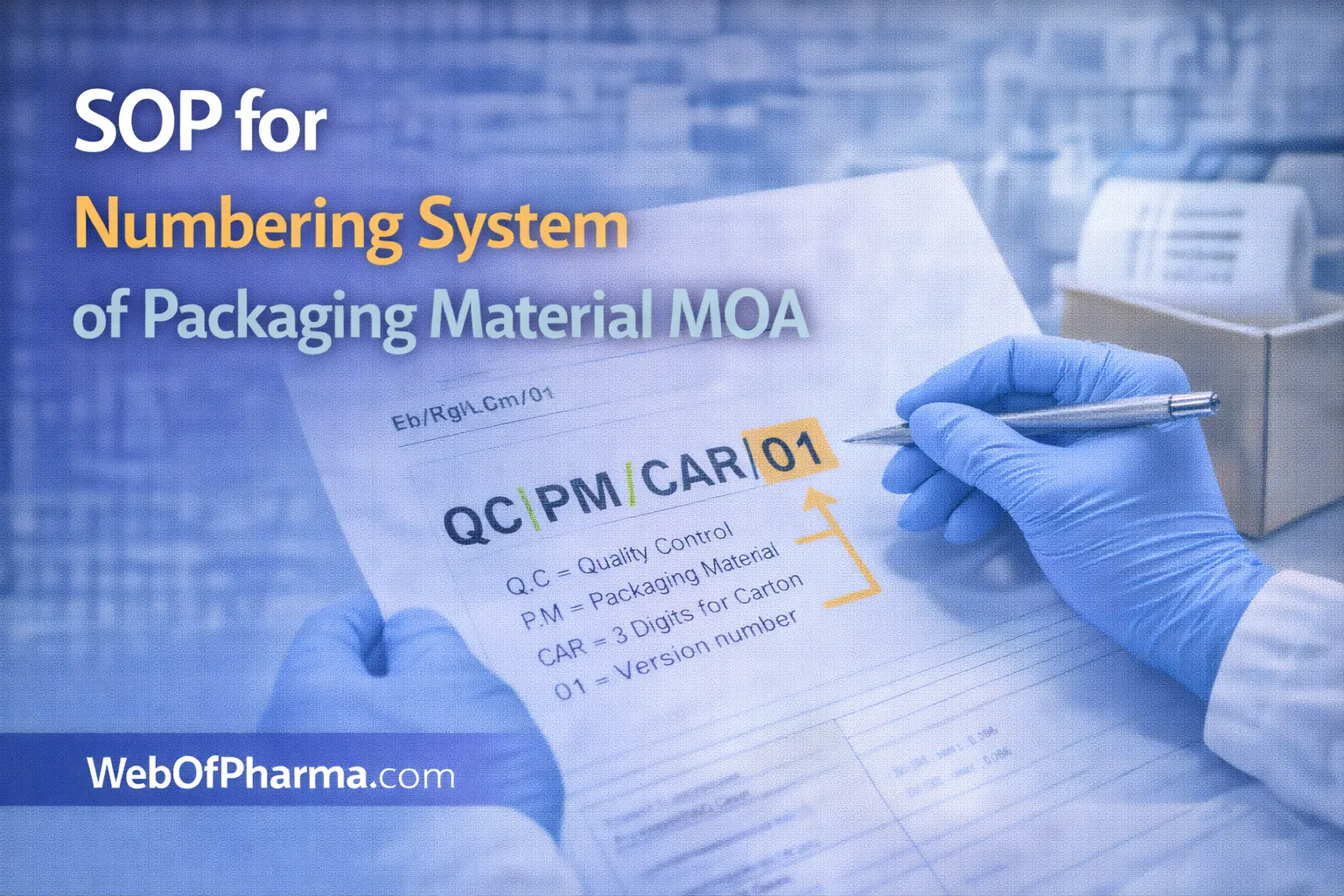

Learn SOP for numbering system of packaging material MOA.
In pharmaceutical quality control, documentation plays a critical role in ensuring traceability, compliance, and consistency. A well-structured numbering system helps identify, track, and manage analytical methods efficiently.
This comprehensive SOP for numbering system of packaging material explains how to assign unique codes to methods of analysis (MOA) for packaging materials.
1. Objective of the SOP
The objective is to:
- Define a logical system for assigning method numbers
- Ensure uniformity in documentation
- Improve traceability and identification of methods
- Maintain compliance with GMP requirements
2. Scope
This SOP applies to:
- All methods of analysis (MOA) for packaging materials
- QC laboratory documentation systems
- New and revised analytical methods
3. Roles and Responsibilities
3.1 Responsible Personnel
- Technical Assistant / Executive: Prepare and assign codes
- Executive / Manager: Verify and approve
3.2 Accountability
- Head of Department: Ensure SOP implementation
4. Importance of Numbering System in Pharma
A proper numbering system helps in:
- Easy identification of documents
- Efficient record management
- Version control and updates
- Audit readiness
👉 Without a structured system, documentation can become confusing and error-prone.
5. Coding Logic for Packaging Material MOA
The numbering system is based on:
- Alphabetical coding
- Structured format with version control
6. Structure of MOA Numbering System
The coding system follows a 7–11 digit format:
6.1 Code Breakdown
- First Two Letters: Department
- Slash (/)
- Third & Fourth Letters: Specific Area
- Slash (/)
- Fifth to Eleventh Letters: Packaging Material Code
- Slash (/)
- Last Two Digits: Version Number
7. Explanation of Each Segment
7.1 Department Code
- Example: QC = Quality Control
7.2 Area Code
- Example: PM = Packaging Material
7.3 Material Code
- Represents specific packaging material
- Example:
- CAR = Carton
- BOT = Bottle
- LBL = Label
7.4 Version Number
- Starts from 01
- Increases with every revision
👉 Ensures proper version control.
8. Example of MOA Numbering
Example Code:
QC/PM/CAR/01
Breakdown:
- QC → Quality Control
- PM → Packaging Material
- CAR → Carton
- 01 → Version number
👉 This makes identification simple and standardized.
9. Procedure for Assigning MOA Numbers
Step-by-Step Process
- Identify department (QC)
- Define specific area (PM)
- Assign material code (e.g., CAR)
- Assign version number (starting from 01)
- Combine all elements using slash format
- Assign effective date
👉 Ensure approval before final implementation.
10. Version Control and Updates
- Update version number for any change in method
- Maintain record of previous versions
- Ensure latest version is in use
👉 Version control prevents confusion during audits.
11. Documentation Requirements
- Maintain master list of MOA codes
- Record effective date
- Keep revision history
- Ensure authorized signatures
12. Best Practices
- Use consistent coding format
- Avoid duplication of codes
- Maintain centralized documentation
- Train staff on coding system
- Review codes periodically
13. Common Mistakes to Avoid
- Incorrect code structure
- Missing version number
- Duplicate codes
- Lack of documentation
- Ignoring updates
FAQs
1. What is MOA in pharmaceuticals?
Method of Analysis used for testing materials.
2. Why is numbering important?
It ensures traceability and proper document control.
3. What does QC stand for?
Quality Control.
4. What does PM mean?
Packaging Material.
5. What is version number?
It shows revision level of a document.
6. What is an example of MOA code?
QC/PM/CAR/01.
7. How is version updated?
Incremented with each revision.
8. Who assigns MOA codes?
Technical assistant or executive.
9. Why avoid duplicate codes?
To prevent confusion and errors.
10. Why is documentation important?
For compliance and audit purposes.