


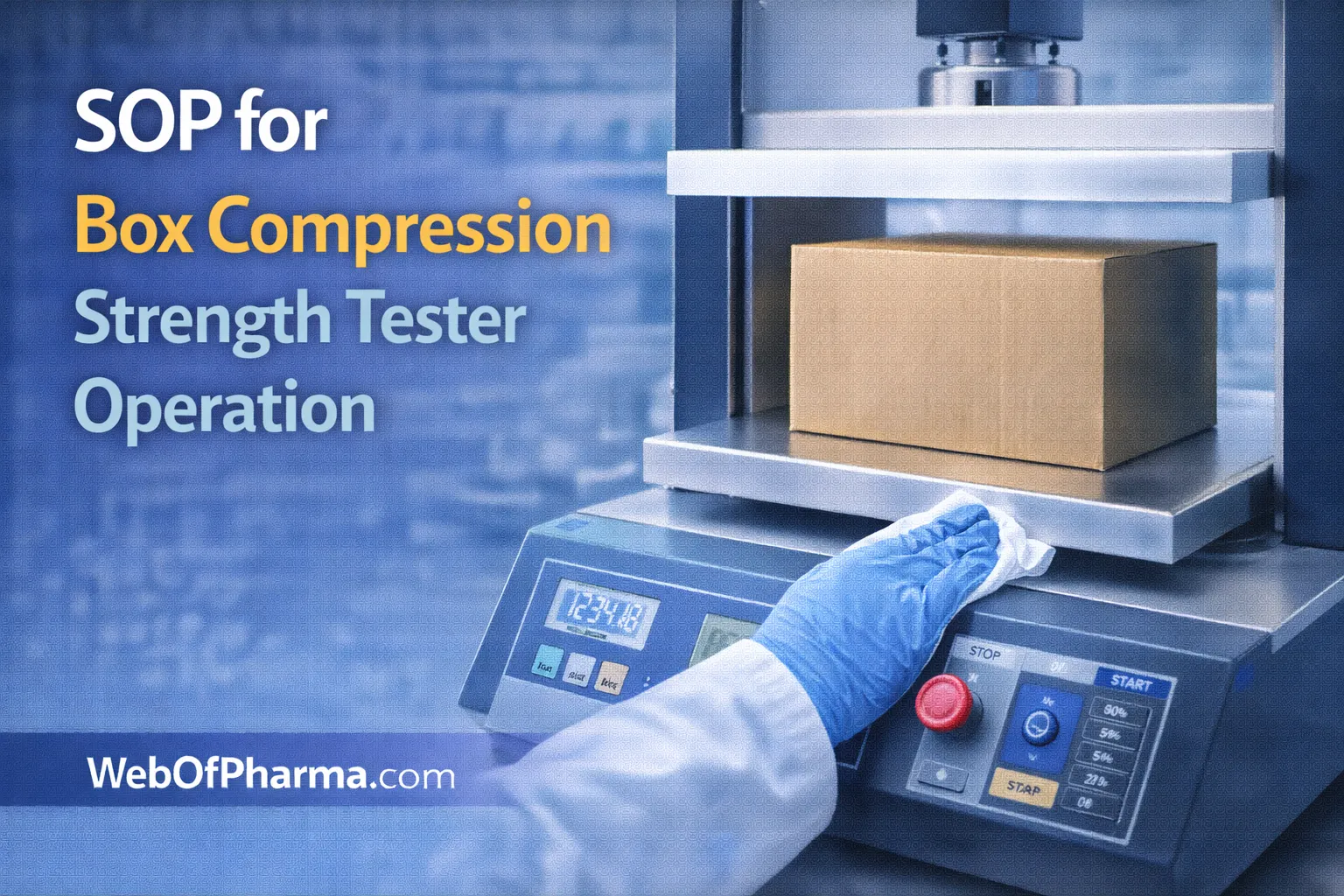

Learn SOP for box compression strength tester operation, calibration & cleaning.
In pharmaceutical packaging, strength and durability are critical. Packaging must withstand handling, transport, and storage without damage. That’s why following a proper SOP for box compression strength tester is essential to ensure accurate testing and reliable results.
This SOP outlines step-by-step procedures for operating, calibrating, and cleaning the box compression strength tester.
1. Objective of the SOP
The objective is to:
- Ensure accurate measurement of box compression strength
- Maintain proper functioning of the instrument
- Define cleaning and maintenance procedures
- Improve reliability of packaging quality testing
2. Scope
This SOP applies to:
- Box compression strength testers used in QC laboratories
- Packaging material testing processes
- Routine maintenance and cleaning activities
3. Roles and Responsibilities
3.1 Responsible Personnel
- Technical Assistant / Executive: Perform testing and cleaning
- Executive / Manager: Verify and supervise
3.2 Accountability
- Head of Department: Ensure SOP compliance
4. Frequency
- Cleaning should be performed daily after testing
👉 Regular cleaning ensures consistent performance.
5. Operation Procedure
Before testing:
- Ensure the instrument is clean and functional
- Check alignment of platens
- Place the sample (box) properly
Steps:
- Switch ON the instrument
- Place the box between upper and lower platen
- Apply load gradually
- Record compression strength value
👉 Always follow manufacturer guidelines for operation.
6. Calibration Procedure (General Guidelines)
Calibration ensures accuracy.
Steps:
- Use standard weights or certified reference materials
- Verify load cell accuracy
- Check alignment and pressure distribution
- Record calibration data
👉 Perform calibration at defined intervals.
7. Cleaning Procedure
Proper cleaning prevents errors and maintains accuracy.
Step-by-Step Cleaning Process
- Switch OFF the instrument after testing
- Release air using control knob
- Switch OFF the mains power supply
7.1 Cleaning of Instrument Components
- Clean outer surface using cotton cloth
- Clean control panel gently
- Clean upper and lower platen surfaces
- Clean load cell and platform
- Clean dummy stool
👉 Ensure all surfaces are dust-free and dry.
7.2 Documentation
- Record cleaning activity in instrument log card
👉 Documentation ensures compliance and traceability.
8. Safety Precautions
- Do not operate with damaged platens
- Avoid overloading the instrument
- Use PPE (gloves, lab coat)
- Keep hands away during testing
9. Best Practices for Accurate Testing
- Use properly conditioned samples
- Ensure uniform placement of boxes
- Calibrate instrument regularly
- Maintain clean testing surfaces
- Record results immediately
10. Common Mistakes to Avoid
- Not releasing air pressure after use
- Skipping cleaning steps
- Improper sample placement
- Ignoring calibration
- Poor documentation
FAQs
1. What is a box compression strength tester?
It measures the strength of packaging boxes under compression.
2. Why is cleaning important?
It ensures accurate and reliable test results.
3. How often should cleaning be done?
Daily after testing.
4. What is calibration used for?
To ensure accuracy of load measurements.
5. Who operates the tester?
Technical assistant or executive.
6. What happens if the instrument is not cleaned?
It may give inaccurate results.
7. What is the role of load cell?
It measures applied force.
8. Why release air after testing?
To prevent pressure buildup and damage.
9. What PPE should be used?
Gloves and lab coat.
10. Why is documentation important?
For audit compliance and traceability.