



Learn SOP for handling official reference standards and impurities in QC, including procurement, storage, numbering, and discard procedures.
📌 Definition
Reference standards and reference impurities are certified materials used in Quality Control laboratories to ensure accuracy, calibration, and validation of analytical methods, requiring controlled handling, storage, and documentation.
📊 Table Snippet (Data Type)
| Section | Description |
|---|---|
| Objective | Ensure availability and accountability of reference standards |
| Scope | Applicable to all pharmacopoeial reference standards |
| Responsibility | Technical Assistant/Executive (execution), HOD (verification) |
| Accountability | Head of Department |
| Key Activities | Procurement, numbering, storage, usage, documentation, disposal |
🔢 Step-by-Step SOP
- Obtain latest list of reference standards
- Procure from USP, BP, EP, IP agencies
- Verify label details and record in bin card
- Assign unique reference numbers
- Maintain stock and usage records
- Store at 2–8°C conditions
- Prepare working standards
- Discard outdated standards safely
🔍 Introduction
Reference standards and impurities are the backbone of pharmaceutical Quality Control testing. Their proper handling ensures analytical accuracy, regulatory compliance, and data integrity. This SOP provides a structured approach for procurement, storage, tracking, and disposal of pharmacopoeial standards in QC laboratories.
🧠 Semantic Content Layer
Handling official reference standards involves procurement from certified pharmacopoeial bodies such as USP, BP, EP, and IP, followed by proper labeling, storage under controlled conditions, and documentation through bin cards. Reference impurities are similarly managed with unique identification systems. This SOP ensures traceability, minimizes errors, and aligns with Good Laboratory Practices (GLP).
1.0 OBJECTIVE
To ensure availability and accountability of reference standards and impurities.
2.0 SCOPE
Applicable to all reference standards from pharmacopoeial agencies used in QC laboratories.
3.0 RESPONSIBILITY
- 3.1 Doing: Technical Assistant / Executive
- 3.2 Checking: Head of Department
4.0 ACCOUNTABILITY
Head of the Department
5.0 PROCEDURE
5.1 Operation (Procurement & Identification)
- Obtain latest list of standards from pharmacopoeial agencies
- Procure standards (USP, BP, EP, IP) via purchase order
- Verify label details upon receipt
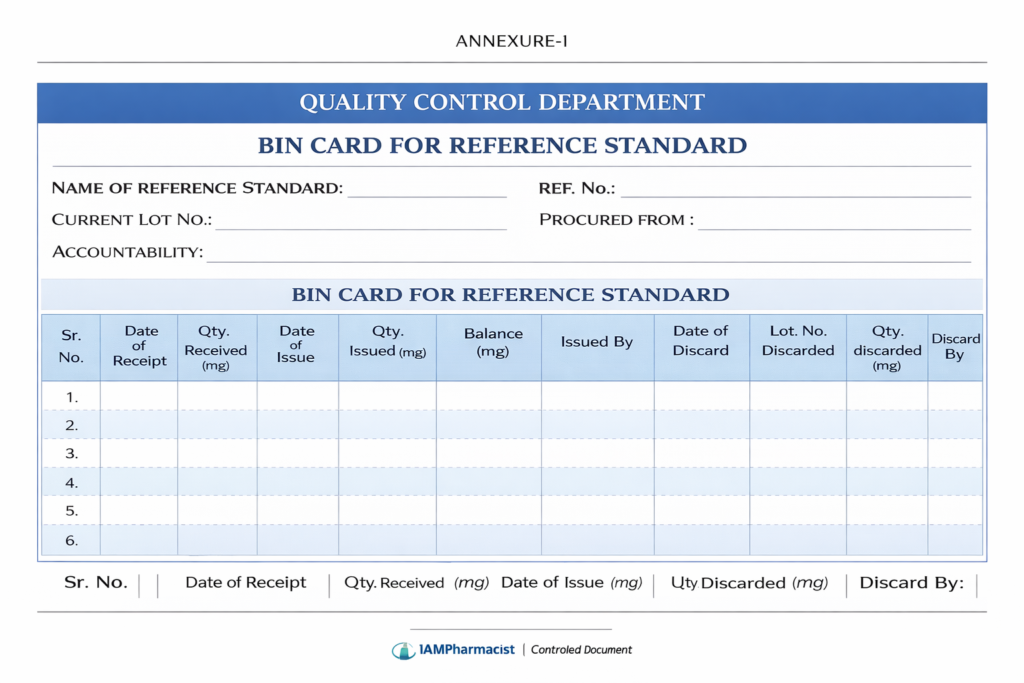
- Record details in bin card (Annexure-I)
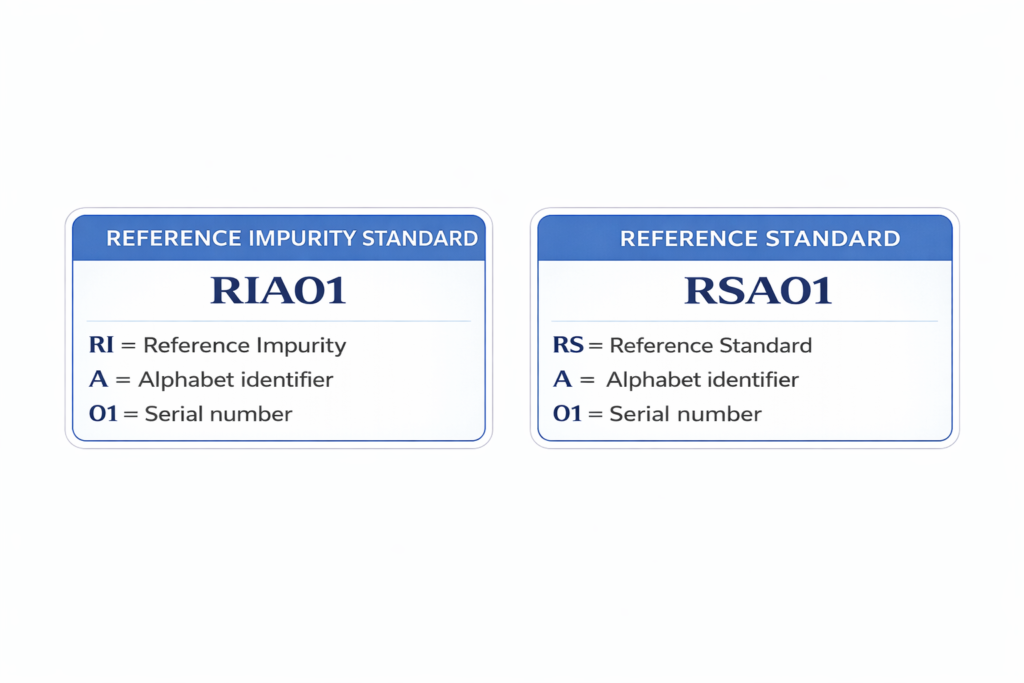
5.2 Numbering System
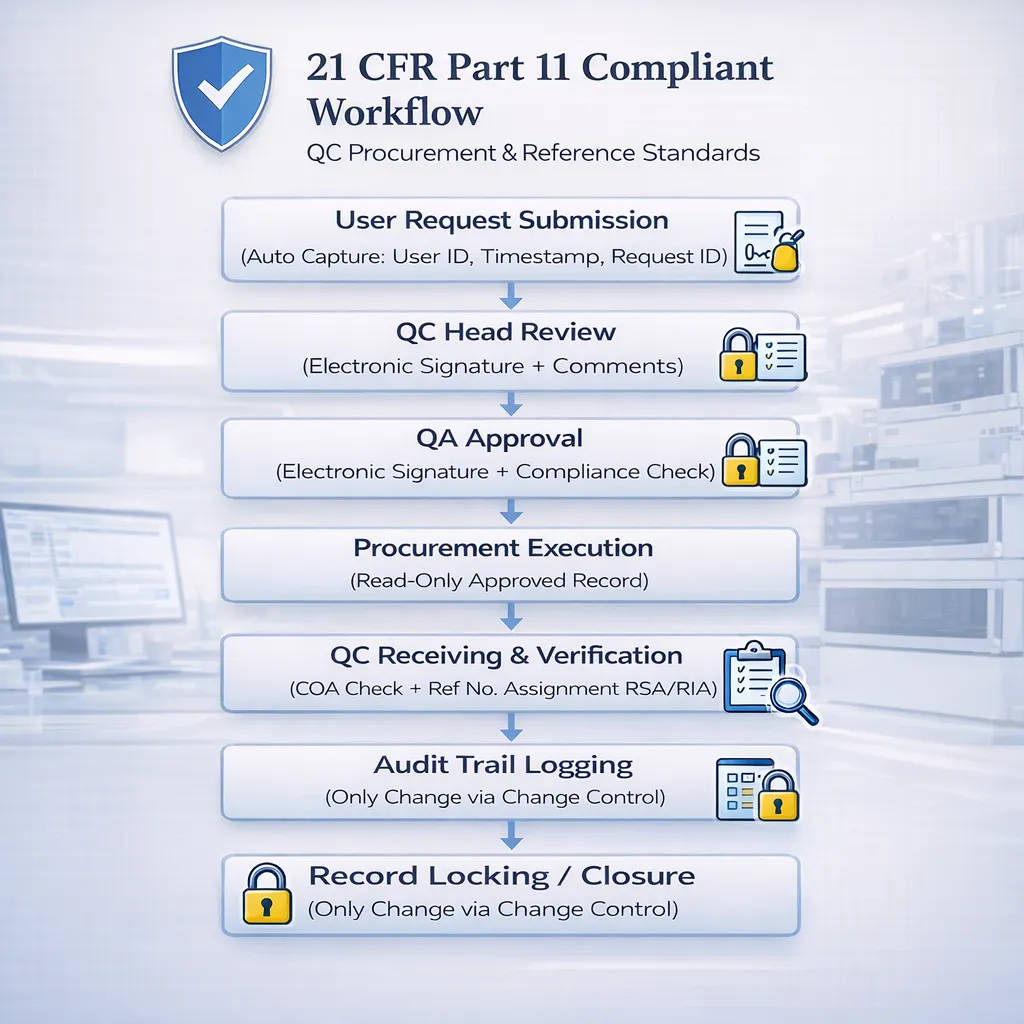
5.3 Documentation & Control
- Maintain bin card for each standard
- Record every issue and balance
- Ensure traceability and audit readiness
- Monitor stock levels
5.4 Storage & Handling (Cleaning & Control)
- Store standards tightly closed
- Maintain 2°C to 8°C refrigeration
- Avoid contamination and exposure
- Ensure proper labeling and segregation
5.5 Usage
- Use reference standard for preparation of working standards
- Follow separate SOP for working standard preparation
5.6 Discard Procedure
- Replace old lot with current lot
- Empty contents into water
- Convert to paste and transfer to polyethylene bag
- Deface labels
- Dispose vials in glass waste
- Record destruction in logbook
6.0 ABBREVIATIONS
- IP: Indian Pharmacopoeia
- BP: British Pharmacopoeia
- USP: United States Pharmacopoeia
- EP: European Pharmacopoeia
- Ref.: Reference
- Std.: Standard
📄 ANNEXURE-I: BIN CARD FORMAT
❓ FAQs
1. What are reference standards in QC?
Certified materials used for calibration and validation.
2. Why are impurity standards important?
They help identify and quantify impurities in drugs.
3. How are reference standards stored?
At 2–8°C under controlled conditions.
4. What is a bin card?
A record for tracking stock and usage of standards.
5. How are standards numbered?
Using defined formats like RSA01 and RIA01.
6. What happens to old standards?
They are discarded as per SOP.
7. Who is responsible for maintaining records?
Technical Assistant executes; HOD verifies.
8. Can reference standards be reused indefinitely?
No, they must be replaced with new lots.
9. Why is documentation important?
For traceability and regulatory compliance.
10. What agencies supply standards?
USP, BP, EP, and IP.