


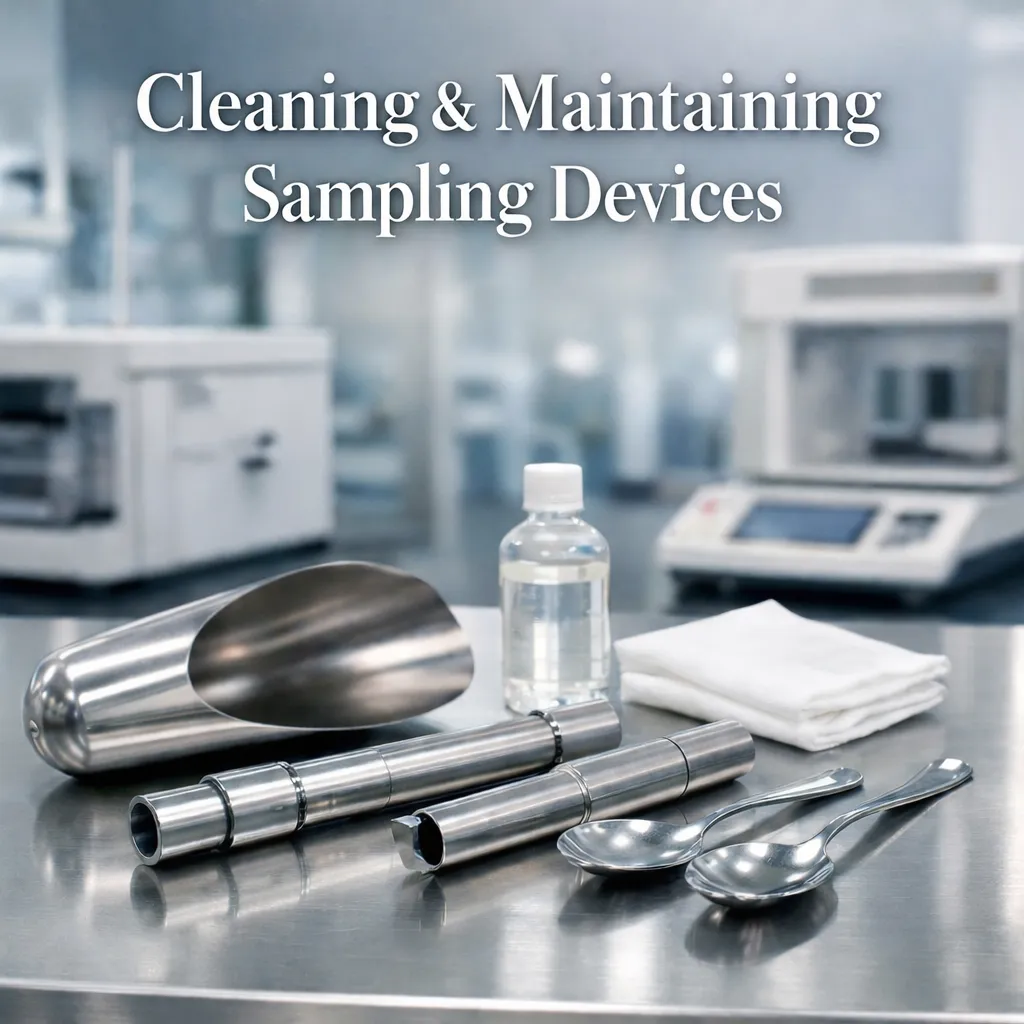

Learn a complete SOP for cleaning and maintaining raw material sampling devices and areas. Ensure compliance, hygiene, and contamination control.
Introduction
Maintaining contamination-free sampling equipment is critical in industries like pharmaceuticals, food, and chemicals. A poorly cleaned sampling device can compromise product integrity, lead to batch rejection, and violate GMP compliance.
This SOP provides a clear, validated, and regulatory-aligned procedure for cleaning, maintaining, and storing sampling devices used in raw material sampling—ensuring accuracy, hygiene, and audit readiness.
Definition
A standard operating procedure (SOP) for cleaning sampling devices is a documented process that ensures all sampling tools and areas are properly cleaned, disinfected, dried, and stored to prevent contamination and maintain compliance with GMP standards.
Semantic Content Layer
This SOP aligns with Good Manufacturing Practices (GMP) by ensuring systematic cleaning, proper disinfection using 70% isopropyl alcohol, controlled drying, and documented verification. It supports cross-contamination prevention, microbiological safety, and traceability, which are essential for regulatory compliance in pharmaceutical and manufacturing environments.
1.0 OBJECTIVE
To clearly define the maintenance and cleaning procedure for sampling equipment used in raw material sampling.
2.0 SCOPE
Applicable to:
- Cleaning of sampling devices
- Storage and handling procedures
- Maintenance of sampling area
3.0 RESPONSIBILITY
- Doing: Worker
- Checking: Technical Assistant
4.0 ACCOUNTABILITY
- Head of Department
5.0 PROCEDURE
5.1 General Maintenance of Sampling Devices
- Clean and maintain all devices such as:
- Stainless steel scoops
- Stainless steel spoons
- Sampling rods
- Ensure devices are free from contamination before and after use
Step-by-Step Cleaning Procedure
5.2 Cleaning of Sampling Devices
Step 1: Initial Washing
- Wash all devices with raw water
- For sampling rods:
- Disassemble into parts
- Wash each piece separately
- Use ~100 liters of water
- Flow rate: 36 L/min for 3 minutes
Step 2: Rinsing
- Rinse with purified water
- For rods:
- Use ~10 liters per piece
- Flow rate: 12 L/min for 1 minute
- Other devices: use sufficient purified water
Step 3: Disinfection
- Mop each device with 70% isopropyl alcohol
- Mandatory for microbiological sampling
Step 4: Drying
- Use infrared dryer
- Dry for approximately 10 minutes
Step 5: Visual Inspection
- Check for:
- Residual material
- Moisture traces
Step 6: Packing
- Pack in clean polyethylene bags
- Tie securely
- Place in “Ready for use” receptacle
Step 7: Documentation
- Record cleaning details in annexure/logbook
Step 8: Pre-Use Verification
- Inspect devices and area before sampling
- Ensure no previous material trace exists
Table Snippet (Data Type)
| Step | Activity | Key Requirement | Purpose |
|---|---|---|---|
| 1 | Washing | Raw water (100 L for rods) | Remove bulk contaminants |
| 2 | Rinsing | Purified water | Remove residues |
| 3 | Disinfection | 70% IPA | Kill microorganisms |
| 4 | Drying | Infrared dryer (10 min) | Eliminate moisture |
| 5 | Inspection | Visual check | Ensure cleanliness |
| 6 | Packing | Polyethylene bags | Prevent contamination |
| 7 | Documentation | Annexure record | Traceability |
FAQs
1. What is an SOP for sampling device cleaning?
A documented procedure ensuring proper cleaning, disinfection, and storage of sampling tools.
2. Why is 70% IPA used?
It provides optimal microbial kill efficiency.
3. How often should sampling devices be cleaned?
After every use and before reuse.
4. What happens if devices are not cleaned properly?
Risk of contamination, batch failure, and regulatory non-compliance.
5. Can the same device be reused without cleaning?
No, cleaning is mandatory before reuse.
6. What is the drying method used?
Infrared drying for 10 minutes.
7. Why is visual inspection required?
To confirm absence of residue and moisture.
8. What type of water is used for rinsing?
Purified water.
9. How are cleaned devices stored?
In polyethylene bags inside a “Ready for use” container.
10. Who is responsible for the cleaning process?
Workers perform cleaning; Technical Assistant verifies.
{ “@context”: “https://schema.org”, “@type”: “Article”, “headline”: “SOP for Cleaning Sampling Devices”, “description”: “Step-by-step SOP for maintaining and cleaning sampling devices used in raw material sampling.”, “author”: { “@type”: “Person”, “name”: “SEO Technical Writer” }, “publisher”: { “@type”: “Organization”, “name”: “Quality Assurance Hub” }, “mainEntityOfPage”: { “@type”: “WebPage”, “@id”: “https://example.com/sop-cleaning-sampling-devices-raw-material” }, “faq”: { “@type”: “FAQPage”, “mainEntity”: [ { “@type”: “Question”, “name”: “What is an SOP for sampling device cleaning?”, “acceptedAnswer”: { “@type”: “Answer”, “text”: “It is a documented procedure for cleaning and maintaining sampling tools.” } } ] }, “howTo”: { “@type”: “HowTo”, “name”: “Cleaning Sampling Devices”, “step”: [ {“@type”: “HowToStep”, “text”: “Wash with raw water”}, {“@type”: “HowToStep”, “text”: “Rinse with purified water”}, {“@type”: “HowToStep”, “text”: “Disinfect with 70% IPA”}, {“@type”: “HowToStep”, “text”: “Dry using infrared dryer”}, {“@type”: “HowToStep”, “text”: “Inspect and store properly”} ] } }