




Regulatory
- Research & Development (R & D)
- Clinical Research
- SAS (Statistical Analysis System)
- Dossiers
- Pharmacovigilance



our documentation


about us
Setting new standards in pharmaceutical documentation excellence,

We strive to deliver the best pharmaceutical documentation experience for you.

We are committed to delivering the highest standard of pharmaceutical documentation.
Pharmacist have main role in pharmaceuticals sector
”A very useful resource for pharmacists and pharmacy students.”
iampharmacist.com provides practical and easy-to-understand pharmaceutical information. The articles are well organized and cover topics that are useful in both academic learning and professional pharmacy practice. I especially appreciate the focus on pharmaceutical calculations, drug information, and industry-related guidance.
Clinical Pharmacist

“Excellent platform for pharmaceutical professionals.”
As an industrial pharmacist, I found iampharmacist.com extremely helpful for understanding pharmaceutical manufacturing, quality control, GMP, validation, and regulatory concepts. The information is presented in a simple but professional manner, making complicated pharmaceutical topics much easier to understand.
Industrial Pharmacist

“Very informative for pharmaceutical industry professionals.”
I really appreciate the educational content available on iampharmacist.com. The website provides useful information about GMP, ICH guidelines, pharmaceutical quality systems, regulatory affairs, validation, and drug development. It is a valuable resource for anyone working or studying in the pharmaceutical field.
Regulatory Affairs Pharmacist

“A reliable learning website for pharmacists.”
iampharmacist.com is an informative platform where pharmacists can quickly find useful pharmaceutical knowledge. The content is easy to read and covers a wide range of subjects related to medicines, pharmacy practice, dosage calculations, and pharmaceutical sciences. I would recommend it to pharmacy students as well as practicing pharmacists..
Community Pharmacist

news & blogs
Lorem ipsum dolor sit amet, consectetur adipiscing elit. Proin nisi elit, consequat pharetra elementum nec, eleifend non turpis.

Learn FDA GLP master schedule requirements, who maintains the schedule, required fields, date rules, and a practical pharmaceutical laboratory template. GLP master schedule is the facility register of applicable nonclinical laboratory studies. It helps management track workload and gives the Quality Assurance Unit (QAU) a current view for planning oversight. In pharma, it may cover…
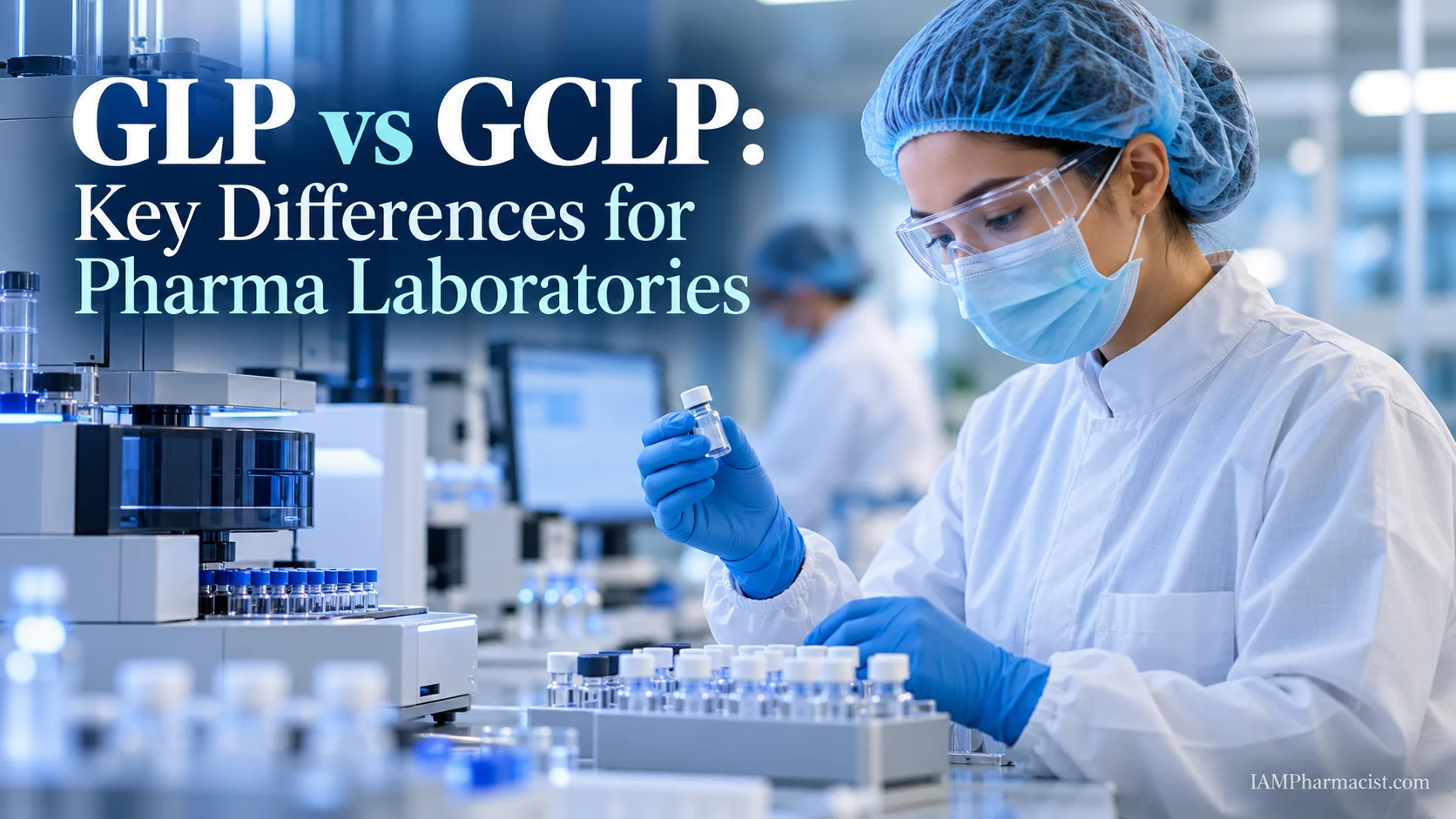
GLP vs GCLP in pharma: learn which applies to nonclinical safety studies, clinical trial samples, GCP, and GMP, with practical examples. Pharmaceutical teams can confuse GLP, GCLP, GCP, and GMP because all involve quality controls and records. Their scopes differ. Good Laboratory Practice (GLP) supports reliable nonclinical safety studies. Good Clinical Laboratory Practice (GCLP) guides…

Learn what a GLP study plan should contain, who reviews it, how amendments are handled, and what auditors look for. Key takeaways What is a GLP study plan? A GLP study plan is the written instruction set for conducting a nonclinical safety study. It defines what the study is intended to establish, how it will…
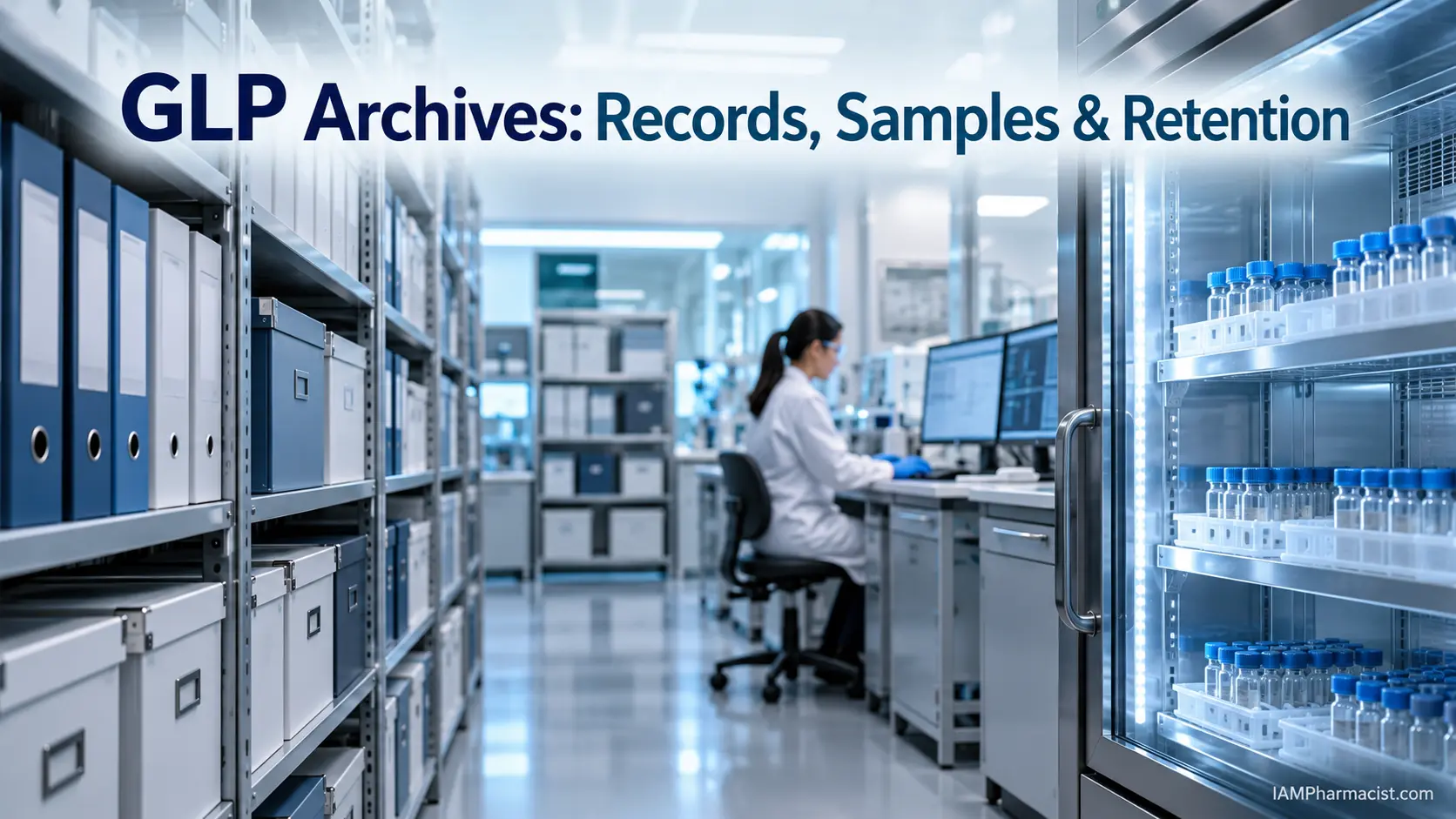
Learn GLP archives requirements for study records, specimens, retention periods, access controls and electronic data migration. A Good Laboratory Practice (GLP) archive protects the records and materials needed to review and reconstruct a nonclinical safety study. It may contain paper records, electronic raw data, protocols, reports, and study specimens. FDA’s 21 CFR Part 58 requires…

Learn the GLP Study Director; responsibilities, qualifications, QAU relationship, protocol duties and role in multi-site studies. A Good Laboratory Practice (GLP) Study Director leads the technical conduct of a nonclinical laboratory study and serves as its single point of study control. The role covers study oversight, data review, protocol compliance, reporting, and transfer of records…

Learn GLP computerized systems requirements for validation, access controls, audit trails, backups, archiving, ALCOA+ and 21 CFR Part 11. Computerized systems support many Good Laboratory Practice (GLP) activities, including instrument data capture, sample tracking, calculations, study documentation, and archiving. Their records must allow a study to be reviewed and reconstructed. FDA’s GLP regulation recognizes data…
FAQ’s
Pharma Documentation Simplified.
Pharmaceutical documentation is the systematic recording of processes, procedures, tests, and controls involved in the manufacturing, quality assurance, and distribution of pharmaceutical products. It ensures product quality, safety, traceability, and regulatory compliance.
Documentation is critical to ensure:
• Compliance with regulatory requirements (GMP, DRAP, FDA, WHO, USP, BP)
• Product quality and patient safety
• Traceability and accountability
• Data integrity and audit readines
Common pharmaceutical documents include:
• Standard Operating Procedures (SOPs)
• Batch Manufacturing Records (BMR)
• Batch Packaging Records (BPR)
• Master Formula Records (MFR)
• Validation protocols and reports
• Quality control and stability reports
• Change control and deviation records
Good Documentation Practices (GDP) are guidelines that ensure documents are:
GDP helps maintain data integrity and regulatory compliance.
Accurate, clear, and legible
Written in real time
Properly signed and dated
Secure and traceable
All personnel involved in pharmaceutical operations share responsibility for accurate documentation. However, Quality Assurance (QA) is primarily responsible for document approval, control, revision, and archiving.
Common errors include:
* Incomplete or inconsistent records
* Missing signatures or dates
* Overwriting or use of correction fluid
* Backdating entries
* Illegible handwriting
Pharmaceutical documentation is governed by:
* USP, BP, and IP standards
* WHO-GMP guidelines
* FDA 21 CFR Parts 210, 211, and 11
* MHRA Act & Rules
* ICH guidelines
Documentation quality can be improved by:
* Regular staff training
* Standardized templates
* Routine audits and reviews
* Clear SOPs and GDP enforcement
* Use of digital documentation systems
One response