


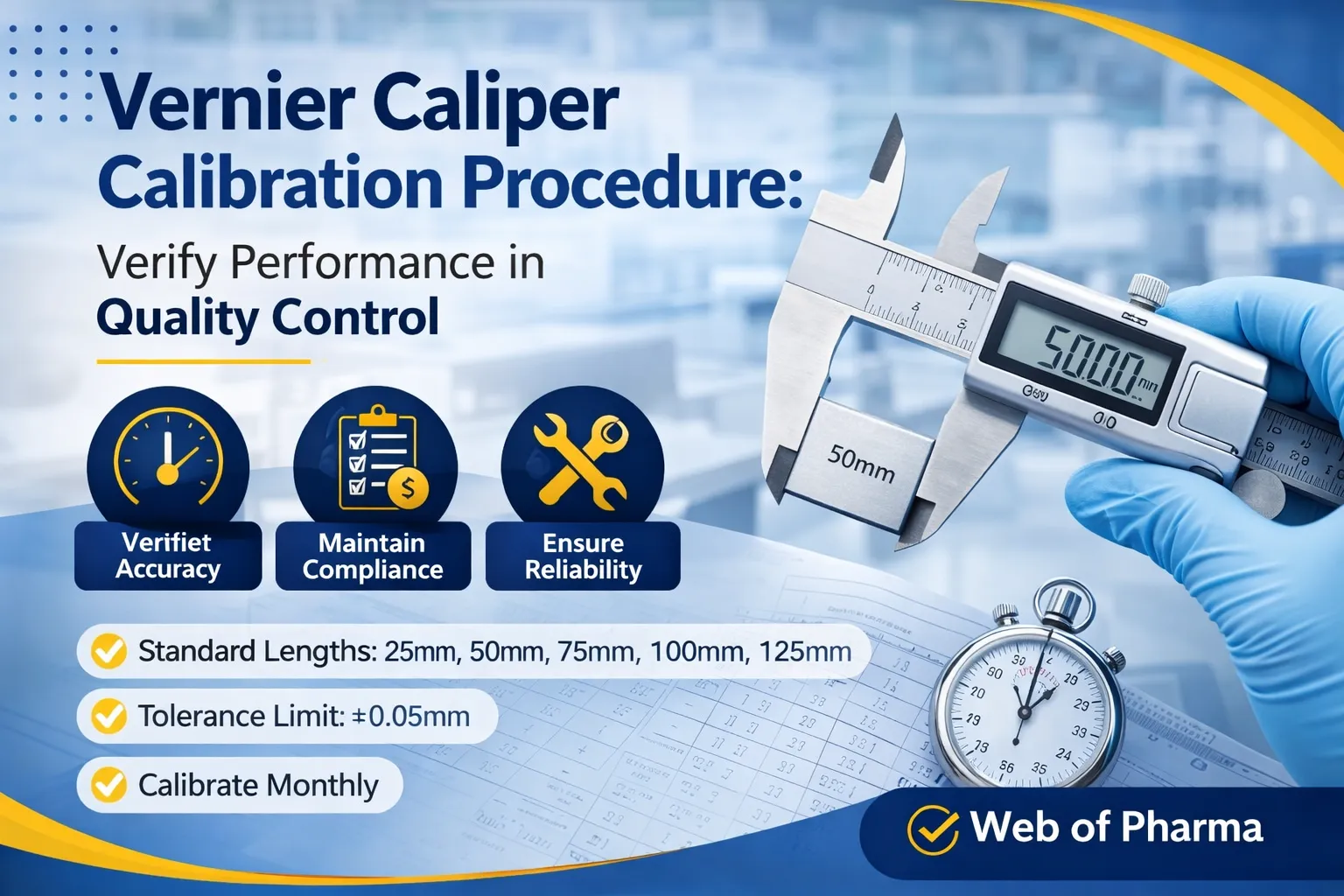

Learn how to verify the performance of Vernier Caliper used for measurements in Quality Control. Step-by-step calibration procedure, tolerance limits, frequency, and maintenance guidelines.
Accurate measurement is essential in pharmaceutical quality control. A Vernier caliper is widely used for precise dimensional analysis, and regular calibration is necessary to ensure reliability. This guide explains how to verify the performance of Vernier Caliper used for measurements in Quality Control using a simple and effective procedure.
🎯 Purpose of Calibration
The purpose of Vernier caliper calibration is to:
- Ensure measurement accuracy
- Maintain compliance with GMP standards
- Detect deviations and instrument errors
- Guarantee reliable QC results
⚙️ Calibration Procedure
Step 1: Preparation
- Ensure the caliper is clean and free from dust or residue.
- Check zero error before starting.
- Use certified standard length rods for calibration.
Step 2: Measurement Using Standard Lengths
- Place a 25 mm standard length between the measuring jaws.
- Take readings at three different positions:
- Upper
- Center
- Lower
- Record all readings.
- Calculate the average reading.
Step 3: Repeat for Additional Lengths
Repeat the same procedure for the following standard lengths:
- 50 mm
- 75 mm
- 100 mm
- 125 mm
📊 Acceptance Criteria (Tolerance Limit)
- Tolerance: ±0.05 mm
Each measured value must fall within the acceptable range:
- Example:
- 25 mm → Acceptable range: 24.95 mm – 25.05 mm
📅 Calibration Frequency
- Perform calibration once every month
- Maintain proper documentation for audit and compliance
📝 Calibration Record Requirements
Ensure the calibration report includes:
- Instrument number, make, and date
- Standard lengths used
- Observations at upper, center, and lower positions
- Average readings
- Minimum and maximum limits
- Final conclusion (Satisfactory / Not satisfactory)
- Signatures (Done by / Checked by)
- Next calibration due date
⚠️ Out-of-Calibration Handling
- If readings fall outside tolerance:
- Label the instrument as “Out of Calibration”
- Send for repair or servicing
- After servicing:
- Recalibrate before reuse to ensure accuracy
🔧 Maintenance & Care Tips
- Keep measuring jaws clean and dry
- Avoid dropping or mishandling the caliper
- Store in a protective case
- Regularly check for wear and tear
✅ Conclusion
Routine calibration ensures that your Vernier caliper provides precise and consistent measurements. Following this SOP to verify the performance of Vernier Caliper used for measurements in Quality Control helps maintain product quality, regulatory compliance, and data integrity in pharmaceutical operations.
❓ Frequently Asked Questions (FAQs)
1. Why is Vernier caliper calibration important in QC?
It ensures accurate measurements, which are critical for product quality and compliance.
2. What is the acceptable tolerance for Vernier caliper calibration?
The acceptable tolerance is ±0.05 mm.
3. How often should a Vernier caliper be calibrated?
Calibration should be performed once a month.
4. What standard lengths are used in calibration?
Typically 25 mm, 50 mm, 75 mm, 100 mm, and 125 mm rods are used.
5. Why are readings taken at three positions?
To ensure uniform accuracy across the measuring jaws.
6. What should be done if the caliper fails calibration?
Label it “Out of Calibration” and send it for repair or servicing.
7. Is recalibration required after servicing?
Yes, recalibration is mandatory before reuse.
8. What is the purpose of averaging readings?
It improves accuracy and reduces random measurement errors.
9. Can a damaged caliper affect results?
Yes, damaged or worn-out jaws can lead to incorrect measurements.
10. How should a Vernier caliper be maintained?
Keep it clean, dry, and stored properly to prevent damage and ensure longevity.