


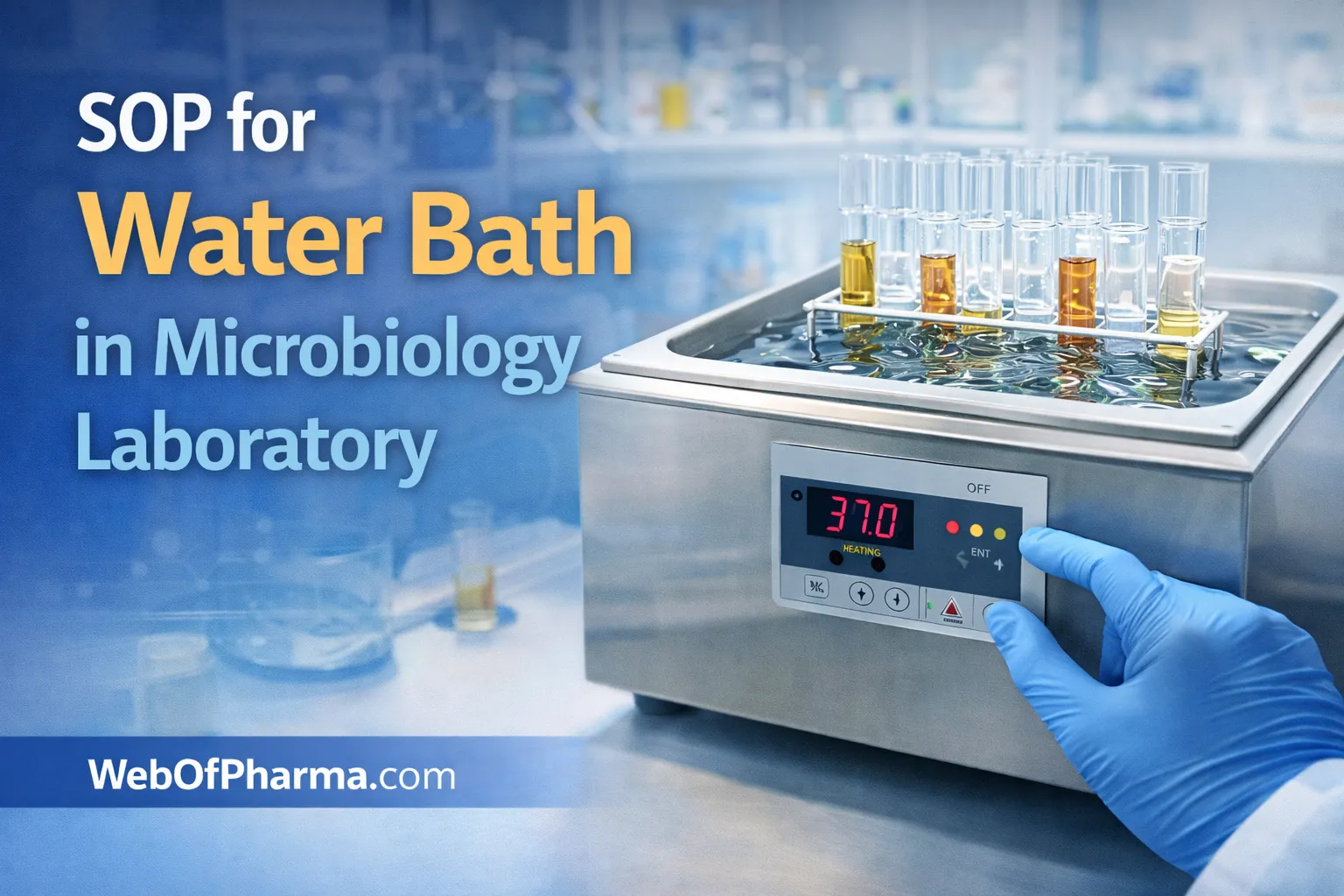

Learn SOP for water bath in microbiology laboratory. Ensure accurate temperature control & safe operation.
In microbiology laboratories, precision is everything. Even a slight temperature variation can impact test results. That’s why following a proper SOP for water bath in microbiology laboratory is essential for ensuring accuracy, safety, and consistency.
This guide provides a clear, step-by-step procedure for operating a water bath effectively in a QC microbiology lab.
1. Objective of the SOP
The main objective is to:
- Ensure proper operation of the water bath
- Maintain accurate temperature control
- Prevent damage to equipment
- Ensure safe laboratory practices
2. Scope
This SOP applies to:
- Water baths used in microbiology laboratories
- QC laboratory testing environments
- All personnel operating the equipment
3. Roles and Responsibilities
3.1 Responsible Personnel
- Technical Assistant: Operates the water bath
- Executive/Manager: Verifies correct operation
3.2 Accountability
- Head of Department: Ensures SOP compliance
4. Step-by-Step Water Bath Operating Procedure
4.1 Pre-Operation Checks
Before starting the water bath:
- Ensure the platform is clean and dry
- Check that the surrounding area is dry
- Confirm sufficient water level (cover heating element)
- Use only purified water
👉 These steps prevent electrical hazards and ensure proper heating.
4.2 Power Connection
- Connect the water bath to power supply
- Switch ON:
- Main power supply
- Instrument mains
👉 A glowing red lamp indicates power ON
4.3 Temperature Setting Procedure
Follow these steps carefully:
- Press SET key → Red LED turns ON
- Lower display shows “SP” (Set Point)
- Upper display shows last stored value
- Adjust temperature using:
- UP key to increase value
- SHIFT key to move digits
- Set all digits one by one
- Press ENTER to save value
- Red LED turns OFF
- Temperature begins to rise gradually
👉 The sensor maintains the set temperature automatically.
4.4 During Operation
- Monitor temperature display regularly
- Do not disturb the temperature sensor (capillary)
- Ensure stable water level
👉 A glowing yellow lamp indicates heater ON
4.5 After Use
- Switch OFF:
- Instrument mains
- Main power supply
- Allow the equipment to cool
- Clean and dry the platform
5. Important Safety Instructions
To ensure safe operation:
- Always keep platform and area dry
- Use only purified water
- Never operate with low water level
- Do not touch heating elements
- Avoid tampering with sensors
6. Common Mistakes to Avoid
- Operating without sufficient water
- Incorrect temperature setting
- Ignoring indicator lights
- Not switching off after use
- Using contaminated or tap water
7. Benefits of Following This SOP
- Accurate microbiological test results
- Increased equipment lifespan
- Improved lab safety
- Compliance with QC standards
- Reduced risk of equipment failure
8. Practical Tips for Better Performance
- Calibrate the water bath regularly
- Record temperature logs
- Clean water bath periodically
- Replace water frequently
- Train staff on proper usage
FAQs
1. What is a water bath used for in microbiology?
It is used to maintain samples at a constant temperature during testing.
2. Why is temperature control important in a water bath?
Accurate temperature ensures reliable microbiological results.
3. What type of water should be used?
Only purified water should be used.
4. What does the red indicator light mean?
It indicates that the power supply is ON.
5. What does the yellow indicator light mean?
It shows that the heater is active.
6. Who is responsible for operating the water bath?
The technical assistant operates it, while supervisors verify.
7. What happens if water level is low?
It can damage the heating element and affect performance.
8. How is temperature set in a water bath?
Using SET, UP, SHIFT, and ENTER keys.
9. Can tap water be used in a water bath?
No, only purified water is recommended.
10. Why should the sensor not be disturbed?
It ensures accurate temperature regulation.