


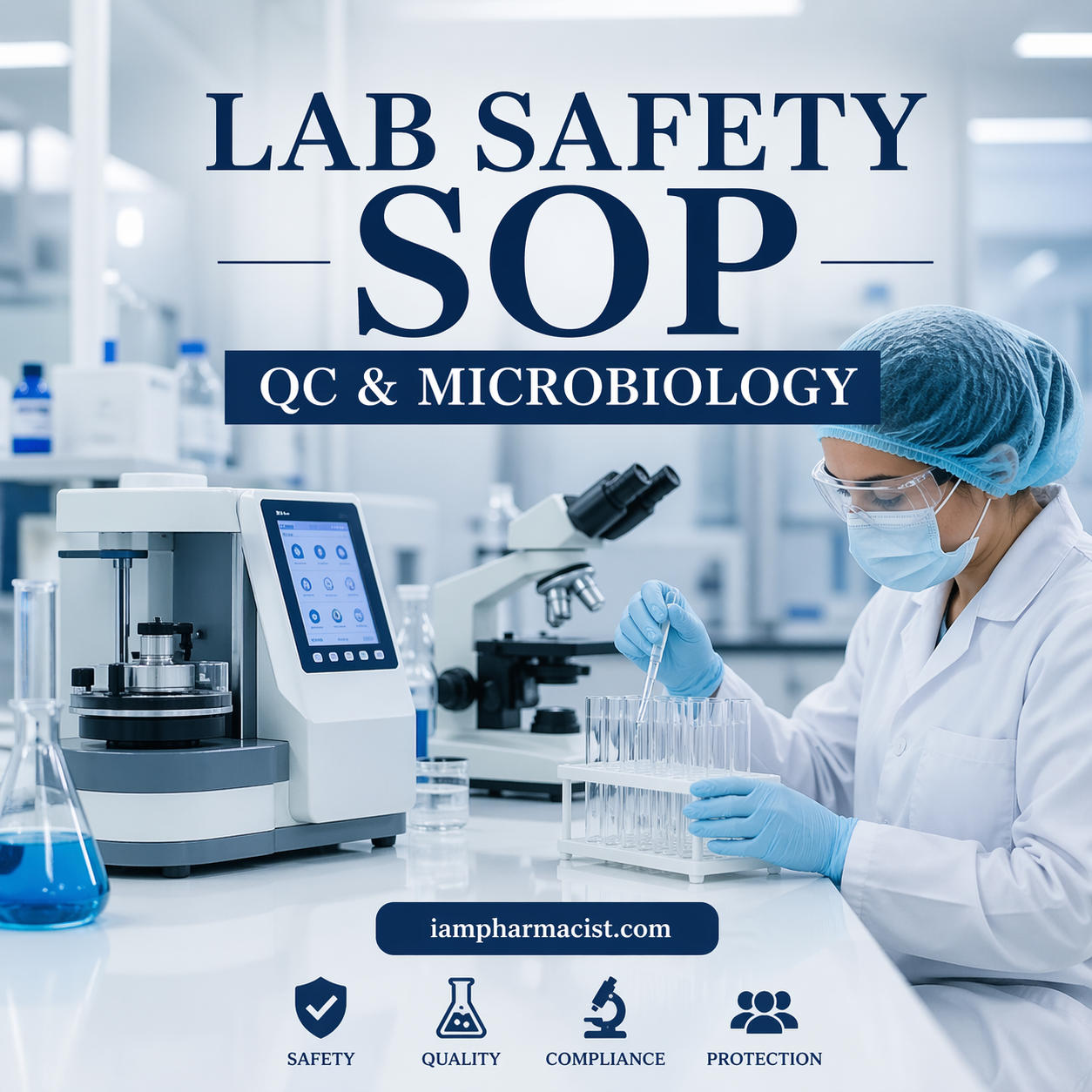

Comprehensive SOP for safety in Quality Control and Microbiology labs, including operation, calibration, cleaning, and compliance best practices.
Definition
Standard Operating Procedure (SOP) for laboratory safety is a documented set of step-by-step instructions designed to ensure safe handling of chemicals, equipment, and biological materials in Quality Control (QC) and Microbiology laboratories, minimizing risks to personnel, environment, and data integrity.
Introduction
Safety in Quality Control (QC) and Microbiology laboratories is non-negotiable. These environments involve hazardous chemicals, sensitive instruments, and potentially harmful microorganisms. A well-defined safety SOP ensures consistent practices, regulatory compliance, and protection of personnel and assets.
This guide provides a fully structured, SEO-optimized SOP covering operation, calibration, and cleaning, aligned with industry expectations and real-world lab workflows.
1.0 OBJECTIVE
To establish standardized safety procedures for personnel working in Quality Control and Microbiology laboratories.
2.0 SCOPE
Applicable to all personnel working in QC chemical and microbiology laboratories.
3.0 RESPONSIBILITY
- Officer / Executive – Quality Control
4.0 ACCOUNTABILITY
- Manager – Quality Control
5.0 PROCEDURE
5.1 Working in Chemical (QC) Laboratory
5.1.1 General Safety Guidelines
- Always wear lab aprons during operations
- Follow instrument-specific SOPs strictly
- Use PPE: gloves, safety glasses, masks when handling hazardous materials
- Ensure proper electrical connections and earthing
- Avoid using damaged glassware
- Handle sharp tools cautiously
5.1.2 Electrical Safety
- Ensure no loose or open connections
- Disconnect power immediately if sparks are observed
- Report issues to QC, EHS, and Engineering Managers
5.1.3 Chemical Handling
- Clean spills immediately
- Dispose of chemical waste as per SOP
- Use safety showers when required
5.2 Working in Microbiology Laboratory
5.2.1 Personal Safety
- Wear prescribed microbiology lab attire
- Maintain strict aseptic conditions
5.2.2 Culture Handling
- Handle cultures carefully
- Sterilize all equipment after use
5.2.3 Waste Management
- Disinfect microbial waste before disposal
- Follow microbial waste SOP
5.2.4 Spill Management
- Clean culture spills immediately using disinfectants
5.2.5 Equipment Safety
- Inspect autoclaves and pressure vessels regularly
- Check for pressure leaks at defined intervals
6.0 SOP Sections for Compliance
6.1 Operation
Step-by-Step Safety Workflow:
- Wear appropriate PPE
- Verify equipment condition
- Follow instrument SOP
- Handle chemicals/cultures safely
- Monitor environmental conditions
- Report deviations immediately
6.2 Calibration
- Calibrate instruments at defined intervals
- Use certified standards
- Maintain calibration logs
- Ensure traceability
- Label calibrated equipment clearly
6.3 Cleaning
- Clean work areas before and after use
- Use approved disinfectants
- Sterilize microbiology tools
- Dispose waste as per SOP
- Maintain cleaning records
Laboratory Safety Checklist
| Category | Key Requirement | Frequency |
|---|---|---|
| PPE Usage | Gloves, apron, goggles | Always |
| Equipment Check | Electrical & operational safety | Daily |
| Calibration | Instrument accuracy verification | Scheduled |
| Cleaning | Surface & equipment sanitation | Daily/After use |
| Waste Disposal | Chemical & microbial SOP compliance | Continuous |
| Emergency Readiness | Safety shower, spill kits | Always available |
Abbreviations
- SOP – Standard Operating Procedure
- QC – Quality Control
FAQs
1. What is a safety SOP in a laboratory?
A safety SOP is a documented procedure ensuring safe lab operations and hazard control.
2. Why is safety SOP important in QC labs?
It prevents accidents, ensures compliance, and maintains data integrity.
3. What PPE is required in QC laboratories?
Gloves, lab coat, safety glasses, and masks depending on risk.
4. How are chemical spills handled?
Immediately cleaned using appropriate absorbents and PPE.
5. What is microbiology lab safety?
It involves aseptic handling, sterilization, and contamination control.
6. How often should lab equipment be calibrated?
As per predefined schedules and regulatory requirements.
7. What is the role of autoclave in microbiology labs?
It sterilizes equipment and waste using high-pressure steam.
8. How is microbial waste disposed?
After proper disinfection following SOP guidelines.
9. Who is responsible for lab safety?
QC officers are responsible; QC managers are accountable.
10. What are common lab safety risks?
Chemical exposure, biological hazards, electrical faults, and contamination.
{ “@context”: “https://schema.org”, “@type”: “Article”, “headline”: “Safety SOP for QC & Microbiology Laboratories”, “description”: “Comprehensive SOP for laboratory safety in QC and microbiology labs.”, “author”: { “@type”: “Person”, “name”: “Senior SEO Content Strategist” }, “publisher”: { “@type”: “Organization”, “name”: “Your Company Name” } } { “@context”: “https://schema.org”, “@type”: “FAQPage”, “mainEntity”: [ { “@type”: “Question”, “name”: “What is a safety SOP in a laboratory?”, “acceptedAnswer”: { “@type”: “Answer”, “text”: “A safety SOP is a documented procedure ensuring safe lab operations.” } } ] } { “@context”: “https://schema.org”, “@type”: “HowTo”, “name”: “How to Follow Laboratory Safety SOP”, “step”: [ {“@type”: “HowToStep”,”text”: “Wear PPE”}, {“@type”: “HowToStep”,”text”: “Check equipment”}, {“@type”: “HowToStep”,”text”: “Follow SOP”}, {“@type”: “HowToStep”,”text”: “Handle materials safely”}, {“@type”: “HowToStep”,”text”: “Clean and dispose waste”} ] }