



Learn a complete SOP for preparation and standardization of volumetric solutions with step-by-step procedures, calibration, cleaning, and QA guidelines.
Introduction
Accuracy in analytical chemistry begins with properly prepared and standardized volumetric solutions. Even a minor deviation in concentration can compromise results, regulatory compliance, and product quality. This SOP for volumetric solutions provides a structured, repeatable, and audit-ready process for preparation, standardization, labeling, calibration, and maintenance—ensuring precision and reliability in every analysis.
Definition
A volumetric solution is a solution of accurately known concentration prepared using analytical-grade chemicals and standardized against a primary standard to ensure precise quantitative chemical analysis.
Semantic Content Layer
The SOP for volumetric solutions integrates laboratory best practices, analytical chemistry standards, and quality assurance protocols to ensure consistent preparation, accurate standardization, and reliable storage of titration solutions. It emphasizes the use of analytical reagent (AR) grade chemicals, calibrated volumetric glassware, periodic re-standardization, and proper documentation. This process supports compliance with GMP, ISO, and GLP guidelines while minimizing variability in volumetric analysis procedures.
1. OBJECTIVE
To establish a standardized procedure for preparation, identification, standardization, and documentation of volumetric solutions used in analytical testing.
2. SCOPE
Applicable to all volumetric solutions used during laboratory analysis, including titration and quantitative chemical testing.
3. RESPONSIBILITY
- Execution: Technical Assistant / Executive
- Verification: Executive / Manager
4. ACCOUNTABILITY
Head of the Department (HOD)
5. PROCEDURE
5.1 Selection of Chemicals
- Use chemicals with minimum 2 years shelf life from opening date
- Only A.R./Merck certified analytical grade chemicals allowed
5.2 Preparation of Volumetric Solutions
- Refer to authorized method file
- Select appropriate analytical-grade chemicalshttps://iampharmacist.com/hazardous-chemical-handling-in-laboratories/
- Weigh accurately using calibrated balance
- Dissolve in suitable solvent
- Transfer to volumetric flask
- Make up to mark with solvent
- Mix thoroughly to ensure homogeneity
5.3 Standardization of Solutions
- Perform duplicate standardization
- Follow validated method
- Record results and verify compliance
5.4 Storage Guidelines
- Store in clean, dry, labeled bottles
- Maintain proper storage conditions
- Avoid contamination and exposure
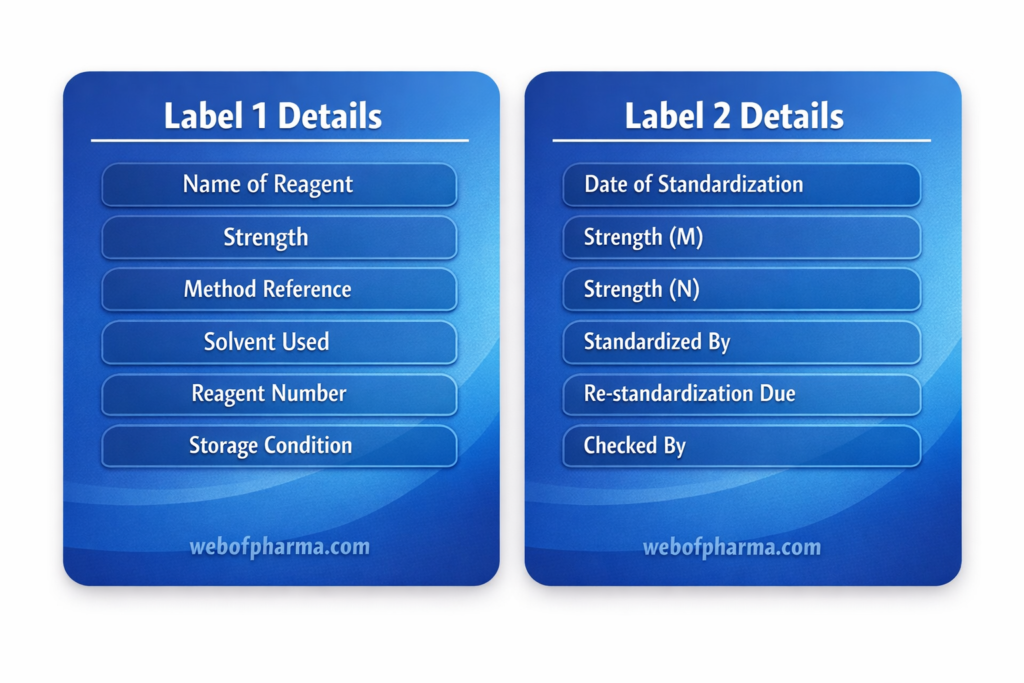
5.5 Labeling Requirements
5.6 Re-Standardization Schedule
- Every 30 days (general solutions)
- Every 15 days (Perchloric acid, Sodium thiosulphate)
- At time of use (Iodine solutions)
5.7 Periodic Maintenance
- Maintain records in authorized file
- Ensure proper documentation and signatures
5.8 Fresh Preparation Policy
- Prepare fresh solutions every 3 months
- Discard old solutions safely
- Re-standardize new solutions
5.9 Acceptance Criteria
- Difference between duplicate results ≤ 0.5%
- Deviation from prescribed strength ≤ 10%
6. CALIBRATION OF VOLUMETRIC GLASSWARE
- Calibrate burettes, pipettes, and flasks periodically
- Use certified calibration standards
- Maintain calibration records
- Ensure traceability to national/international standards
7. CLEANING PROCEDURE
- Wash with distilled water after use
- Use mild detergent if required
- Rinse with purified water
- Dry in dust-free environment
- Avoid contamination before use
8. ABBREVIATIONS
- SOP – Standard Operating Procedure
- AR – Analytical Grade
FAQs
1. What is an SOP for volumetric solutions?
A documented procedure for preparation, standardization, and handling of solutions used in quantitative analysis.
2. Why use analytical grade chemicals?
They ensure purity and accuracy in solution concentration.
3. How often should solutions be standardized?
Typically every 30 days, unless specified otherwise.
4. What is the acceptable deviation in strength?
Not more than 10% from prescribed value.
5. Why is duplicate standardization required?
To confirm accuracy and reproducibility.
6. How long can volumetric solutions be stored?
Maximum 3 months unless re-standardized.
7. What is re-standardization?
Periodic verification of solution strength.
8. Why proper labeling is important?
Ensures traceability and prevents misuse.
9. What happens if deviation exceeds limits?
Solution must be rejected and re-prepared.
10. Which solutions need frequent standardization?
Perchloric acid, sodium thiosulphate, and iodine.
{ “@context”: “https://schema.org”, “@type”: “Article”, “headline”: “Standard Operating Procedure for Volumetric Solutions”, “description”: “Complete SOP for preparation and standardization of volumetric solutions including calibration and cleaning procedures.”, “author”: { “@type”: “Person”, “name”: “Senior SEO Content Strategist” }, “publisher”: { “@type”: “Organization”, “name”: “Lab SOP Insights” }, “mainEntityOfPage”: { “@type”: “WebPage”, “@id”: “/sop-volumetric-solutions-preparation-standardization” }, “datePublished”: “2026-04-18”, “mainEntity”: [ { “@type”: “FAQPage”, “name”: “Volumetric Solutions FAQs” }, { “@type”: “HowTo”, “name”: “Preparation of Volumetric Solutions”, “step”: [ “Select analytical grade chemicals”, “Weigh accurately”, “Dissolve in solvent”, “Make up volume”, “Standardize solution”, “Label and store properly” ] } ] }