


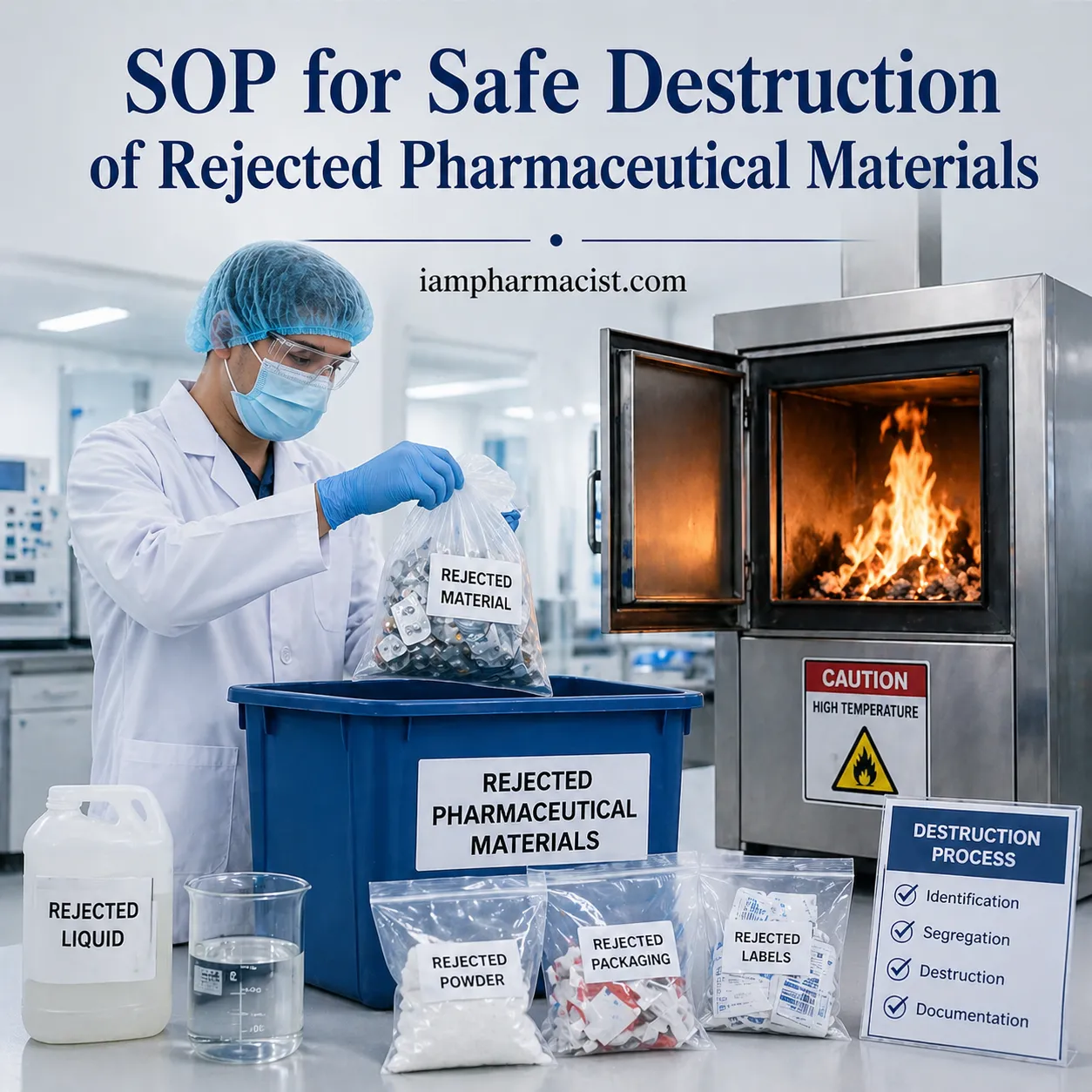

Learn SOP for safe destruction of rejected pharmaceutical materials, including liquids, solids, and packaging with compliance and documentation.
Definition
A Standard Operating Procedure (SOP) for destruction of rejected materials in pharmaceuticals defines the controlled process for safely disposing of materials that fail specifications, ensuring compliance with GMP, environmental safety, and documentation requirements.
| Material Type | Destruction Method | Key Precaution |
|---|---|---|
| Liquids | Dilution + drainage | Avoid contamination |
| Glass | Break and scrap | Use PPE |
| Powders | Slurry + drain | Prevent dust exposure |
| Labels/Cartons | Tearing + burning | Prevent misuse |
Introduction
In pharmaceutical manufacturing, materials that fail to meet specifications must be handled with strict control to prevent misuse, contamination, or regulatory non-compliance. A well-defined SOP ensures that rejected materials are destroyed safely, systematically, and with full traceability. https://iampharmacist.com/deviation-management-in-pharmaceuticals/
This guide outlines a comprehensive SOP for destruction of rejected pharmaceutical materials, aligned with GMP practices and quality standards.
1.0 Objective
To establish a procedure for the safe and documented destruction of rejected materials.
2.0 Scope
Applicable to:
- Quality Control (QC)
- Quality Assurance (QA)
- Stores Department
3.0 Responsibility
- QA Officer
4.0 Accountability
- Senior Manager – Quality Assurance
5.0 Procedure
5.1 Records
Maintain detailed records including:
- Date of destruction
- Name of material
- Quantity destroyed
- Method of destruction
Approval Signatures Required:
- Quality Control
- Production Head
- Security In-Charge
5.2 Precautions
- Use proper Personal Protective Equipment (PPE)
- Ensure safety during:
- Glass breakage
- Burning of materials
- Follow environmental and safety guidelines
5.3 Destruction of Liquids
- Dilute rejected liquids with suitable water quantity
- Dispose into the drainage system as per guidelines
5.4 Destruction of Solids
Glass Materials
- Break safely
- Dispose as scrap
Overprinted Packing Materials
- Destroy by tearing
Powders
- Convert into slurry using water
- Dispose into drainage system
Other Printed Materials
- Tear and burn completely
5.5 Destruction of Labels & Packaging Materials
Inspection
- Check labels and cartons for:
- Smudged printing
- Illegible text
- Gumming defects
Collection
- Count rejected and excess materials
- Store in sealed rejection drums
Destruction
- Tear and burn in scrap yard
- Must be performed in presence of:
- Department In-Charge
- QA Representative
Documentation
- Record in:
- Destruction Record Book
- Batch Manufacturing Record (BMR)
SOP Operational Sections
Operation
- Identify and segregate rejected materials
- Follow defined destruction methods
- Ensure supervision during destruction
- Maintain traceability
Calibration
- Ensure weighing balances (if used) are calibrated
- Maintain calibration logs for accuracy in quantity recording
Cleaning
- Clean destruction area after activity
- Prevent cross-contamination
- Maintain hygiene and safety
Step-by-Step Process
- Identify rejected material
- Segregate based on type (liquid/solid/packaging)
- Record details in destruction log
- Apply appropriate destruction method
- Ensure supervision by authorized personnel
- Dispose safely following environmental norms
- Document and obtain signatures
Abbreviations
- SOP: Standard Operating Procedure
- QA: Quality Assurance
- QC: Quality Control
FAQs
1. What is rejected material in pharmaceuticals?
Material that fails to meet quality specifications.
2. Why must rejected materials be destroyed?
To prevent misuse and ensure compliance.
3. How are liquid rejects disposed?
By dilution and drainage under controlled conditions.
4. How are powders destroyed?
By converting into slurry and draining.
5. What happens to rejected labels?
They are torn and burned to prevent reuse.
6. Who approves destruction?
QC, Production Head, and Security.
7. What records are required?
Date, material, quantity, method, and signatures.
8. Why is documentation important?
For traceability and audit compliance.
9. What precautions are needed?
Use PPE and follow safety protocols.
10. What is GMP in waste disposal?
Good Manufacturing Practices ensuring safe handling.
{ “@context”: “https://schema.org”, “@type”: “Article”, “headline”: “SOP for Destruction of Rejected Materials in Pharma”, “description”: “Complete SOP for safe destruction of rejected pharmaceutical materials.”, “author”: { “@type”: “Organization”, “name”: “iampharmacist.com” } } { “@context”: “https://schema.org”, “@type”: “FAQPage”, “mainEntity”: [ { “@type”: “Question”, “name”: “Why destroy rejected materials?”, “acceptedAnswer”: { “@type”: “Answer”, “text”: “To prevent misuse and ensure compliance.” } } ] } { “@context”: “https://schema.org”, “@type”: “HowTo”, “name”: “Destruction of Rejected Materials”, “step”: [ {“@type”: “HowToStep”,”text”: “Identify rejected materials”}, {“@type”: “HowToStep”,”text”: “Segregate materials”}, {“@type”: “HowToStep”,”text”: “Destroy using proper method”}, {“@type”: “HowToStep”,”text”: “Record details”} ] }