


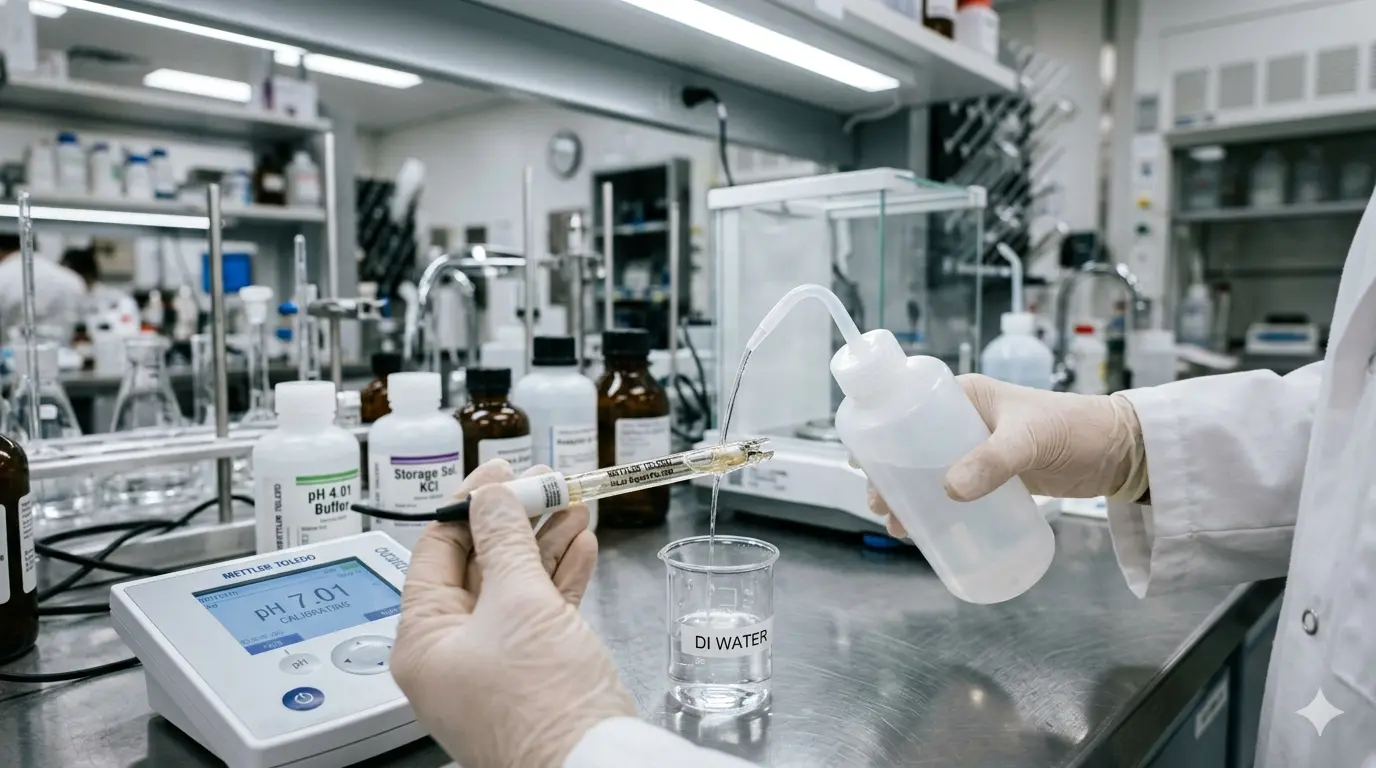

Learn why pH meter electrodes are very sensitive and required a lot of care, some of the tips to care the pH electrodes include proper calibration, storage in KCl solution, gentle cleaning, and regular maintenance to ensure reliable and accurate pH measurements in laboratories.
In pharmaceutical, chemical, and quality control laboratories, pH measurement plays a critical role in ensuring product quality and regulatory compliance. However, many analysts overlook a key fact: pH meter electrodes are very sensitive and required a lot of care, some of the tips to care the pH electrodes properly can significantly improve accuracy, reliability, and instrument lifespan.
A pH meter electrode measures the degree of acidity or alkalinity by comparing aqueous solutions using reference half-cells built inside the electrode. These half-cells are typically coated with silver chloride (AgCl) and operate in conjunction with potassium chloride (KCl) solutions to generate a measurable electrical potential difference.
Proper care and maintenance of pH electrodes are essential to maintain calibration stability, measurement precision, and compliance with Good Laboratory Practices (GLP) and Good Manufacturing Practices (GMP).
Understanding How pH Meter Electrodes Work
A pH meter electrode functions by developing a potential difference between two solutions with different hydrogen ion concentrations. Inside the electrode, a reference half-cell containing silver chloride (AgCl) interacts with an external solution containing potassium chloride (KCl).
This interaction creates a concentration gradient, resulting in a measurable voltage signal in millivolts (mV), which is then converted into a pH value.
Modern pH electrodes often include built-in temperature sensors because temperature changes can significantly affect pH readings. Automatic temperature compensation ensures accurate calibration and measurement across varying laboratory conditions.
Why Proper Care of pH Meter Electrodes is Critical
Since pH electrodes are delicate instruments, improper handling or storage can lead to inaccurate readings, frequent recalibration, or complete electrode failure. Regular maintenance ensures:
- Accurate and reliable pH measurements
- Longer electrode lifespan
- Reduced laboratory errors
- Compliance with GMP and GLP requirements
- Improved efficiency in routine analysis
Remember: pH meter electrodes are very sensitive and required a lot of care, some of the tips to care the pH electrodes properly can prevent costly errors and unnecessary instrument replacement.
Best Practices for pH Meter Electrode Care
1. Regular Calibration Using Standard Buffers
Calibration is essential to maintain measurement accuracy. pH calibration buffers such as potassium chloride (KCl) are standardized solutions with fixed pH values and high precision.
Recommended Calibration Practices:
- Calibrate the electrode daily before use
- Use at least two buffer solutions (e.g., pH 4, 7, and 10)
- Replace expired buffer solutions
- Record calibration results in laboratory logs
2. Proper Storage in Potassium Chloride (KCl) Solution
pH electrodes should always be stored in a suitable storage solution to keep the glass membrane hydrated.
Storage Guidelines:
- Use 4 M KCl solution for electrode storage
- Ensure the glass bulb is fully immersed
- Never store the electrode dry
- Avoid storing in distilled water
It is normal to observe KCl crystals forming on the electrode during storage. These crystals do not affect performance and can be removed by rinsing with distilled water before use.
3. Gentle Cleaning of the Electrode
Cleaning removes contaminants that can interfere with accurate readings.
Cleaning Tips:
- Rinse the electrode with distilled water after each use
- Blot dry gently using lint-free tissue
- Avoid rubbing the glass membrane
- Use appropriate cleaning solutions for stubborn residues
4. Avoid Prolonged Exposure to Distilled Water
While rinsing with distilled water is necessary, prolonged exposure can damage the glass membrane and reduce electrode sensitivity.
Correct Practice:
- Rinse quickly
- Do not soak the electrode in distilled water
- Return the electrode to KCl storage solution immediately
5. Inspect the Diaphragm and Reference System
The diaphragm acts as a protective barrier between the internal reference solution and the external environment. If the diaphragm becomes blocked or damaged, measurement accuracy will decline.
Signs of Diaphragm Problems:
- Slow response time
- Drifting readings
- Frequent recalibration requirements
- Inconsistent pH values
Regular inspection helps detect issues early and prevents measurement errors.
Common Factors That Affect pH Electrode Performance
Several operational and environmental factors can impact the effectiveness of pH electrodes, including:
- Temperature fluctuations
- Contamination of the glass bulb
- Improper storage conditions
- Blocked diaphragm
- Incorrect calibration procedures
- Mechanical damage to the electrode
- Expired buffer solutions
Understanding these factors helps laboratory personnel maintain reliable analytical results.
Troubleshooting Common pH Electrode Problems
Problem: Unstable pH Readings
Possible Causes:
- Dirty electrode
- Air bubbles in the bulb
- Incorrect calibration
Solution:
- Clean and recalibrate the electrode
- Check storage solution
- Ensure proper immersion depth
Problem: Slow Response Time
Possible Causes:
- Clogged diaphragm
- Dehydrated electrode
Solution:
- Soak the electrode in KCl solution
- Clean the diaphragm
- Replace the electrode if necessary
Benefits of Proper pH Electrode Maintenance
Implementing good electrode care practices provides several advantages:
- Improved measurement accuracy
- Reduced laboratory errors
- Extended electrode lifespan
- Lower maintenance costs
- Reliable quality control results
- Compliance with regulatory standards
- Increased laboratory efficiency
Consistent maintenance ensures dependable analytical performance in pharmaceutical and quality control laboratories.
Conclusion
Accurate pH measurement is essential in pharmaceutical, chemical, and research laboratories. Since pH meter electrodes are very sensitive and required a lot of care, some of the tips to care the pH electrodes include proper calibration, correct storage in KCl solution, gentle cleaning, and regular inspection of the diaphragm.
By following these best practices, laboratories can ensure reliable results, maintain regulatory compliance, and extend the service life of their pH measurement equipment.
Frequently Asked Questions (FAQs)
1. Why are pH meter electrodes considered sensitive instruments?
Because they contain delicate glass membranes and reference systems that can be easily damaged by improper handling or storage.
2. How often should a pH electrode be calibrated?
Typically, calibration should be performed daily before use or whenever measurement accuracy is critical.
3. Can a pH electrode be stored in distilled water?
No. Distilled water can damage the glass membrane. Always store the electrode in KCl solution.
4. What is the purpose of potassium chloride (KCl) in pH electrode storage?
KCl maintains the hydration of the glass membrane and ensures stable reference potential.
5. Is it normal to see crystals on the pH electrode?
Yes. KCl crystals may form during storage and can be safely removed by rinsing with distilled water.
6. What happens if the diaphragm becomes blocked?
A blocked diaphragm can cause slow response time, unstable readings, and inaccurate measurements.
7. How long does a pH electrode typically last?
With proper care, a pH electrode usually lasts between 1 to 2 years.
8. Why does temperature affect pH measurement?
Temperature changes the chemical activity of hydrogen ions, which can alter pH readings.
9. What should be done if the pH reading is drifting?
Clean the electrode, recalibrate the instrument, and check the storage solution.
10. What is the most important tip for maintaining pH electrode accuracy?
Regular calibration and proper storage in KCl solution are the most critical practices.