


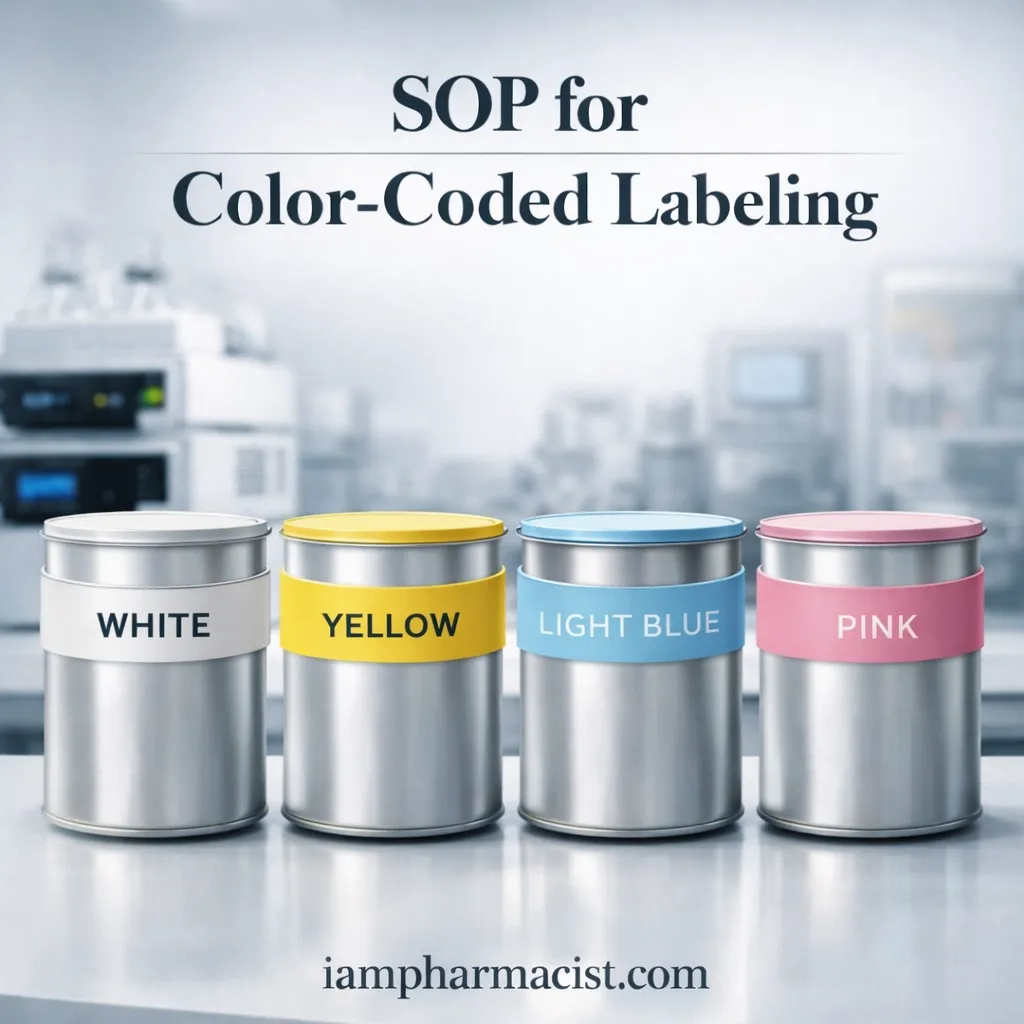

Learn SOP for labeling materials and products using color codes in production areas. Ensure traceability, compliance, and error-free operations.
Introduction
In pharmaceutical manufacturing, labeling is not just identification—it is a critical control mechanism ensuring traceability, compliance, and prevention of mix-ups. A well-defined SOP for labeling materials and products helps maintain Good Manufacturing Practices (GMP), reduces human error, and ensures product integrity throughout the production lifecycle.
This guide provides a detailed, practical SOP for implementing color-coded labeling systems in production areas.
📌 Definition
Material and product labeling in production is a controlled process of identifying containers, equipment, and products using standardized color-coded labels to ensure traceability, prevent mix-ups, and comply with GMP requirements.
📊 Label Color Coding
📋 Step-by-Step Labeling Process
- Affix “Under Process” label at each production stage
- Select label color based on product strength hierarchy
- Ensure label visibility on container body (not lid)
- Insert one label inside container (between poly bags)
- Attach one label externally on container
- Remove previous labels before applying new ones
- Deface/remove labels after container is emptied
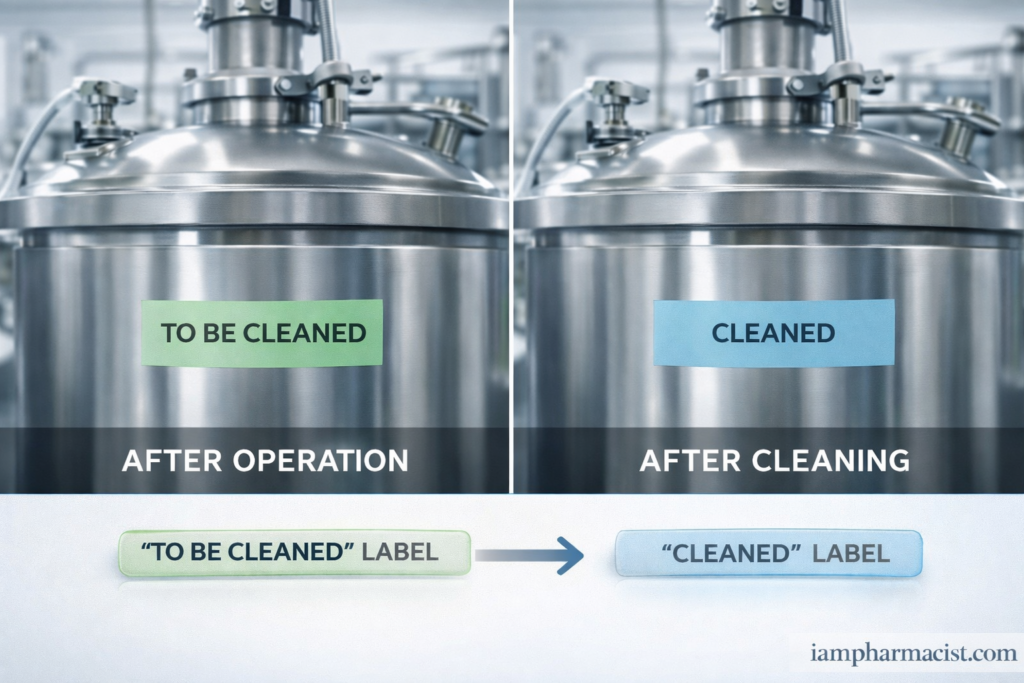
- Apply “To Be Cleaned” label after operation
- Replace with “Cleaned” label post-cleaning
- Re-clean equipment if unused for 72 hours
1.0 OBJECTIVE
To establish a standardized procedure for labeling materials and products in the production department.
2.0 SCOPE
Applicable to all materials and products in the production area to ensure proper identification and correct usage.
3.0 RESPONSIBILITY
- Execution: Operator
- Checking: Production Pharmacist & above
4.0 ACCOUNTABILITY
- Head of Department (Production) / Assigned Designee
5.0 PROCEDURE
5.1 Under Process Labeling
- Every container must have an “Under Process” label at each stage.
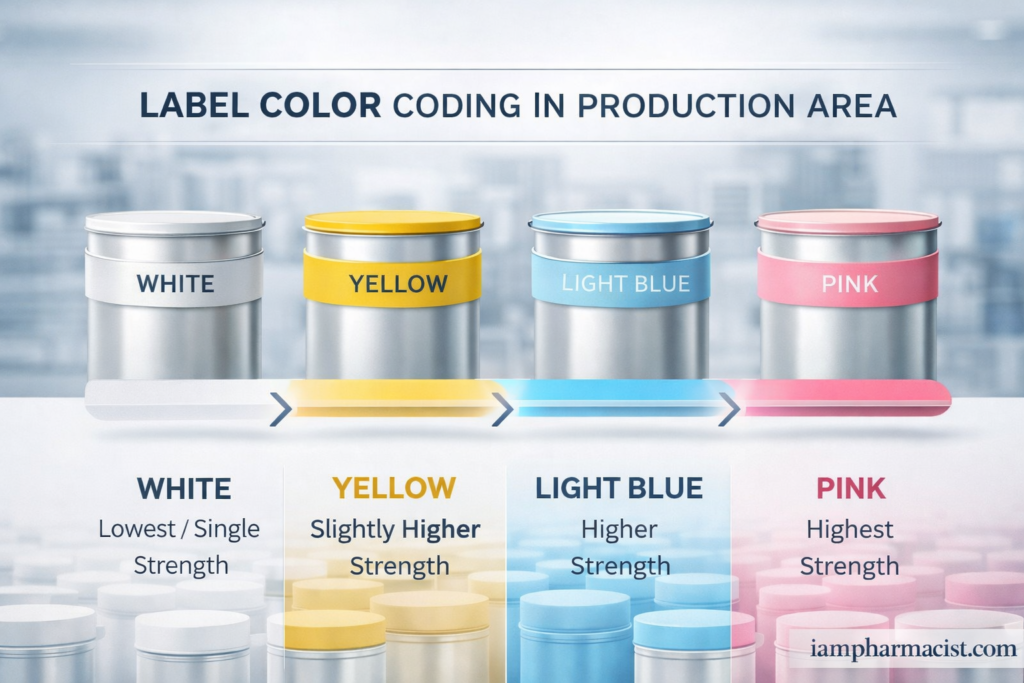
- Labels are differentiated by color and strength.
5.1.1 Color Coding System
- White Label:
- Single strength OR lowest strength in product range
- Yellow Label:
- Slightly higher strength than white
- Light Blue Label:
- Higher strength than yellow
- Pink Label:
- Highest strength in product range
5.1.2 Special Case: Red Area
- Dedicated production areas (same punch size & color) require modified labeling criteria.
- Objective: Prevent product mix-up
- Use white labels unless product range demands otherwise.
5.2 Equipment Status Labeling
5.3 Cleaning Validity
- Cleaning validity: 72 hours
- If unused beyond 72 hours:
- Re-clean before use
- Record in Equipment Log Book
5.4 Label Control Practices
- Remove previous labels before applying new ones
- Labels must be:
- Clearly visible
- Affixed on container body (not lid)
5.5 Container Labeling Requirements
- One label inside container (between poly bags)
- One label outside container
5.6 Label Removal
- Labels must be:
- Removed or defaced after container is emptied
6.0 ABBREVIATIONS
- SOP: Standard Operating Procedure
Calibration
- Ensure label printers are calibrated for:
- Color accuracy
- Print clarity
- Verify label format periodically
- Maintain calibration records
Cleaning
- Ensure:
- No old labels remain on containers
- Adhesive residues are removed
- Cleaning must be documented
FAQs
1. What is labeling in pharmaceutical production?
Labeling is the process of identifying materials, products, and equipment using standardized labels.
2. Why is color coding used in labeling?
To differentiate product strengths and prevent mix-ups.
3. What does a white label indicate?
Lowest strength or single-strength product.
4. How long is cleaning validity?
72 hours.
5. Where should labels be affixed?
On the container body, not the lid.
6. Why insert a label inside the container?
For internal identification and traceability.
7. What happens after 72 hours of cleaning?
Equipment must be re-cleaned before use.
8. Who is responsible for labeling?
Operators execute; pharmacists verify.
9. What is an “Under Process” label?
Indicates the product is currently being processed.
10. What is the risk of improper labeling?
Product mix-ups, regulatory non-compliance, and recalls.
{ “@context”: “https://schema.org”, “@type”: “Article”, “headline”: “Material & Product Labeling SOP in Production Area”, “description”: “SOP for labeling materials and products using color coding in pharmaceutical production.”, “author”: { “@type”: “Person”, “name”: “Pharma Technical Expert” }, “publisher”: { “@type”: “Organization”, “name”: “iampharmacist.com” } }