


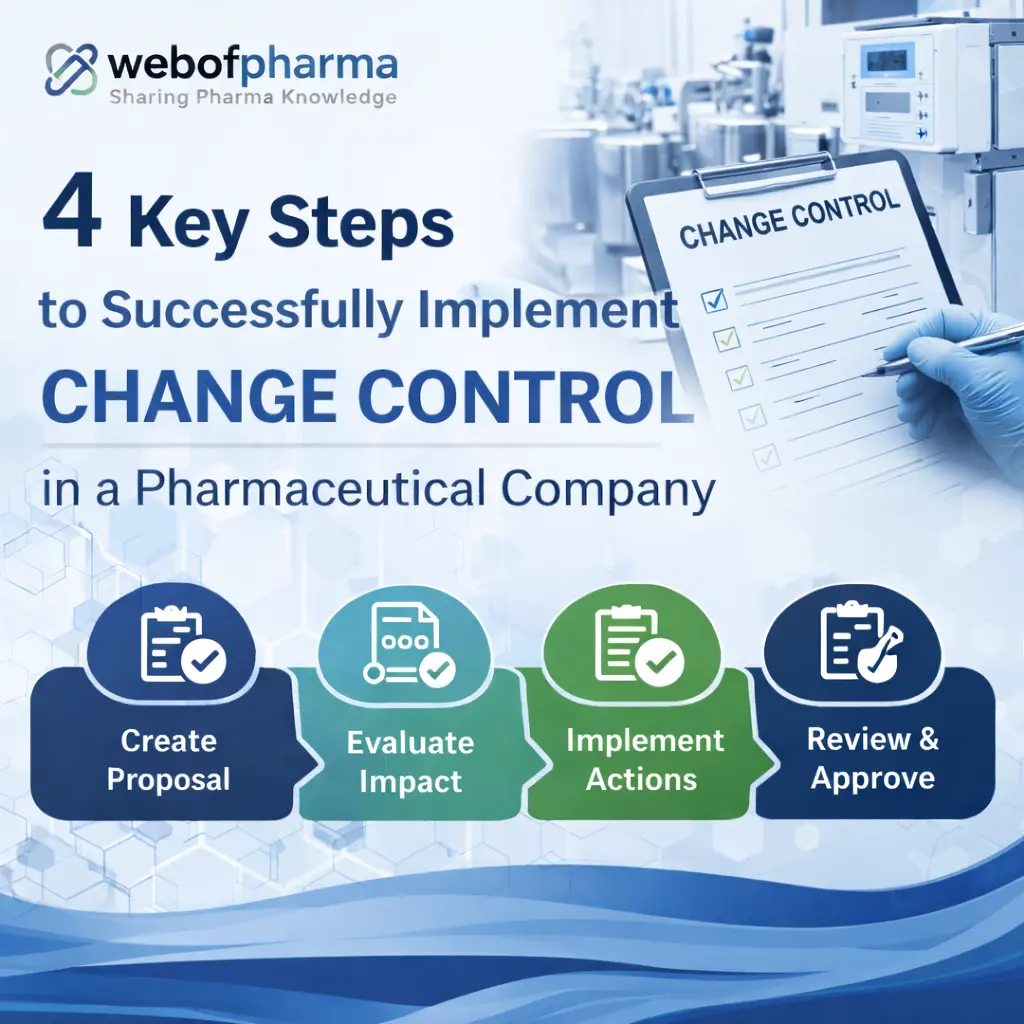

Learn the number of steps that must be taken in order to successfully implement change in a pharmaceutical company. This practical guide explains change control planning, implementation, risk management, and monitoring as per GMP requirements.
Introduction to Change Control in the Pharmaceutical Industry
The pharmaceutical industry has a direct impact on human health and patient safety. Because medicines affect lives, any change in manufacturing, testing, equipment, or procedures must be carefully controlled. At the same time, pharmaceutical companies operate as businesses where processes evolve, technologies improve, and regulatory requirements change.
Human errors or uncontrolled process changes can lead to serious consequences, including product quality failures, regulatory observations, or patient safety risks. That is why a robust change control system is essential.
Understanding the number of steps that must be taken in order to successfully implement change in a pharmaceutical company helps organizations manage change effectively, maintain compliance with Good Manufacturing Practices (GMP), and ensure continuous improvement.
What is Change Control in Pharmaceuticals?
Change control is a formal system used to evaluate, approve, implement, and monitor changes that may affect product quality, safety, or regulatory compliance.
Examples of Changes Requiring Change Control
- Equipment modification or replacement
- Process parameter changes
- Raw material changes
- Method changes
- Facility upgrades
- Software updates
- Packaging material changes
- Supplier changes
A structured change control system ensures that all changes are properly assessed, documented, and implemented without negatively affecting product quality.
Why Change Control is Important in Pharmaceutical Companies
A well-managed change control system protects both patients and the organization.
Key Benefits
- Ensures product quality and safety
- Maintains regulatory compliance
- Reduces operational risks
- Prevents process failures
- Improves efficiency
- Supports continuous improvement
- Enhances documentation and traceability
Regulatory agencies expect companies to demonstrate control over all process changes.
Number of Steps That Must Be Taken in Order to Successfully Implement Change in a Pharmaceutical Company
Although change control systems may vary between organizations, the process generally follows four essential steps.
Step 1: Understand and Define the Problem
The first and most critical step in change control is identifying and understanding the problem or improvement opportunity.
Key Activities
- Review historical data
- Identify root causes
- Define the change requirement
- Assess potential impact
- Determine scope of change
After identifying the problem, a structured plan must be developed to address it effectively.
Example
A deviation shows repeated equipment downtime due to outdated components. A change request may be initiated to upgrade the equipment.
Step 2: Create a Change Management Plan
Developing a clear change management plan is essential for successful implementation.
The plan outlines the number of steps that must be taken in order to successfully implement change in a pharmaceutical company and ensures that changes are performed safely and systematically.
Key Elements of a Change Management Plan
- Description of the proposed change
- Risk assessment
- Implementation strategy
- Resource requirements
- Training requirements
- Timeline and milestones
- Responsibilities and accountability
- Communication plan
- Contingency plan
How to Create a Proposal for Effective Change Control
An effective change control proposal helps management evaluate and approve the change.
Best Practices
1. Clearly Define the Change
Explain:
- What needs to change
- Why the change is required
- Expected outcomes
2. Identify Risks and Potential Problems
Risk assessment helps prevent unexpected failures.
Examples of Risks
- Process disruption
- Equipment failure
- Product quality impact
- Regulatory non-compliance
3. Develop a Timeline
A timeline ensures that implementation activities are completed within defined deadlines.
Timeline Should Include
- Start date
- Implementation stages
- Validation activities
- Completion date
4. Monitor Implementation Activities
Regular monitoring ensures the change is progressing according to plan.
5. Evaluate Cost vs Benefit
This step determines whether the change is financially and operationally beneficial.
How to Write an Effective Change Control Justification
A strong justification helps management and stakeholders understand the importance of the change.
Important Questions to Address
- What risks are associated with the change?
- What benefits will the change provide?
- How will the change be implemented?
- What happens if the change is not implemented?
- Who will be responsible for implementation?
- What is the completion deadline?
- How will progress be monitored?
- What corrective actions will be taken if problems occur?
Answering these questions ensures transparency and accountability.
Step 3: Implement the Change
Implementation is the stage where approved changes are executed according to the action plan.
This step is critical in ensuring that the number of steps that must be taken in order to successfully implement change in a pharmaceutical company are followed in a controlled and documented manner.
Key Activities During Implementation
A. Create an Action Plan
The action plan defines the specific tasks required to implement the change.
Action Plan Includes
- Implementation steps
- Timeline
- Responsibilities
- Decision points
- Required approvals
B. Communicate the Change
Communication ensures that all stakeholders understand the change and their responsibilities.
Stakeholders May Include
- Employees
- Management
- Quality Assurance
- Suppliers
- Regulatory teams
C. Train Employees
Training ensures personnel can safely operate under the new system or process.
Training Topics
- New procedures
- Equipment operation
- Safety requirements
- Documentation practices
D. Manage Resistance to Change
Employee resistance is common during change implementation.
Strategies to Manage Resistance
- Provide clear communication
- Offer training and support
- Encourage feedback
- Address concerns promptly
E. Celebrate Success
Recognizing successful implementation encourages teamwork and reinforces the importance of continuous improvement.
Step 4: Monitor and Evaluate the Success of Change
Monitoring and evaluation ensure that the change achieved its intended objectives without negative effects.
Key Monitoring Activities
- Track process performance
- Measure quality indicators
- Review deviation trends
- Assess employee feedback
- Verify regulatory compliance
If problems occur, corrective actions must be implemented immediately.
Common Challenges in Change Control Implementation
Typical Issues
- Poor planning
- Inadequate risk assessment
- Lack of communication
- Insufficient training
- Resistance to change
- Weak documentation
Recognizing these challenges helps organizations strengthen their change control systems.
Best Practices for Effective Change Control in Pharmaceuticals
Recommended Practices
- Follow GMP guidelines
- Conduct risk assessments
- Maintain proper documentation
- Provide employee training
- Monitor change effectiveness
- Perform periodic reviews
- Use standardized procedures
These practices ensure consistent and compliant change management.
Conclusion
Change control is a critical component of pharmaceutical quality systems. Understanding the number of steps that must be taken in order to successfully implement change in a pharmaceutical company helps organizations manage change safely, maintain regulatory compliance, and improve operational efficiency.
By following structured planning, implementation, and monitoring processes, pharmaceutical companies can minimize risks and ensure consistent product quality.
Frequently Asked Questions (FAQs)
1. What is change control in the pharmaceutical industry?
Change control is a formal system used to evaluate, approve, implement, and monitor changes that may affect product quality, safety, or compliance.
2. Why is change control important in pharmaceutical companies?
It ensures product quality, regulatory compliance, patient safety, and process reliability.
3. What are the main steps in change control?
The main steps include:
- Understand the problem
- Create a change management plan
- Implement the change
- Monitor and evaluate success
4. What types of changes require change control?
Changes involving equipment, processes, materials, methods, facilities, software, or suppliers require change control.
5. Who is responsible for change control in pharmaceutical companies?
Quality Assurance (QA), Production, Engineering, and Management teams share responsibility for change control.
6. What is a change control plan?
A change control plan is a document outlining how a proposed change will be implemented, monitored, and evaluated.
7. How is risk assessed in change control?
Risk is assessed by evaluating the potential impact of the change on product quality, safety, and compliance.
8. What is the role of training in change control?
Training ensures employees understand and correctly implement new procedures or systems.
9. What happens if change control is not properly implemented?
Poor implementation can lead to product defects, regulatory issues, operational failures, and patient safety risks.
10. How is the success of change control measured?
Success is measured through performance monitoring, deviation trends, quality indicators, and compliance audits.