


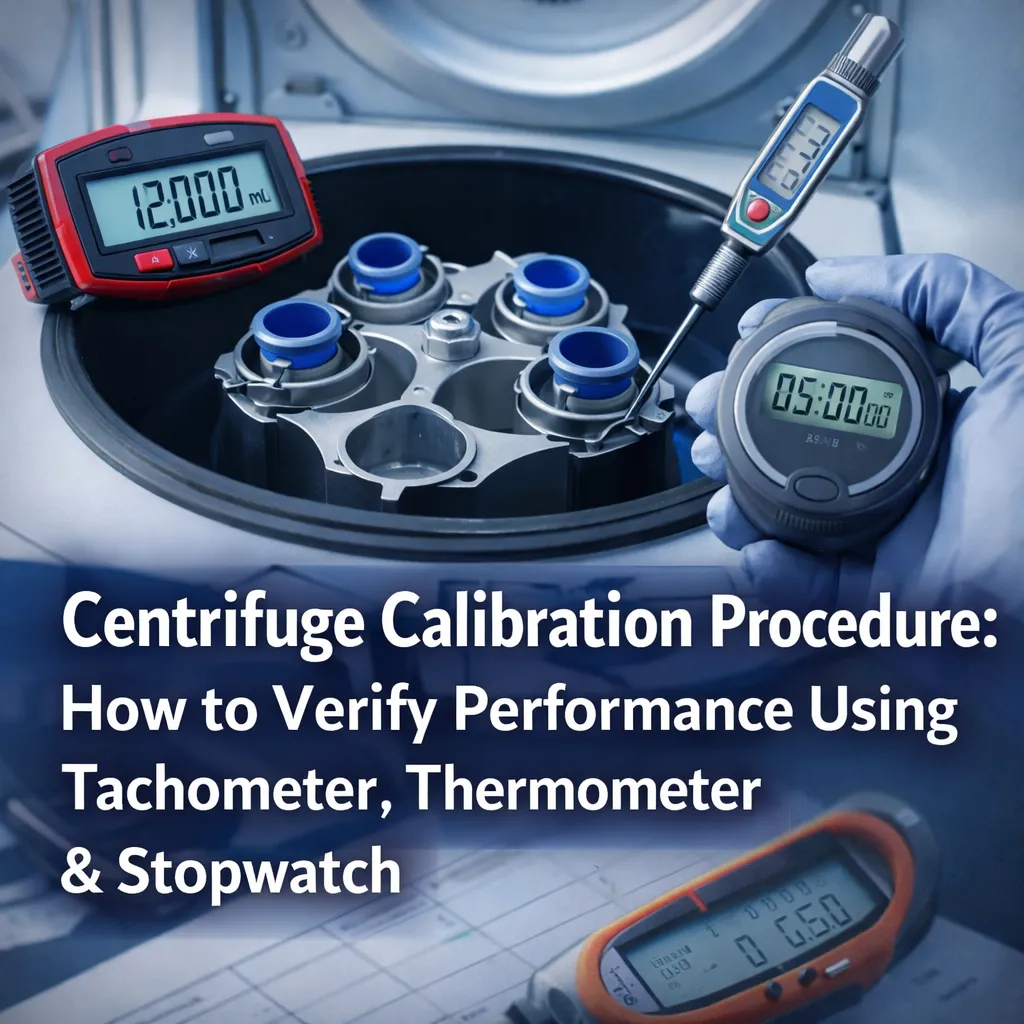

Learn how to verify the performance of centrifuge apparatus using calibrated tachometer, digital thermometer and stop watch. Step-by-step SOP for RPM, temperature, and time calibration in pharmaceutical labs.
Calibration of a centrifuge is a critical activity in pharmaceutical and laboratory environments to ensure accurate, reliable, and reproducible results. This guide explains how to verify the performance of centrifuge apparatus using calibrated tachometer, digital thermometer and stop watch, following a structured SOP approach.
🔍 Purpose of Centrifuge Calibration
The purpose of calibration is to confirm that the centrifuge operates within defined limits for:
- Speed (RPM)
- Temperature
- Time
Accurate calibration ensures compliance with GMP requirements and prevents analytical errors.
⚙️ General Precautions Before Calibration
- Ensure all instrument connections are proper.
- Operate the centrifuge as per manufacturer instructions.
- Always use calibrated instruments:
- Digital tachometer (non-contact)
- Digital thermometer
- Stopwatch
⏱️ Calibration of Time
Procedure:
- Set the centrifuge timer for 5 minutes.
- Measure actual time using a calibrated stopwatch.
- Record results.
- Repeat the same procedure for 10 minutes.
Acceptance Criteria:
- Tolerance: ±2 minutes
🔄 Calibration of RPM (Speed)
🔹 Fixed Angle Rotor:
- Set RPM to 12,000 → Verify using tachometer
- Set RPM to 6,000 → Verify using tachometer
🔹 Swing-Out Rotor:
- Set RPM to 4,000 → Verify using tachometer
- Set RPM to 2,000 → Verify using tachometer
Acceptance Criteria:
- Tolerance: ±100 RPM
🌡️ Calibration of Temperature
Medium Used:
- Ethylene glycol (filled in sample tubes)
🔹 Fixed Angle Rotor:
| Set Temp | RPM | Time |
|---|---|---|
| 5°C | 12000 | 45 min |
| 10°C | 12000 | 45 min |
| 20°C | 12000 | 45 min |
👉 Measure actual temperature using a digital thermometer.
🔹 Swing-Out Rotor:
| Set Temp | RPM | Time |
|---|---|---|
| 5°C | 4000 | 45 min |
| 10°C | 4000 | 45 min |
| 20°C | 4000 | 45 min |
👉 Record temperature readings using a calibrated thermometer.
Acceptance Criteria:
- Tolerance: ±2°C
📅 Calibration Frequency
- Perform calibration every six months
- Maintain proper calibration records as per SOP
🧼 Maintenance & Cleaning Guidelines
- Use only neutral cleaning agents:
- 70% isopropanol/water mixture
- Alcohol-based disinfectants
- Rinse rubber seals thoroughly and lubricate with glycerin.
- Dry condensation using a soft absorbent cloth.
- Clean rotor and buckets regularly to avoid contamination.
⚠️ Out-of-Calibration Handling
- If results exceed limits:
- Label instrument as “Out of Calibration”
- Send for repair/service
- After servicing:
- Recalibrate before use
📝 Calibration Record Requirements
Maintain records including:
- Instrument details (Make, Model, ID)
- Rotor type (Fixed angle / Swing-out)
- Observations for:
- Speed
- Temperature
- Time
- Remarks (Satisfactory / Not satisfactory)
- Signatures (Performed by / Checked by)
- Next calibration due date
✅ Conclusion
Regular calibration helps ensure that the centrifuge delivers accurate and reliable results. Following a standardized procedure to verify the performance of centrifuge apparatus using calibrated tachometer, digital thermometer and stop watch is essential for maintaining compliance and data integrity in pharmaceutical laboratories.
❓ Frequently Asked Questions (FAQs)
1. Why is centrifuge calibration important?
It ensures accurate RPM, temperature, and timing, which are critical for reliable laboratory results.
2. Which instruments are required for centrifuge calibration?
A calibrated tachometer, digital thermometer, and stopwatch are required.
3. How often should a centrifuge be calibrated?
Calibration should be performed every six months.
4. What is the acceptable tolerance for RPM?
The acceptable tolerance is typically ±100 RPM.
5. What is used for temperature calibration in centrifuges?
Ethylene glycol is commonly used as a medium for temperature calibration.
6. What happens if a centrifuge fails calibration?
It should be labeled “Out of Calibration” and sent for servicing.
7. Why is a tachometer used in calibration?
It measures the actual RPM of the rotor to verify accuracy.
8. Can cleaning affect centrifuge performance?
Yes, improper cleaning can cause contamination and affect results.
9. What is the acceptable temperature tolerance?
The acceptable temperature variation is ±2°C.
10. Is recalibration required after repair?
Yes, the centrifuge must be recalibrated after servicing before reuse.