


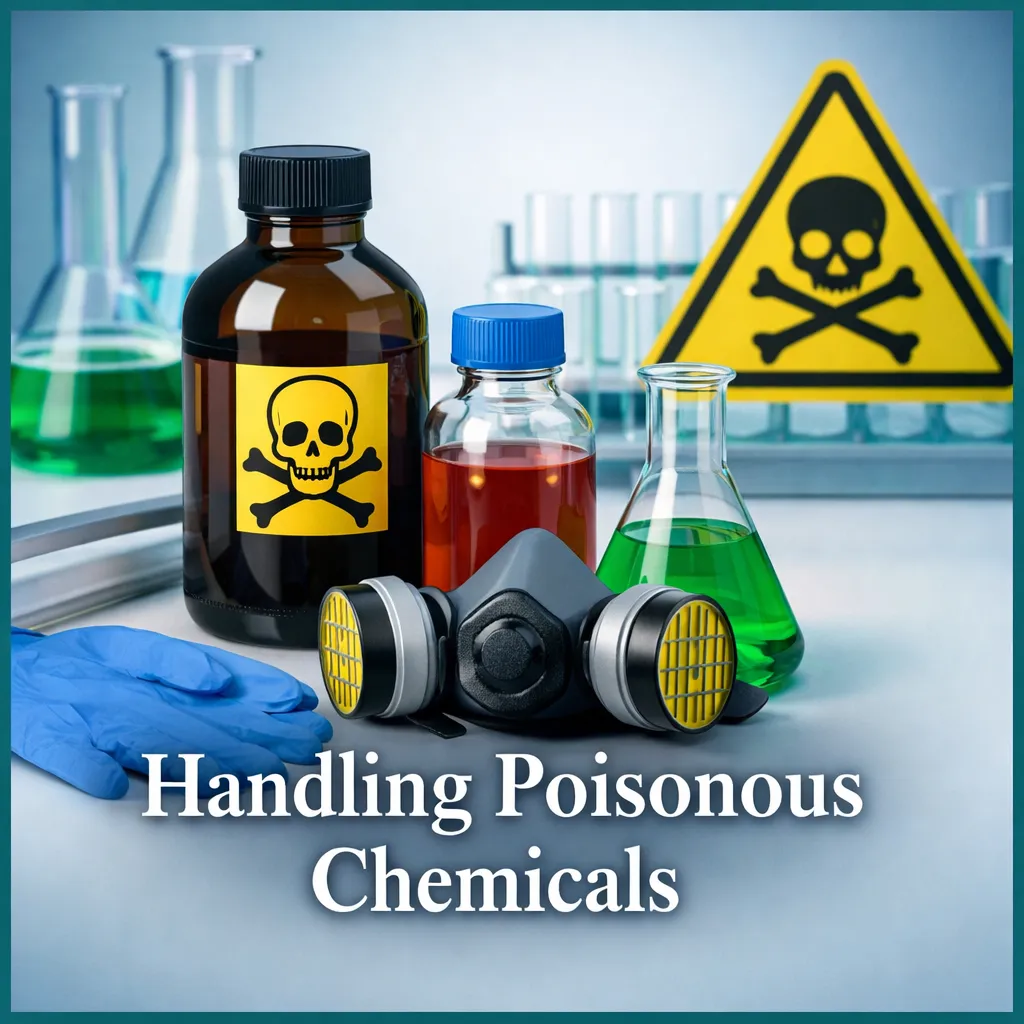

Learn safe handling of poisonous chemicals in labs with this SOP. Ensure compliance, safety, and accuracy.
Introduction
Handling poisonous and harmful chemicals in a laboratory requires strict adherence to safety protocols to prevent accidents, exposure, and environmental hazards. A well-defined Standard Operating Procedure (SOP) ensures safe usage, storage, and accountability of hazardous substances.
This guide provides a clear, step-by-step SOP for handling poisonous chemicals in laboratories, along with safety precautions, best practices, and common mistakes to avoid.
1.0 Objective
To ensure controlled, safe handling and issuance of poisonous chemicals, minimizing risks and preventing laboratory accidents.
2.0 Scope
This SOP applies to all poisonous and harmful chemicals used, handled, or stored within the laboratory environment.
3.0 Responsibility
- Doing: Technical Assistant
- Checking: Executive / Manager
4.0 Accountability
- Head of the Department
5.0 Step-by-Step SOP for Handling Poisonous Chemicals
5.1 Identification of Chemicals
- Always read chemical labels before use
- Verify whether the substance is poisonous or hazardous
5.2 Follow MSDS Guidelines
- Refer to the Material Safety Data Sheet (MSDS) for each chemical
- Handle chemicals only under supervisor guidance
5.3 Use of Personal Protective Equipment (PPE)
- Wear appropriate PPE at all times:
- Safety gloves
- Protective goggles
- Face mask / respirator
- Lab coat
5.4 Safe Handling in Fume Hood
- Open, transfer, or prepare chemicals only inside a fume hood
- Avoid inhalation of toxic fumes
5.5 Safe Pipetting Practices
- Never pipette by mouth
- Use:
- Rubber bulbs
- Vacuum pipetting devices
5.6 Storage of Poisonous Chemicals
- Store chemicals in designated, locked areas
- Clearly label storage with hazard warnings
- Restrict access to authorized personnel only
5.7 Key Control
- Storage keys must be handled by the person in charge only
5.8 Chemical Inventory List
- Maintain an updated list of all poisonous chemicals
5.9 Stock Recording
- Record:
- Quantity received
- Quantity used
- Remaining stock
5.10 Stock Verification
- Periodically verify stock
- Ensure proper documentation and authorized signatures
6.0 Abbreviations
- SOP: Standard Operating Procedure
Safety Precautions
- Always work under supervision when handling toxic chemicals
- Ensure proper ventilation in the laboratory
- Avoid direct contact, inhalation, or ingestion
- Dispose of hazardous waste as per regulations
- Immediately report spills or exposure incidents
Common Mistakes to Avoid
- Ignoring MSDS instructions
- Not wearing PPE properly
- Improper labeling or storage
- Mouth pipetting (extremely dangerous)
- Unauthorized access to hazardous chemicals
- Poor record-keeping
Best Practices for Chemical Safety
- Conduct regular safety training
- Label all chemicals clearly and accurately
- Maintain updated documentation and logs
- Perform routine audits and inspections
- Use secondary containment for storage
- Keep emergency equipment accessible (eyewash, showers)
FAQs (Frequently Asked Questions)
1. What is a poisonous chemical in a laboratory?
A chemical that can cause harm through inhalation, ingestion, or skin contact.
2. Why is MSDS important?
It provides essential safety, handling, and emergency information.
3. What PPE is required for handling hazardous chemicals?
Gloves, goggles, masks, and lab coats are standard.
4. Can poisonous chemicals be handled outside a fume hood?
No, handling should always be done inside a fume hood.
5. Why is mouth pipetting dangerous?
It can lead to accidental ingestion of toxic substances.
6. How should poisonous chemicals be stored?
In locked, labeled, and designated storage areas.
7. Who is responsible for chemical safety?
Technical staff handle, managers supervise, and department heads are accountable.
8. How often should stock be verified?
Regularly, based on lab policy (daily/weekly/monthly).
9. What should be done in case of exposure?
Follow emergency procedures and seek immediate medical help.
10. Why is record-keeping important?
It ensures traceability, accountability, and regulatory compliance.