


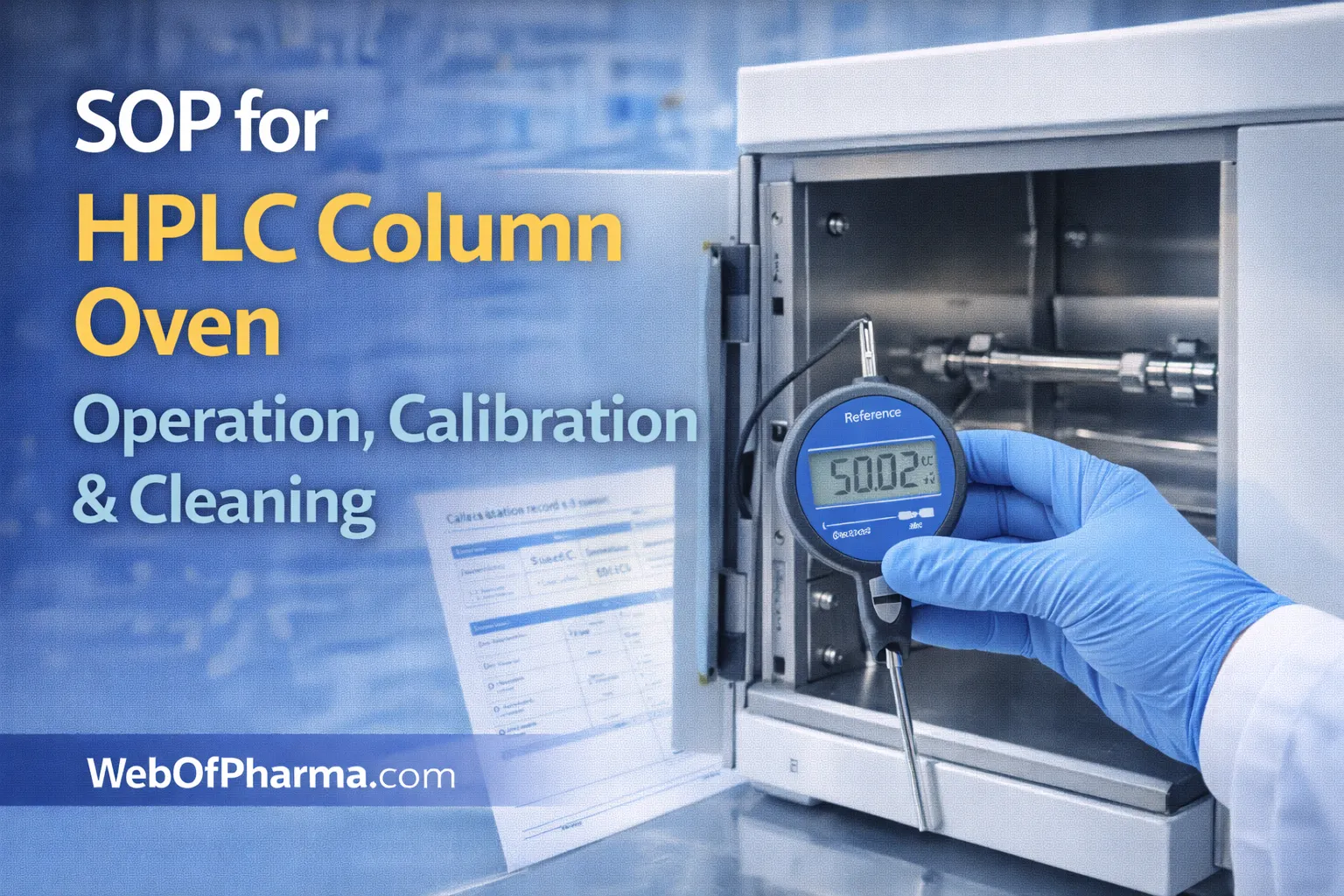

Learn SOP for HPLC column oven operation, calibration & cleaning using a digital thermometer. Ensure accuracy
In pharmaceutical analysis, temperature control is critical for achieving accurate and reproducible chromatographic results. Even slight temperature deviations in an HPLC column oven can affect retention time and peak resolution. That’s why following a strict SOP for HPLC column oven calibration operation and cleaning is essential.
This SOP provides a clear, step-by-step guide to ensure proper operation, accurate calibration, and effective cleaning of HPLC column ovens using a calibrated digital thermometer.
1. Objective of the SOP
The objective is to:
- Ensure accurate temperature control in HPLC column ovens
- Maintain consistency in chromatographic results
- Establish a standardized calibration procedure
- Ensure compliance with regulatory requirements
2. Scope
This SOP applies to:
- All HPLC column ovens used in QC laboratories
- Calibration, operation, and cleaning procedures
- Routine maintenance of chromatography equipment
3. Roles and Responsibilities
3.1 Responsible Personnel
- Technical Assistant / Executive: Perform operation and calibration
- Executive / Manager: Verify results
3.2 Accountability
- Head of Department: Ensure SOP compliance
4. Calibration Frequency
- Calibration should be performed once a year
👉 Regular calibration ensures consistent and reliable performance.
5. Equipment and Materials Required
- HPLC column oven
- Calibrated digital thermometer
- Clean and stable working environment
6. Operation of HPLC Column Oven
Before calibration:
- Switch ON the column oven
- Ensure proper functioning of the instrument
- Check for cleanliness and proper airflow
👉 Proper setup ensures accurate calibration results.
7. Calibration Procedure
7.1 Initial Setup
- Place the probe of calibrated digital thermometer at the center of the oven chamber
- Close the oven properly
7.2 Calibration at Different Temperatures
Step 1: Set Temperature to 25°C
- Set oven temperature to 25°C
- Allow stabilization for at least 5 minutes
- Record:
- Oven display temperature
- Reference thermometer reading
Step 2: Record Multiple Readings
- Maintain a gap of minimum 5 minutes between readings
- Record at least two readings
Step 3: Repeat for Higher Temperatures
Set and record readings for:
- 40°C
- 50°C
- 60°C
- 70°C
👉 Follow the same stabilization and recording process for each temperature.
8. Acceptance Criteria
- Temperature readings should be within acceptable limits (as per internal standards)
👉 Any deviation beyond limits requires corrective action.
9. Cleaning Procedure
Proper cleaning ensures efficient performance.
Steps:
- Switch OFF the instrument
- Allow oven to cool
- Clean inner chamber with a lint-free cloth
- Remove dust and residues
- Ensure no solvent spills remain
10. Documentation Requirements
Maintain records including:
- Instrument ID
- Calibration data at each temperature
- Reference thermometer details
- Calibration and due dates
- Analyst and reviewer signatures
11. Safety Precautions
- Avoid touching hot surfaces
- Ensure proper ventilation
- Use PPE (gloves, lab coat)
- Handle thermometer carefully
12. Best Practices
- Always use a calibrated thermometer
- Allow sufficient stabilization time
- Avoid opening oven during calibration
- Perform calibration under controlled conditions
- Record data immediately
13. Common Mistakes to Avoid
- Skipping stabilization time
- Incorrect placement of thermometer probe
- Not recording multiple readings
- Ignoring deviations
- Poor cleaning practices
FAQs
1. Why is HPLC column oven calibration important?
It ensures accurate temperature control and reliable results.
2. What is used for calibration?
A calibrated digital thermometer.
3. What is the calibration frequency?
Once a year.
4. What temperatures are used for calibration?
25°C, 40°C, 50°C, 60°C, and 70°C.
5. Why is stabilization time important?
It ensures accurate temperature readings.
6. Where should the thermometer probe be placed?
At the center of the oven chamber.
7. What happens if calibration fails?
The instrument must be adjusted or serviced.
8. How should the oven be cleaned?
Using a lint-free cloth after cooling.
9. Who performs calibration?
Technical assistant or executive.
10. Why is documentation necessary?
For audit compliance and traceability.