


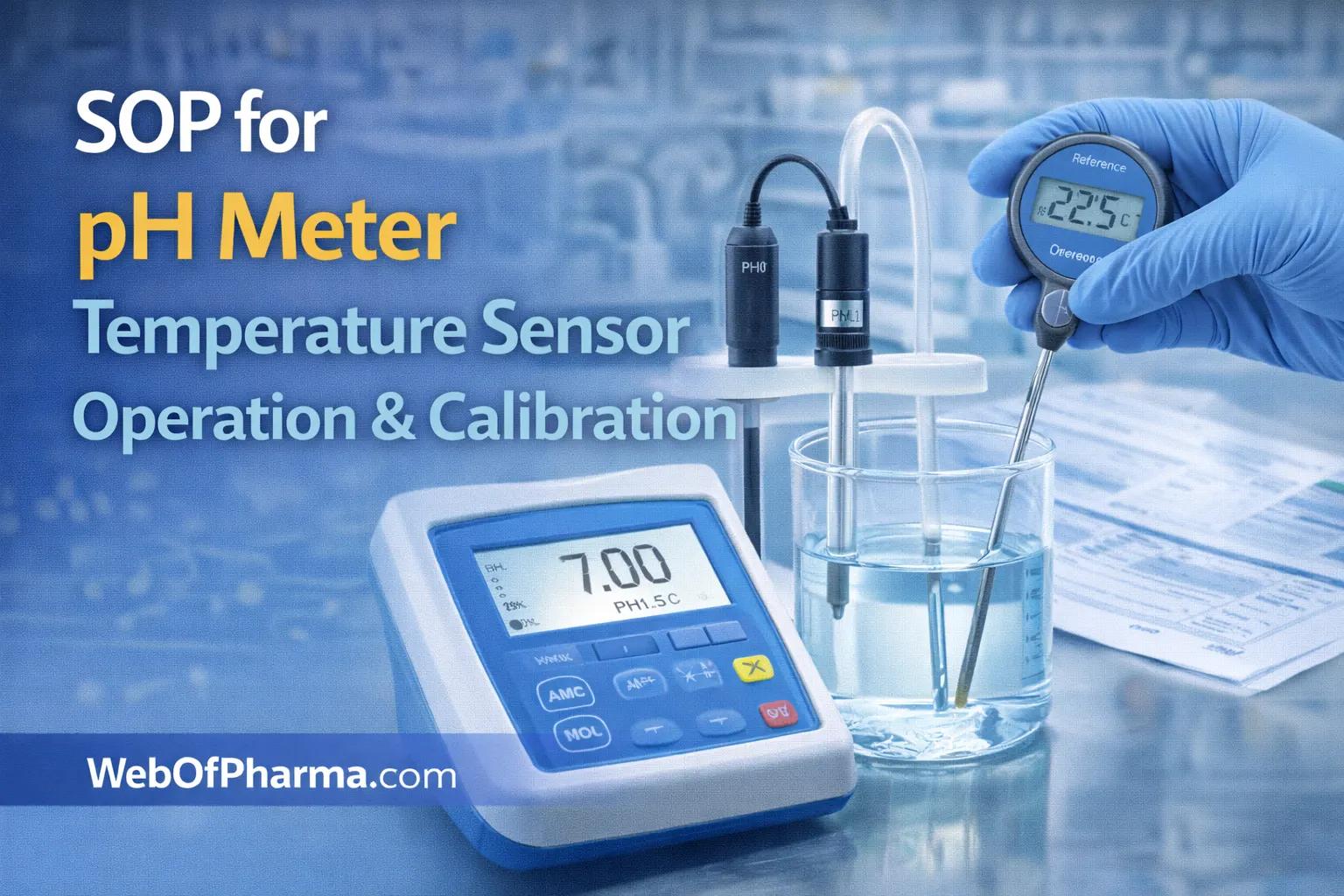

Learn SOP for pH meter temperature sensor operation, calibration & cleaning using WFI/PW. Ensure accuracy
In pharmaceutical quality control laboratories, accuracy is everything. Even a small temperature variation can affect pH readings and lead to incorrect results. That’s why following a well-defined SOP for pH meter temperature sensor operation calibration and cleaning is essential.
This SOP provides a clear, step-by-step method to ensure reliable performance of the pH meter temperature sensor using Water for Injection (WFI) or Purified Water (PW).
1. Objective of the SOP
The objective is to:
- Ensure accurate temperature measurement
- Maintain reliable pH readings
- Define standardized calibration and cleaning procedures
- Comply with regulatory and quality standards
2. Scope
This SOP applies to:
- All pH meters used in QC laboratories
- Calibration and maintenance of temperature sensors
- Routine laboratory operations
3. Roles and Responsibilities
3.1 Responsible Personnel
- Technical Assistant / Executive: Perform operation and calibration
- Executive / Manager: Verify and review
3.2 Accountability
- Head of Department: Ensure SOP implementation
4. Calibration Frequency
- Calibration should be performed twice a year
👉 Regular calibration ensures consistent and accurate performance.
5. Equipment and Materials Required
- pH meter with temperature sensor
- Reference calibrated digital thermometer
- Water for Injection (WFI) / Purified Water (PW)
- Clean beaker
6. Operation of pH Meter Temperature Sensor
Before calibration:
- Ensure the pH meter is clean and functional
- Check sensor condition and connections
- Switch ON the instrument and allow stabilization
👉 Proper operation ensures reliable calibration results.
7. Calibration Procedure
7.1 Initial Setup
- Fill a clean beaker with WFI/PW at approximately 35°C
- Immerse:
- pH meter temperature sensor
- Reference thermometer probe
7.2 Calibration at Different Temperature Ranges
Range 1: 30°C – 27°C
- Add cold WFI/PW dropwise
- Stabilize temperature
- Record:
- pH meter reading
- Reference thermometer reading
Range 2: 26°C – 23°C
- Add more water gradually
- Allow temperature stabilization
- Record both readings
Range 3: 22°C – 20°C
- Continue gradual cooling
- Record observations
8. Acceptance Criteria
- Temperature difference should be within ± 3°C
👉 Results outside limits require recalibration or maintenance.
9. Cleaning Procedure
Proper cleaning is essential for accurate readings.
Steps:
- Rinse sensor with purified water after use
- Remove residues carefully
- Wipe gently with lint-free tissue
- Avoid scratching or damaging the probe
- Store properly after cleaning
10. Documentation
Maintain records including:
- Reference thermometer details
- Calibration data and observations
- Temperature differences
- Calibration and due dates
- Analyst and reviewer signatures
11. Safety Precautions
- Handle glassware carefully
- Avoid contamination of WFI/PW
- Do not expose sensor to extreme temperatures
- Use PPE (gloves, lab coat, goggles)
12. Best Practices
- Use freshly prepared water
- Ensure uniform temperature mixing
- Avoid air bubbles around sensors
- Calibrate reference thermometer regularly
- Record data immediately
13. Common Mistakes to Avoid
- Skipping stabilization time
- Using uncalibrated thermometer
- Rapid cooling causing inaccurate readings
- Poor documentation
- Ignoring acceptance criteria
FAQs
1. Why is temperature calibration important in pH meters?
Temperature affects pH readings, so calibration ensures accuracy.
2. What is used for calibration?
WFI or purified water along with a reference thermometer.
3. How often should calibration be done?
Twice a year.
4. What is the acceptable temperature deviation?
±3°C.
5. Why use a reference thermometer?
To compare and validate temperature readings.
6. What temperature ranges are used?
30–27°C, 26–23°C, and 22–20°C.
7. How should the sensor be cleaned?
Rinse with purified water and dry gently.
8. What happens if calibration fails?
The instrument must be adjusted or serviced.
9. Who performs calibration?
Technical assistant or executive.
10. Why is documentation important?
For compliance, traceability, and audits.