


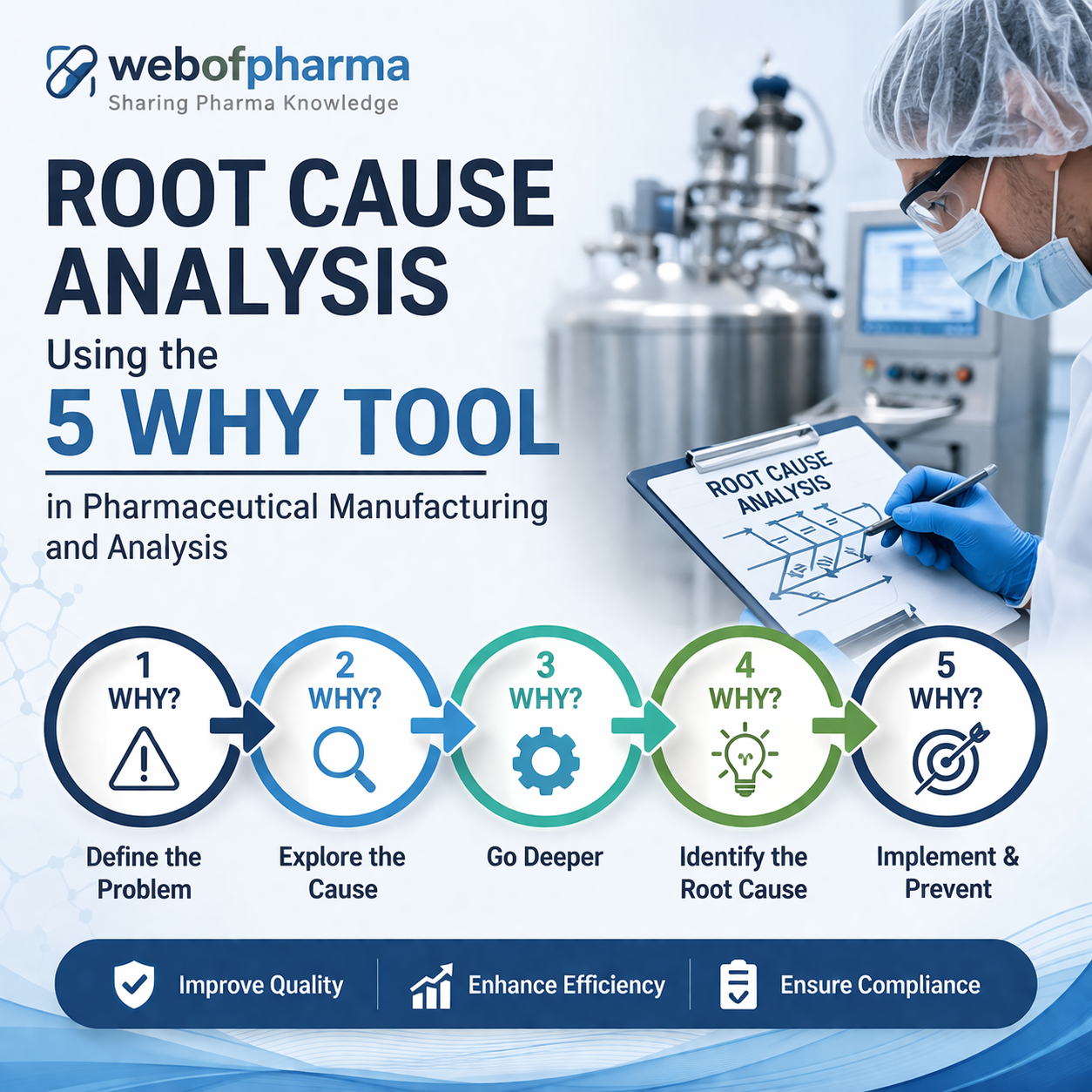

Learn how to identify the root cause of the problem occurred during the manufacturing or analysis of pharmaceutical products using 5 why tool. Understand step-by-step root cause analysis, examples, and corrective actions as per GMP and regulatory expectations.
Root Cause Analysis (RCA) is a systematic process used in the pharmaceutical industry to determine the true underlying cause of errors, deviations, or failures. Identifying the root cause of the problem occurred during the manufacturing or analysis of pharmaceutical products using 5 why tool is essential to maintain product quality, patient safety, and regulatory compliance.
Root cause analysis is commonly performed for:
- Out of Specification (OOS) results
- Deviations during manufacturing
- Laboratory errors
- Equipment failures
- Market complaints
- Process breakdowns
Regulatory agencies expect pharmaceutical companies to investigate problems thoroughly and implement effective corrective and preventive actions (CAPA). Failure to determine the true root cause has led to many regulatory observations and warning letters.
What is the 5 Why Tool in Root Cause Analysis?
The 5 Why Tool is a simple yet powerful problem-solving method used to identify the root cause of a problem by repeatedly asking the question “Why?” until the fundamental cause is discovered.
Although it is called the 5 Why Tool, more than five questions may be required depending on the complexity of the issue.
The method focuses on identifying the real cause rather than addressing symptoms.
Why Root Cause Analysis is Important in Pharmaceuticals
Root cause analysis plays a critical role in maintaining quality systems in pharmaceutical manufacturing and laboratory operations.
Key Benefits
- Prevents recurrence of deviations
- Improves product quality
- Enhances process reliability
- Supports regulatory compliance
- Strengthens CAPA effectiveness
- Reduces operational risks
- Ensures patient safety
Regulatory inspectors often evaluate whether organizations properly identified the root cause of the problem occurred during the manufacturing or analysis of pharmaceutical products using 5 why tool or other structured investigation methods.
Understanding Human Error in Root Cause Analysis
More than half of operational problems appear to involve human error. However, human error is usually not the true root cause—it is often a symptom of deeper system issues.
Common underlying causes include:
- Inadequate training
- Poor procedures
- Equipment design flaws
- Lack of maintenance
- Inadequate supervision
- Poor workplace conditions
- Ineffective cleaning practices
A proper investigation always looks beyond the individual and focuses on system failures.
How to Perform Root Cause Analysis Using the 5 Why Tool
Follow these simple steps to apply the 5 Why technique effectively in pharmaceutical manufacturing or laboratory investigations.
Step-by-Step Process
Step 1: Define the Problem Clearly
Example:
Compression machine stopped suddenly during tablet manufacturing.
Step 2: Ask the First Why
Why did the compression machine stop suddenly?
Answer:
A human error occurred.
Step 3: Ask the Second Why
Why did this human error occur?
Answer:
The operator pressed the emergency stop button.
Step 4: Ask the Third Why
Why did the operator press the emergency stop button?
Answer:
The label on the button was not clear.
Step 5: Ask the Fourth Why
Why was the label not clear?
Answer:
The label was covered with dirt.
Step 6: Ask the Fifth Why
Why was the label covered with dirt?
Answer:
The machine was not cleaned properly.
Identified Root Cause
The compression machine was not cleaned properly, causing unclear labeling and operator confusion.
This demonstrates how the root cause of the problem occurred during the manufacturing or analysis of pharmaceutical products using 5 why tool can be identified systematically.
Corrective and Preventive Actions (CAPA)
Once the root cause is identified, appropriate corrective and preventive actions must be implemented.
Corrective Actions
- Clean the machine immediately
- Replace or relabel control buttons
- Train the operator
Preventive Actions
- Implement daily equipment cleaning verification
- Establish cleaning checklists
- Conduct routine inspections
- Improve maintenance schedules
- Strengthen SOP compliance
Preventive actions ensure the same problem does not occur again.
When to Use the 5 Why Tool in Pharmaceuticals
The 5 Why technique is widely used in pharmaceutical quality systems for:
- Deviations
- Out of Specification (OOS) results
- Out of Trend (OOT) results
- Equipment failures
- Laboratory errors
- Process interruptions
- Customer complaints
- Audit observations
Common Mistakes in Root Cause Analysis
Avoid these common errors when performing investigations.
- Stopping the investigation too early
- Blaming human error without analysis
- Lack of supporting evidence
- Ignoring system failures
- Poor documentation
- Weak corrective actions
Proper documentation is essential for regulatory compliance and quality assurance.
Best Practices for Effective Root Cause Analysis
Recommended Practices
- Use structured investigation tools
- Involve cross-functional teams
- Collect factual evidence
- Document each step clearly
- Verify effectiveness of CAPA
- Monitor recurring trends
These practices help maintain a robust pharmaceutical quality management system.
Conclusion
Root Cause Analysis is a critical component of pharmaceutical quality systems. Using the 5 Why Tool provides a simple and effective way to identify the root cause of the problem occurred during the manufacturing or analysis of pharmaceutical products using 5 why tool.
By identifying the true cause and implementing strong corrective and preventive actions, organizations can prevent recurring issues, maintain regulatory compliance, and ensure consistent product quality.
Frequently Asked Questions (FAQs)
1. What is root cause analysis in pharmaceuticals?
Root cause analysis is a systematic investigation process used to identify the fundamental cause of deviations, errors, or failures in pharmaceutical manufacturing or laboratory operations.
2. What is the 5 Why tool?
The 5 Why tool is a problem-solving method that identifies the root cause of a problem by repeatedly asking the question “Why?” until the underlying cause is determined.
3. Why is root cause analysis important in pharmaceutical manufacturing?
It prevents recurrence of problems, improves product quality, ensures regulatory compliance, and protects patient safety.
4. Is human error always the root cause?
No. Human error is usually a symptom of deeper system issues such as poor procedures, inadequate training, or equipment problems.
5. When should the 5 Why tool be used?
It should be used during deviation investigations, OOS results, equipment failures, complaints, and process interruptions.
6. How many times should “Why” be asked in the 5 Why method?
Typically five times, but more questions may be required depending on the complexity of the problem.
7. What happens after identifying the root cause?
Corrective and preventive actions (CAPA) must be implemented to eliminate the cause and prevent recurrence.
8. What are examples of root causes in pharmaceutical manufacturing?
Common root causes include inadequate cleaning, equipment malfunction, poor training, unclear procedures, and lack of maintenance.
9. What documentation is required for root cause analysis?
Documentation typically includes:
- Deviation report
- Investigation report
- Root cause analysis
- CAPA plan
- Effectiveness check
10. Which departments perform root cause analysis in pharmaceuticals?
Root cause analysis is typically performed by:
- Quality Assurance (QA)
- Quality Control (QC)
- Production
- Engineering
- Validation teams