


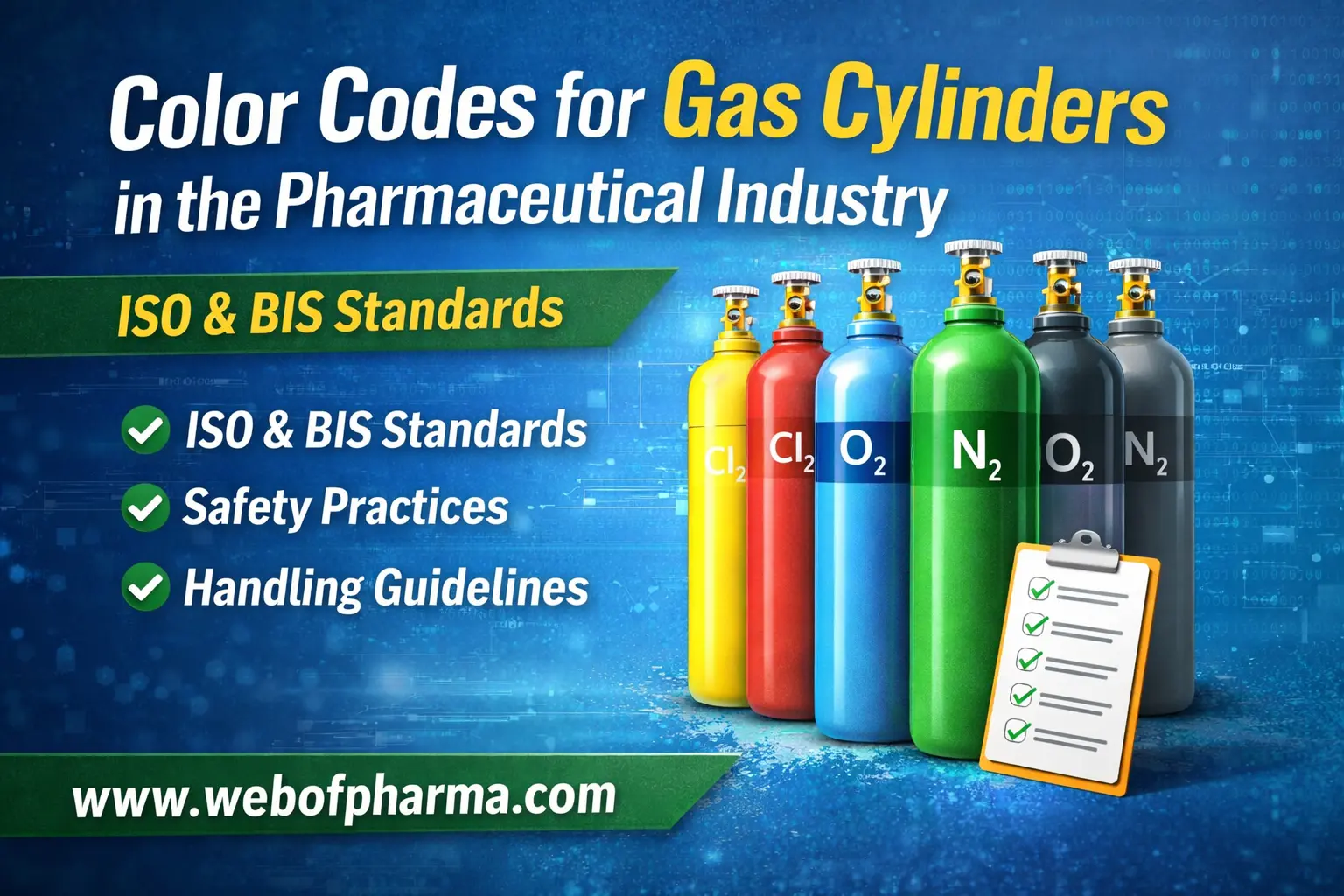

Learn color codes for gas cylinders in the pharmaceutical industry, including ISO and BIS standards, safety practices, and handling guidelines to ensure compliance and workplace safety.
Gas cylinders are widely used across pharmaceutical operations—from sterile manufacturing and laboratory testing to packaging and storage. These cylinders store gases under high pressure, making proper identification and handling essential for safety.
Understanding the color codes for gas cylinders in the pharmaceutical industry, including ISO and BIS standards, safety practices and handling guidelines is critical to prevent mix-ups, ensure compliance, and maintain product quality.
Color coding serves as a quick visual identification system, especially in situations where labels may not be easily visible. However, it should always be used alongside proper labeling and documentation.
Why Color Coding of Gas Cylinders Is Important
In pharmaceutical facilities where multiple gases are used, quick and accurate identification is essential. Color coding helps operators distinguish between gases instantly and avoid potentially dangerous mistakes.
Key Benefits of Color Coding
- Safety: Prevents accidental use of the wrong gas
- Compliance: Aligns with ISO, BIS, and GMP requirements
- Efficiency: Speeds up operations and emergency response
- Quality Assurance: Reduces contamination risks
Each gas cylinder typically has a colored shoulder (top) and body, which together indicate the type or hazard class of the gas.
International Standards for Gas Cylinder Color Codes
Pharmaceutical companies follow recognized standards to maintain uniformity and safety:
- ISO 32 / ISO 7225 – General safety standards for gas cylinders
- BS EN 1089-3 – European color coding system
- BIS (IS 3933:1966) – Indian standard for gas cylinder color identification
In practice, many pharmaceutical companies adopt a combination of ISO and BIS standards depending on regulatory requirements.
General Color Coding System
While exact colors may vary by region, the general concept remains consistent:
- Yellow: Toxic or corrosive gases
- Red: Flammable gases
- Light Blue: Oxidizing gases
- Green: Inert gases
Common Gas Cylinder Color Codes
| Gas | Shoulder Color | Body Color |
|---|---|---|
| Air | Grey | Grey |
| Ammonia | Red | Yellow/Black |
| Carbon Dioxide | Silver | Black |
| Chlorine | Yellow | Yellow |
| Helium | Brown | Brown |
| Hydrogen | Red | Red |
| Nitrogen | Black | Grey |
| Oxygen | White | Black |
⚠️ Important: Never rely solely on color—always verify the label.
Common Gases Used in Pharmaceuticals
1. Sterilization and Purging
- Nitrogen: Removes oxygen and moisture
- Compressed air: Used in filtration and pneumatic systems
2. Analytical Testing
- Helium & Hydrogen: Gas chromatography
- Nitrogen: Carrier gas in HPLC
3. Production Support
- Oxygen & CO₂: Fermentation and bioprocessing
4. Packaging
- Nitrogen: Maintains product stability and extends shelf life
Reading Gas Cylinder Labels and Markings
Color coding is helpful, but labels are the primary source of identification. Each cylinder should include:
- Gas name and chemical formula
- Supplier details
- Cylinder serial number
- Test and expiry dates
- ضغط rating
- Weight (net/tare)
- Hazard classification (GHS)
Safety Practices and Handling Guidelines
To comply with GMP and ensure safety, follow these best practices:
1. Storage
- Store cylinders upright and secure with chains
- Segregate by gas type (flammable, oxidizing, inert)
- Ensure proper ventilation
- Keep away from heat and sunlight
- Restrict unauthorized access
2. Handling
- Use trolleys—never roll cylinders
- Verify color code, label, and valve tag before use
- Use correct regulators (do not interchange)
- Open valves slowly
3. Maintenance
- Check for leaks using soap solution
- Do not use damaged or expired cylinders
- Maintain inspection and usage records
GMP and Regulatory Expectations
Under WHO GMP, EU GMP, and Schedule M:
- Cylinders must be clearly labeled and segregated
- Storage should prevent contamination and mix-ups
- Gases must be traceable (with COA where applicable)
- Periodic inspection is mandatory
Auditors often review:
- Labeling accuracy
- Storage practices
- SOP compliance
Common Mistakes to Avoid
- Relying only on color (ignoring labels)
- Using incorrect regulators
- Improper storage (mixing incompatible gases)
- Ignoring expiry dates
- Overlooking leakage signs
Proper training and SOP adherence can prevent these issues.
Best Practices for Pharmaceutical Facilities
- Display color coding charts in storage areas
- Use dedicated and segregated storage zones
- Implement barcode tracking
- Train staff regularly
- Include gas cylinder management in audits
Conclusion
Understanding the color codes for gas cylinders in the pharmaceutical industry, including ISO and BIS standards, safety practices and handling guidelines is essential for maintaining a safe and compliant workplace.
While color coding provides quick identification, it must always be supported by proper labeling, training, and documentation. By following GMP-compliant practices, pharmaceutical companies can minimize risks, prevent accidents, and ensure operational efficiency.
Frequently Asked Questions (FAQs)
1. Why are gas cylinders color coded in pharmaceuticals?
To enable quick identification and prevent accidental use of the wrong gas.
2. Are gas cylinder color codes the same worldwide?
No, they vary by country, but the general principles remain similar.
3. What standards govern gas cylinder color coding?
ISO, BS EN 1089-3, and BIS (IS 3933) are commonly followed standards.
4. What is the color code for nitrogen cylinders?
Typically a grey body with a black shoulder.
5. What is the color code for oxygen cylinders?
Usually a black body with a white shoulder.
6. Can I rely only on color coding to identify gases?
No, always verify using labels and markings.
7. How should gas cylinders be stored?
Upright, secured, segregated by gas type, and in well-ventilated areas.
8. What are the risks of improper gas cylinder handling?
Fire hazards, contamination, equipment damage, and safety incidents.
9. How often should gas cylinders be inspected?
Periodically, as per SOPs and regulatory requirements.
10. What is a common mistake in gas cylinder usage?
Using the wrong regulator or assuming gas type based only on color.