


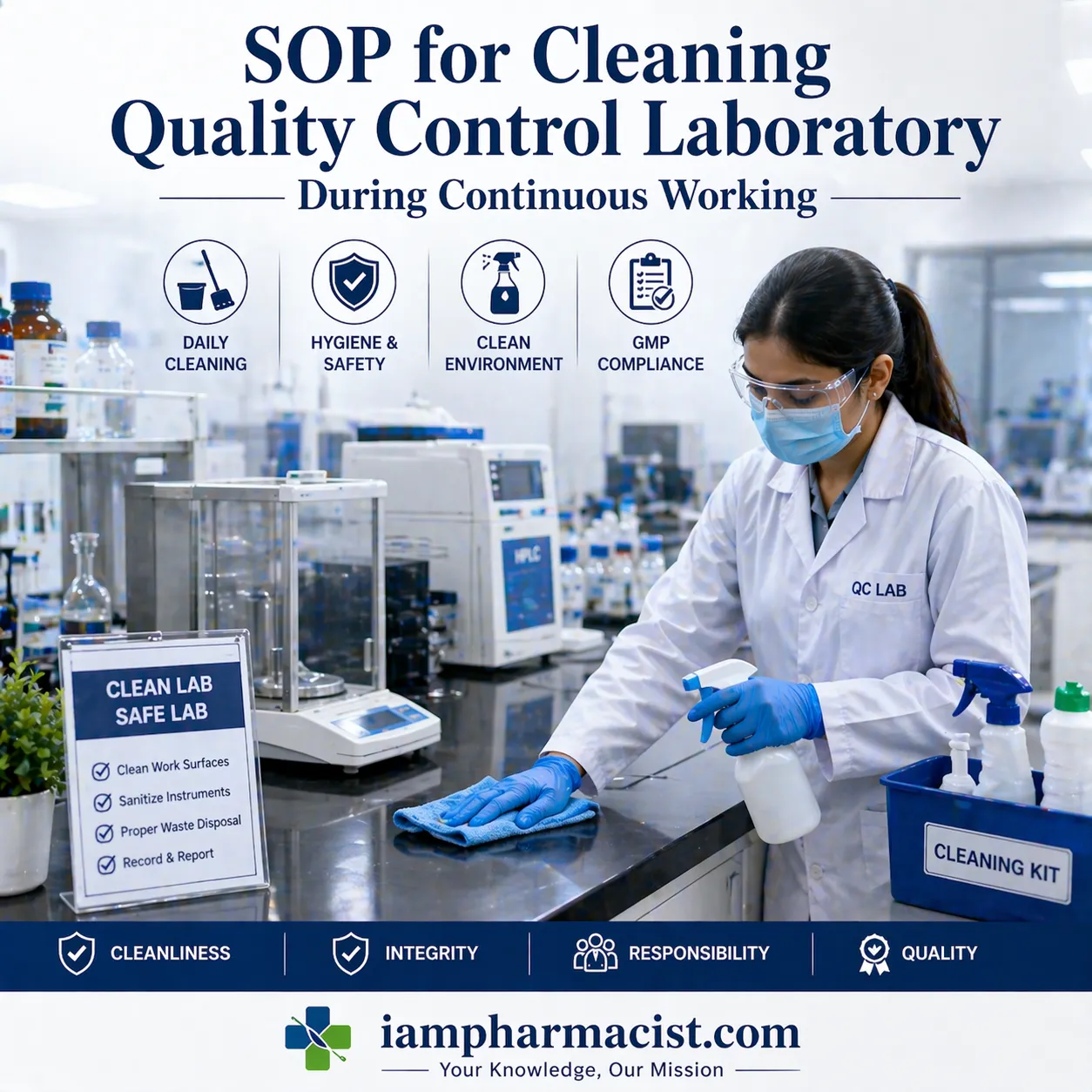

Learn SOP for cleaning quality control laboratory during continuous working including daily, weekly, and monthly cleaning procedures with GMP compliance.
Introduction
Maintaining cleanliness in a Quality Control (QC) laboratory is critical for ensuring accurate analytical results, preventing contamination, and complying with GMP standards. Continuous laboratory operations increase the risk of contamination if cleaning procedures are not strictly followed.
A well-defined SOP ensures systematic cleaning of floors, instruments, work areas, and storage spaces at defined intervals. This document provides a comprehensive procedure for maintaining hygiene in QC laboratories during continuous working conditions.
Definition
QC laboratory cleaning SOP is a standardized procedure that outlines the methods, frequency, and responsibilities for maintaining cleanliness and hygiene in a quality control laboratory to ensure contamination-free operations.
| Area / Item | Frequency | Method |
|---|---|---|
| Floor | Daily (Morning & Evening) | Mop with 3% v/v Dettol solution |
| Working Tables & Racks | Daily | Dedusting |
| Instruments | Daily | Clean with muslin cloth |
| Walls & Ceiling | Weekly | Clean with long broom |
| Doors & Windows (Glass) | Weekly | Glass cleaning powder |
| Dustbins & Basins | Weekly | Thorough cleaning |
| Fans & Fixtures | Monthly | Deep cleaning |
Step-by-Step Process
- Prepare cleaning solution
- Mop floors twice daily
- Dedust work surfaces
- Clean instruments carefully
- Perform weekly cleaning tasks
- Conduct monthly deep cleaning
- Record all cleaning activities https://iampharmacist.com/?s=cleaning+equipment
1.0 OBJECTIVE
To lay down the procedure for cleaning of Quality Control Department throughout working.
2.0 SCOPE
This SOP is applicable to Quality Control Department.
3.0 RESPONSIBILITY
Supervisor – Quality Control
4.0 ACCOUNTABILITY
Sr. Manager – Quality Assurance
5.0 PROCEDURE
5.1 Operation (Routine Cleaning Activities)
Daily Cleaning
- Mop floor with 3% v/v Dettol solution in:
- Chemical section
- Instrument rooms
- Chemical storage room
- Control sample room
- Stability sample room
- Dedust:
- Reagent racks
- Working tables
- Clean all instruments using muslin cloth
5.2 Weekly Cleaning
- Clean:
- Walls and ceilings using long broom
- Doors and window glasses using glass cleaning powder
- Dustbins and basins thoroughly
5.3 Monthly Cleaning
- Clean:
- Fans
- Electrical fixtures
5.4 Cleaning Procedure (Detailed Steps)
- Prepare cleaning solution
- Use appropriate cleaning tools
- Follow area-wise cleaning sequence
- Avoid cross-contamination
- Ensure proper drying of surfaces
5.5 Calibration / Compliance
- Verify cleaning schedules are followed
- Ensure cleaning logs are maintained
- Conduct periodic GMP audits
5.6 Documentation
- Record all cleaning activities in logbook
- Include:
- Date
- Area cleaned
- Person responsible
- Verification
5.7 Precautions
- Use appropriate PPE
- Avoid chemical spillage during cleaning
- Do not disturb analytical setups
- Ensure proper ventilation
6.0 ABBREVIATIONS
- SOP – Standard Operating Procedure
- QA – Quality Assurance
- QC – Quality Control
- Dept. – Department
Technical Insight: Importance of Cleaning in QC
Proper cleaning minimizes contamination risks, ensures data accuracy, and maintains compliance with GMP standards. Poor cleaning practices can lead to analytical errors and product quality issues.
FAQs
1. What is QC lab cleaning SOP?
A procedure for maintaining lab cleanliness.
2. Why cleaning is important?
Prevents contamination and ensures accuracy.
3. What solution is used for floor cleaning?
3% v/v Dettol solution.
4. How often floors are cleaned?
Twice daily.
5. How often instruments are cleaned?
Daily.
6. What is weekly cleaning?
Walls, ceilings, windows, dustbins.
7. What is monthly cleaning?
Fans and fixtures.
8. Who is responsible?
QC Supervisor.
9. What records are maintained?
Cleaning logbook.
10. Which guidelines apply?
GMP standards.