



Learn SOP for laboratory cleaning and disinfection in pharma industry with step-by-step procedures, precautions, and GMP-compliant practices.
Definition
A QC laboratory cleaning and disinfection SOP is a standardized procedure that defines the methods, agents, and precautions required to maintain a clean, contamination-free, and microbiologically controlled environment in pharmaceutical quality control laboratories.
| Parameter | Requirement |
|---|---|
| Cleaning frequency | Daily / routine |
| Cleaning agents | Liquid soap, approved detergents |
| Disinfectant | 3% Dettol (or validated equivalent) |
| Water quality | Fresh potable water |
| Objective | Prevent contamination & ensure safety |
Step-by-Step List
QC Lab Cleaning Steps:
- Remove dust and visible dirt
- Prepare cleaning solution
- Clean surfaces with approved agent
- Prepare disinfectant dilution
- Apply disinfectant to surfaces
- Allow contact time
- Dispose used solutions properly
Introduction
Maintaining a clean and contamination-free environment is essential in pharmaceutical quality control laboratories. Improper cleaning can lead to cross-contamination, inaccurate results, and regulatory non-compliance.
This SOP outlines GMP-compliant cleaning and disinfection practices, ensuring product integrity, analyst safety, and microbiological control.
1.0 OBJECTIVE
To establish a standardized procedure for cleaning and disinfection of the Quality Control laboratory.
2.0 SCOPE
Applicable to the Quality Control Department.
3.0 RESPONSIBILITY
Head Quality Control Department
4.0 ACCOUNTABILITY
Sr. Manager Quality Assurance (QA)
5.0 PROCEDURE
5.1 Purpose of Cleaning and Disinfection
Cleaning and disinfection are essential to:
- Maintain a safe and organized working environment
- Remove dust, dirt, and contaminants
- Prevent cross-contamination between products
- Reduce microbial load
- Ensure accuracy of analytical results
5.2 Precautions
- Do not mix cleaning agents and disinfectants (risk of chemical reaction)
- Do not substitute agents without validation
- Use only approved and validated chemicals
- Follow safety guidelines while handling solutions
5.3 Cleaning Agents
- Prefer liquid cleaning agents to avoid particulate contamination
- Commonly used:
- Liquid soap
- Approved detergents (e.g., Vim powder where applicable)
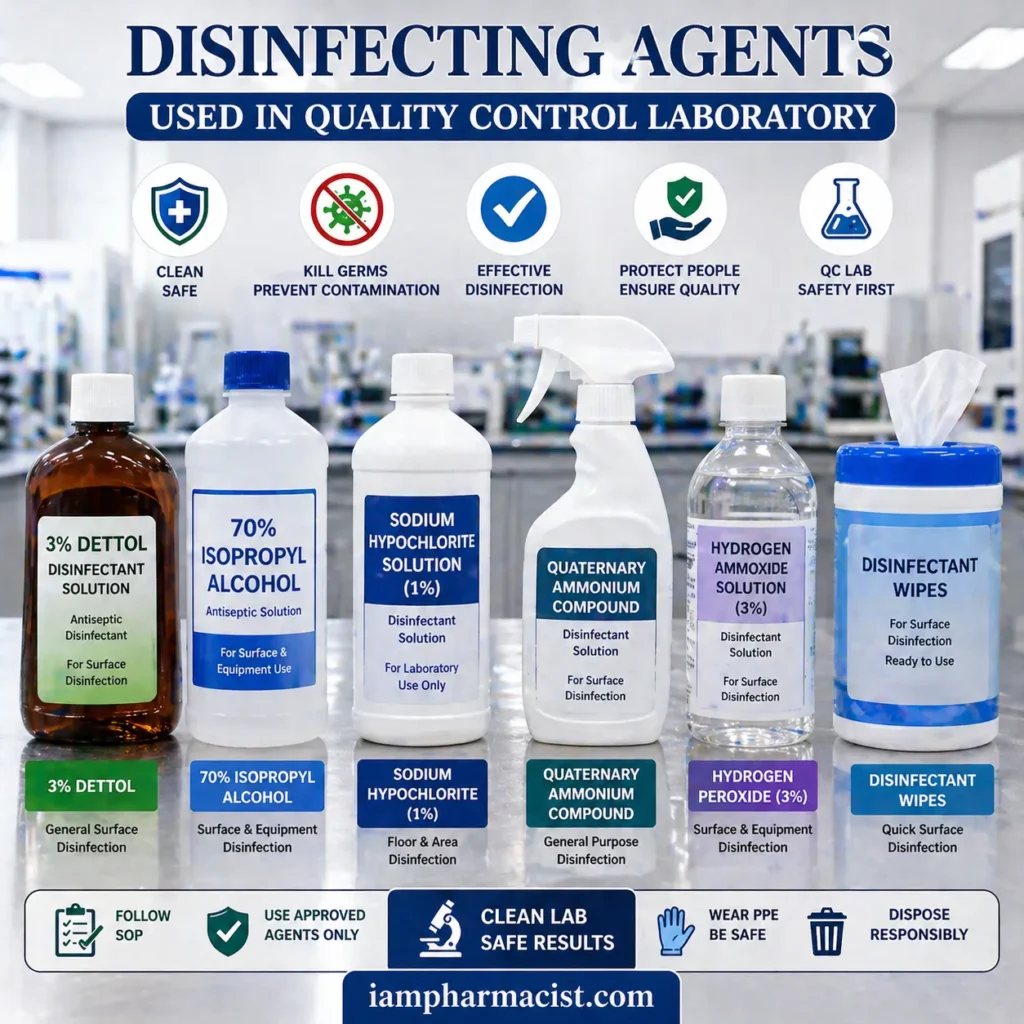
5.4 Disinfectants
- Use alternating disinfectants to prevent microbial resistance
- Select disinfectants with different chemical classes
- Recommended:
- 3% Dettol solution
5.5 Cleaning and Disinfection Procedure
Step-by-Step Process
- Remove visible dust and debris from surfaces
- Prepare cleaning agent solution using potable water
- Clean work surfaces, benches, and equipment
- Prepare disinfectant solution as per SOP
- Apply disinfectant evenly
- Allow adequate contact time
- Wipe surfaces with clean cloth if required
- Dispose used solutions at end of day
- Clean and rinse containers
5.6 Use of Cleaning Agents and Disinfectants
- Prepare solutions accurately and document dilutions
- Use freshly prepared solutions only
- Do not dilute further during use
- Discard leftover solutions daily
- Clean containers after use
Importance of Proper Cleaning in QC Labs
- Prevents analytical errors
- Ensures regulatory compliance (GMP)
- Maintains data integrity
- Protects personnel and products
6.0 ABBREVIATIONS
- SOP: Standard Operating Procedure
FAQs
1. Why is cleaning important in QC labs?
It prevents contamination and ensures accurate test results. https://iampharmacist.com/tablet-disintegration-apparatus/
2. What disinfectant is commonly used?
3% Dettol or validated alternatives.
3. Can cleaning agents be mixed?
No, mixing may cause hazardous reactions.
4. How often should QC labs be cleaned?
Daily or as per SOP schedule.
5. What type of cleaning agents are preferred?
Liquid cleaning agents.
6. Why alternate disinfectants?
To prevent microbial resistance.
7. What water is used for dilution?
Fresh potable water.
8. What happens if cleaning is inadequate?
Risk of contamination and regulatory failure.
9. Should cleaning solutions be reused?
No, they must be discarded daily.
10. What guidelines apply?
GMP and pharmacopeial standards.
{ “@context”: “https://schema.org”, “@type”: “Article”, “headline”: “QC Laboratory Cleaning and Disinfection SOP”, “description”: “Complete SOP for cleaning and disinfecting pharmaceutical quality control laboratories.”, “author”: { “@type”: “Person”, “name”: “Pharma QA Expert” }, “publisher”: { “@type”: “Organization”, “name”: “iampharmacist.com” } } { “@context”: “https://schema.org”, “@type”: “FAQPage”, “mainEntity”: [ { “@type”: “Question”, “name”: “What is QC lab cleaning SOP?”, “acceptedAnswer”: { “@type”: “Answer”, “text”: “It is a standardized procedure to maintain cleanliness and prevent contamination in laboratories.” } } ] } { “@context”: “https://schema.org”, “@type”: “HowTo”, “name”: “How to Clean QC Laboratory”, “step”: [ {“@type”: “HowToStep”,”text”: “Remove dust”}, {“@type”: “HowToStep”,”text”: “Apply cleaning agent”}, {“@type”: “HowToStep”,”text”: “Apply disinfectant”}, {“@type”: “HowToStep”,”text”: “Allow contact time”}, {“@type”: “HowToStep”,”text”: “Dispose solutions”} ] }