


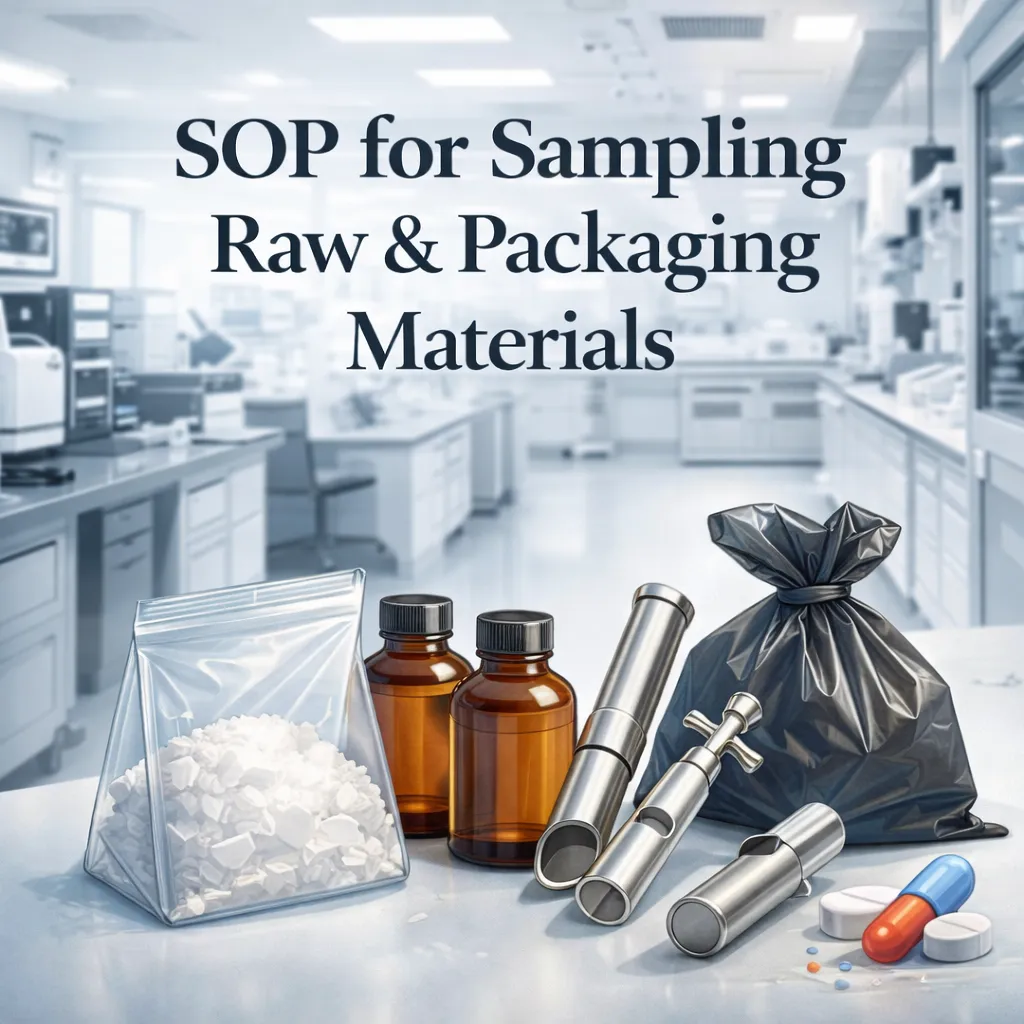

Learn GMP-compliant SOP for sampling raw and packaging materials in pharmaceuticals using √n+1 plan with step-by-step procedures.
Introduction
Sampling is the backbone of pharmaceutical quality control. Without a representative sample, even the most advanced analytical methods can produce misleading results. A well-defined SOP for sampling raw material in pharmaceuticals ensures compliance with GMP, maintains product integrity, and guarantees accurate testing outcomes.
This guide provides a complete, audit-ready SOP for sampling both raw materials and packaging materials https://iampharmacist.com/raw-material-sampling-devices/ using the scientifically accepted √n+1 sampling plan, ensuring regulatory compliance and operational efficiency.
Definition
A pharmaceutical sampling SOP is a standardized procedure that defines how representative samples of raw and packaging materials are collected, handled, and documented to ensure accurate quality control testing and compliance with GMP regulations.
Semantic Content Layer
A pharmaceutical sampling procedure integrates GMP compliance, contamination control, and statistical sampling techniques like √n+1 to ensure representative sampling. Proper sampling in quality control laboratories minimizes variability, ensures batch consistency, and supports regulatory approvals by maintaining traceability and data integrity.
1.0 OBJECTIVE
To establish a standardized procedure for sampling raw and packaging materials to obtain representative samples for quality analysis.
2.0 SCOPE
Applicable to:
- All raw materials received in stores
- All packaging materials (primary & secondary)
3.0 RESPONSIBILITY
- Doing: Technical Assistant
- Checking: Executive / Manager
4.0 ACCOUNTABILITY
Head of the Department
5.0 PROCEDURE
5.1 Operation – Raw Material Sampling
- Use clean, dry sampling devices stored in “Ready for Use” condition.
- Sanitize devices with 70% IPA for microbiological samples.https://www.scribd.com/document/743807488/Environmental-Monitoring-in-Pharmaceutical-Industry-1718860125
- Sample one consignment at a time.
- Wear PPE: mask, gloves, cap, and shoe covers.
- Perform sampling in designated booths (SB01 for inactive, SB02 for active).
- Ensure laminar airflow manometer reading: 7–15 mm water.
- Switch on sodium lamp for light-sensitive materials (5 minutes prior).
- Sample microbial test material first.
- Record material details in QC logbook.
- Assign sampling to authorized QC chemist.
5.2 Calibration (Sampling Accuracy & Control)
- Verify calibration status of weighing balances
- Ensure sampling tools are validated and clean
- Confirm environmental monitoring (LAF airflow, humidity)
- Maintain traceability through calibration records
5.3 Cleaning (Sampling Equipment & Area)
- Clean sampling devices post-use as per SOP
- Use 70% IPA for microbial sampling tools
- Maintain booth cleanliness before and after sampling
- Ensure “Cleaned” status label is displayed
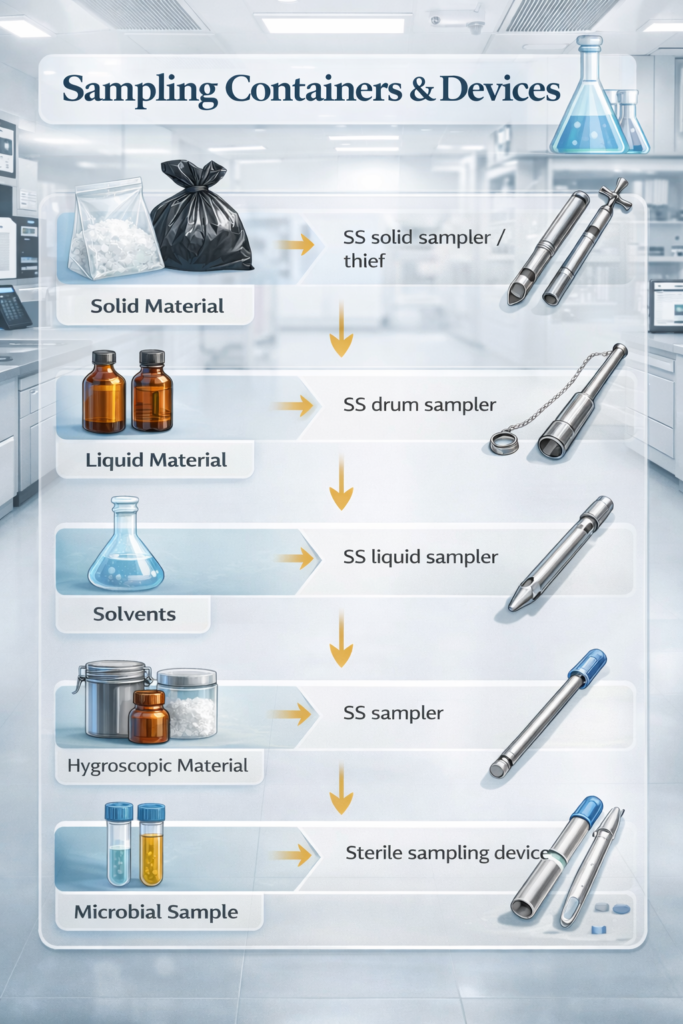
Sampling Containers & Devices
√n+1 Sampling Plan
A statistical sampling method where number of containers sampled = √n + 1 (n = total containers).
- Count total containers (n)
- Calculate √n
- Add 1 to the value
- Round off to nearest whole number
- Sample that number of containers
Packaging Material Sampling SOP
5.1 Operation – Packaging Material Sampling
- Receive packaging verification report from stores
- Enter details in sampling register
- Verify supplier against approved vendor list
- Assign sampling to authorized QC chemist
- Inspect labels and physical condition
- Use tools like scissors, cutters, knives
- Follow √n+1 or minimum 5 containers
- Collect samples from damaged or loose boxes
- Stamp “SAMPLED” on inspected units
- Transfer samples to PMQC for testing
Visual Inspection Sampling Plan
| No. of Boxes | Sample Size |
|---|---|
| Up to 150 | 20 |
| 151–280 | 32 |
| 281–500 | 50 |
| 501–1200 | 90 |
| 1201–3200 | 125 |
| 3201–10000 | 200 |
| 10001–35000 | 315 |
| 35001–150000 | 500 |
| 150001–500000 | 800 |
| Above 500000 | 1250 |
FAQs
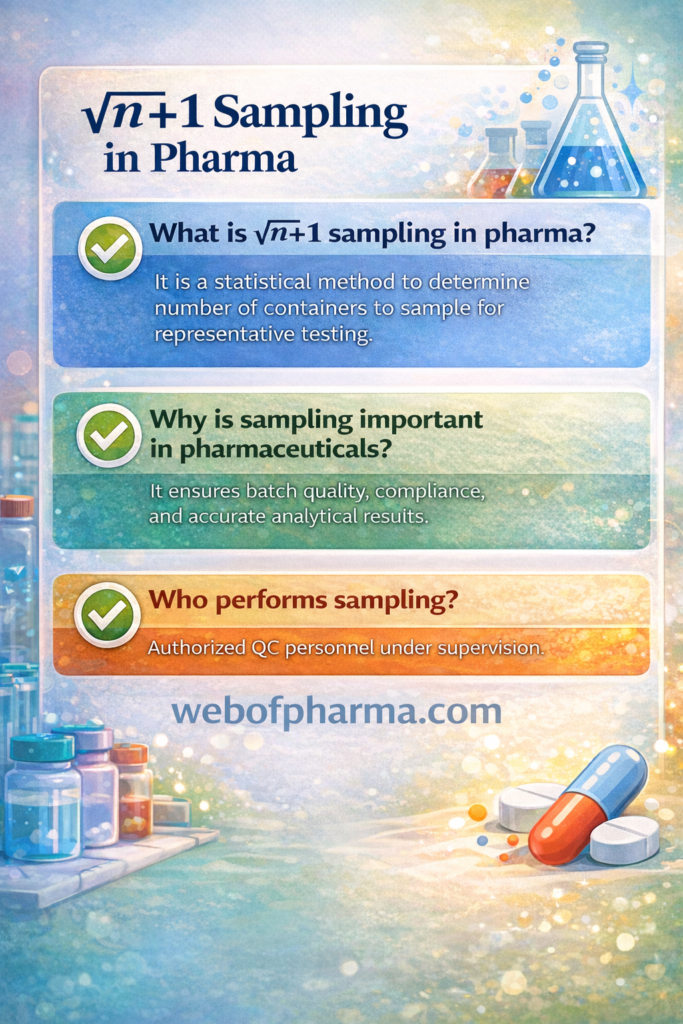
1. What is √n+1 sampling method?
A statistical method to determine sample size based on total containers.
2. Why is GMP sampling important?
It ensures compliance and product quality.
3. What PPE is required during sampling?
Mask, gloves, cap, and shoe covers.
4. Can multiple consignments be sampled together?
No, only one consignment at a time.
5. What is the role of sampling booth?
To prevent contamination during sampling.
6. What is PMQC?
Packaging Material Quality Control.
7. What happens if vendor is not approved?
Material is not sampled and reported to Quality Head.
8. Why is microbial sampling done first?
To avoid contamination from other sampling.
9. What tools are used for packaging sampling?
Scissors, cutters, knives.
10. What is done after sampling?
Material is labeled “UNDER TEST” and sent for analysis.
{ “@context”: “https://schema.org”, “@type”: “Article”, “headline”: “SOP for Sampling Raw & Packaging Materials”, “description”: “Comprehensive SOP for pharmaceutical sampling using √n+1 method.”, “author”: { “@type”: “Person”, “name”: “SEO Technical Writer” }, “publisher”: { “@type”: “Organization”, “name”: “Pharma Knowledge Hub” }, “datePublished”: “2026-04-18”, “mainEntity”: [ { “@type”: “FAQPage” }, { “@type”: “HowTo”, “name”: “Sampling Procedure in Pharma”, “step”: [ “Verify material”, “Calculate √n+1”, “Collect samples”, “Label samples”, “Send for testing” ] } ] }