


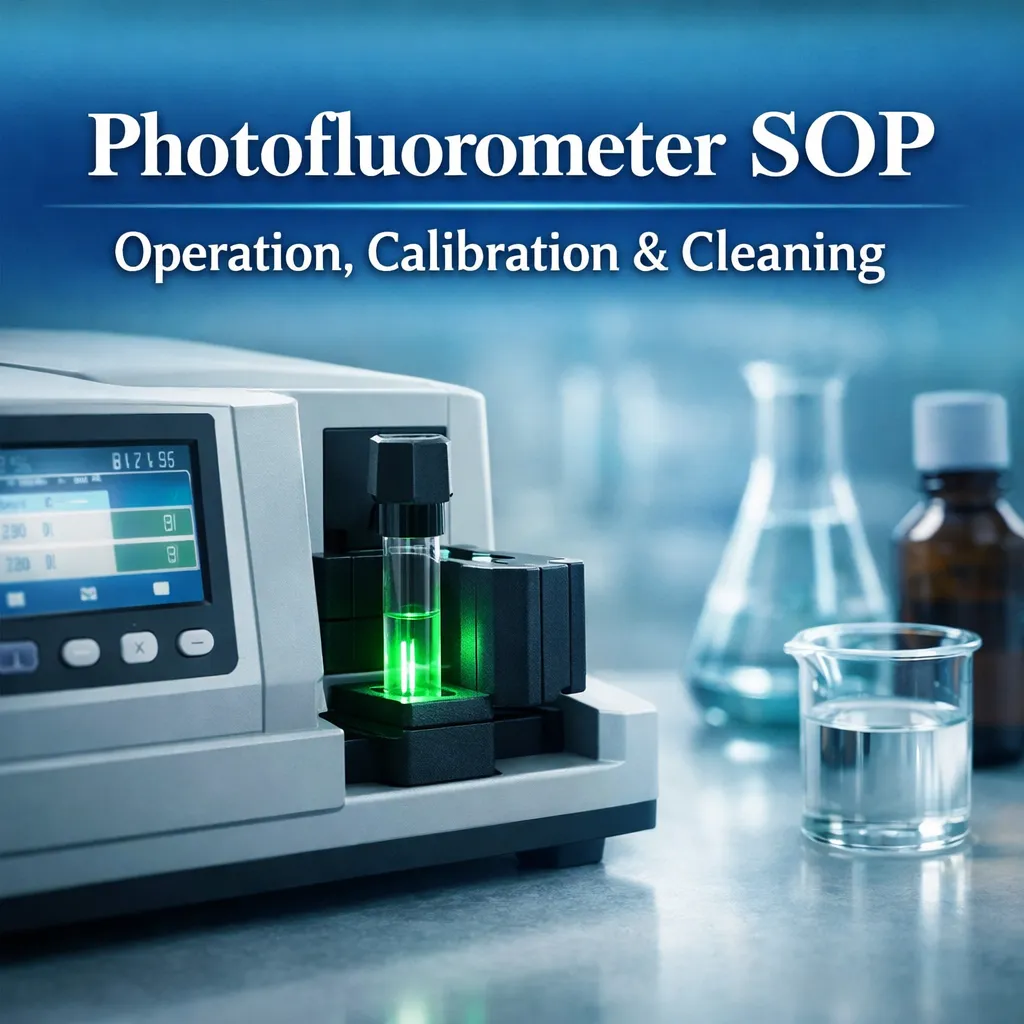

Step-by-step SOP for operating, calibrating, and cleaning a photofluorometer in QC labs, with safety tips, best practices, and compliance guidance.
Introduction
In pharmaceutical quality control (QC), precision and reproducibility are critical. A well-defined Photofluorometer SOP ensures accurate fluorescence measurements, regulatory compliance, and instrument longevity. This guide provides a structured, step-by-step procedure for operation, calibration, and cleaning—aligned with GMP expectations and lab best practices.
1. Objective
To establish a standardized procedure for operating, calibrating, and cleaning the photofluorometer to ensure accurate and reliable analytical results.
2. Scope
Applicable to the photofluorometer installed in the Quality Control laboratory.
3. Responsibility
- Execution: Technical Assistant / Executive
- Review/Verification: Executive / Manager
4. Accountability
- Head of Department
5. SOP for Photofluorometer
5.1 Operation of Photofluorometer
Step-by-Step Procedure
- Ensure the instrument is clean and calibrated before use.
- Switch on the mains power supply.
- Turn on the photofluorometer and allow warm-up (as per manufacturer guidelines).
- Select appropriate excitation and emission wavelengths.
- Prepare blank and sample solutions.
- Insert the blank sample and set baseline/zero.
- Place the test sample in the sample holder.
- Record fluorescence intensity.
- Repeat for all samples as required.
- Document results in the analytical record/logbook.
Best Practices
- Use matched quartz cuvettes for accuracy
- Avoid air bubbles in samples
- Maintain consistent sample positioning
5.2 Calibration of Photofluorometer
Step-by-Step Procedure
- Switch on and allow the instrument to stabilize.https://www.webofpharma.com/2026/02/hplc-and-uplc-key-differences.html
- Use certified reference standards (e.g., quinine sulfate).
- Prepare calibration standards as per method.
- Measure fluorescence intensity of standards.
- Plot calibration curve (intensity vs concentration).
- Verify linearity and correlation coefficient.
- Adjust instrument settings if deviation is observed.
- Record calibration data in the calibration log.
Calibration Checklist (Snippet-Friendly)
| Parameter | Requirement |
|---|---|
| Reference Standard | Certified |
| Linearity (R²) | ≥ 0.99 |
| Blank Response | Minimal/Zero |
| Frequency | As per SOP/weekly/monthly |
5.3 Cleaning of Photofluorometer
Step-by-Step Procedure
- After completion of testing, switch off the instrument.
- Switch off the mains power supply.
- Remove the filter and store it in the designated filter box.
- Remove the sample tube and clean it with a suitable solvent.
- Air dry the tube and store it properly.
- Clean the outer surface using isopropyl alcohol.
- Dry with lint-free tissue.
- Record cleaning activity in the instrument log card.
Safety Precautions
- Wear PPE (gloves, lab coat, goggles)
- Handle solvents like isopropyl alcohol carefully
- Avoid direct exposure to UV light
- Ensure proper electrical grounding
Common Mistakes to Avoid
- Skipping calibration before analysis
- Using contaminated cuvettes
- Incorrect wavelength selection
- Poor documentation practices
- Not allowing sufficient warm-up time
Best Practices for QC Labs
- Follow a strict calibration schedule
- Maintain instrument logs and audit trails
- Use only validated methods
- Perform routine preventive maintenancehttps://iampharmacist.com/quality-control-checklist/
- Train personnel regularly
Abbreviations
- SOP – Standard Operating Procedure
FAQs (SEO-Optimized)
1. What is a photofluorometer used for?
It measures fluorescence intensity to analyze compounds in pharmaceutical and chemical samples.
2. How often should a photofluorometer be calibrated?
Typically daily, weekly, or before critical analysis depending on SOP.
3. Which standard is used for calibration?
Commonly quinine sulfate or certified fluorescence standards.
4. Why is cleaning important?
Prevents contamination and ensures accurate readings.
5. Can I use glass cuvettes?
Quartz cuvettes are preferred for UV fluorescence measurements.
6. What happens if calibration fails?
Instrument settings must be adjusted or maintenance performed.
7. How to avoid signal fluctuations?
Ensure stable power supply and proper sample preparation.
8. Is warm-up necessary?
Yes, it stabilizes the light source for accurate readings.
9. What solvent is used for cleaning?
Typically isopropyl alcohol or sample-compatible solvent.
10. How to maintain compliance in QC labs?
Follow SOPs, maintain logs, and adhere to GMP guidelines.
{ “@context”: “https://schema.org”, “@type”: “BreadcrumbList”, “itemListElement”: [ { “@type”: “ListItem”, “position”: 1, “name”: “Home”, “item”: “https://www.webofpharma.com/” }, { “@type”: “ListItem”, “position”: 2, “name”: “Quality Control”, “item”: “https://www.webofpharma.com/quality-control/” }, { “@type”: “ListItem”, “position”: 3, “name”: “Photofluorometer SOP”, “item”: “https://www.webofpharma.com/photofluorometer-sop-operation-calibration-cleaning” } ] }