


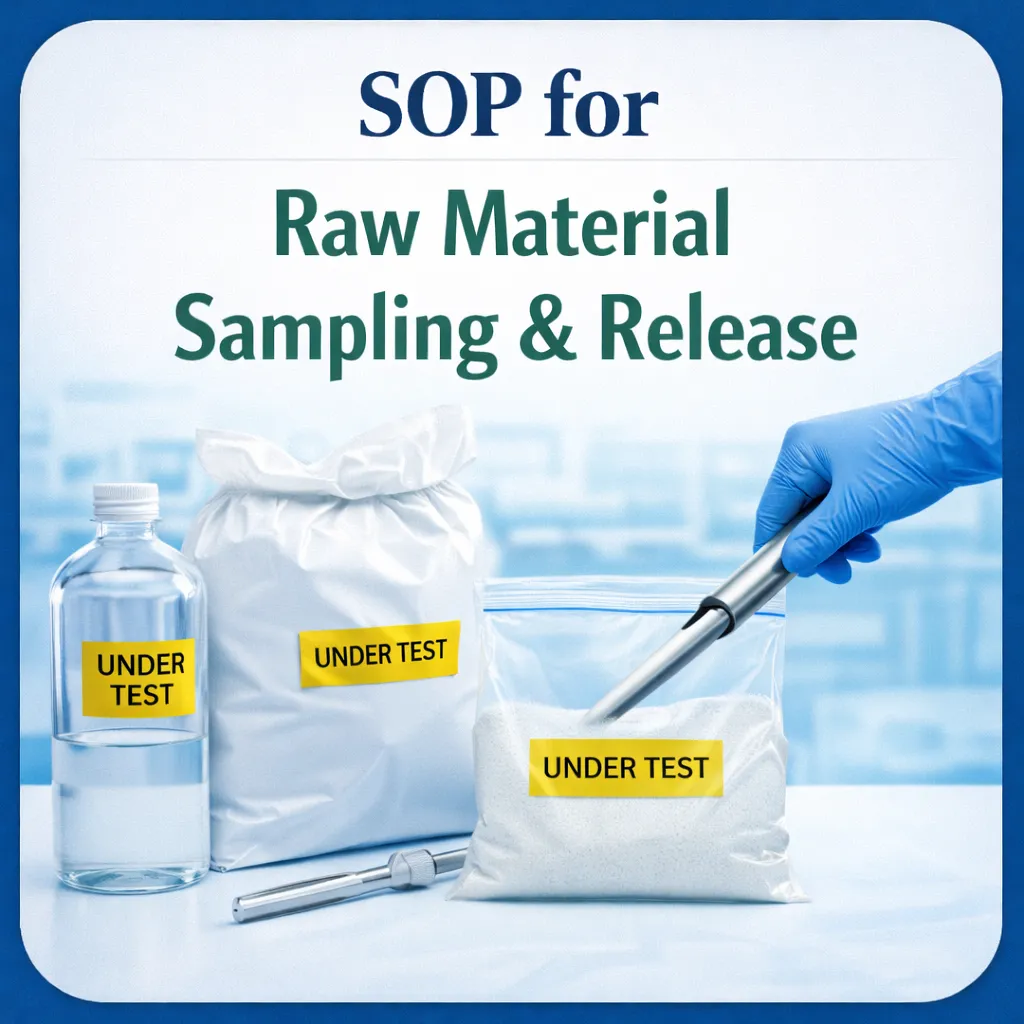

Learn SOP for raw material sampling and release in pharma with step-by-step procedures, safety precautions, and QC best practices.
Introduction
In pharmaceutical manufacturing, raw material quality directly impacts product safety and efficacy. A well-defined SOP for raw material sampling and release ensures compliance with GMP guidelines, prevents contamination, and guarantees batch consistency.
This guide outlines a complete, step-by-step SOP for sampling, testing, and releasing raw materials in API and QC laboratories.
Objective
To establish a standardized procedure for sampling and release of raw materials.
Scope
Applicable to all raw materials received at API Raw Material Stores and tested in the Quality Control (QC) department.
Responsibility
- Execution: Technical Assistant
- Verification: Executive / Manager
- Accountability: Head of Department
Step-by-Step SOP: Raw Material Sampling Procedure
1. Precautions Before Sampling
- Use clean and dry sampling devices
- Use separate tools for different materials
- Follow special handling procedures for:
- Volatile chemicals
- Hazardous solvents
2. Material Receipt & Documentation
Upon receiving the Material Receiving Note (MRN):
Record the following in the QC log register:
- Material name
- Batch number
- Manufacturing/Expiry date
- Manufacturer/Supplier name
- Quantity received
- Date of receipt
- A.R. Number
- Store reference number
3. Selection of Sampling Containers
Choose containers based on material type:
- Solid materials: Clean polyethylene bags
- Liquids/solvents: Glass bottles or stoppered flasks
4. Sampling Devices
- Use stainless steel samplers
- For solids: Thief sampler (multi-level sampling)
- For liquids: Drum sampler
Cleaning of Sampling Devices
- Wash with raw water
- Rinse with DM water
- Air dry or wipe with tissue
- Store in designated container
5. Sampling Preparation
- Assign sampling to authorized QC chemist
- Verify MRN details with supplier label
- Generate “UNDER TEST” labels with:
- Material name
- Code number
- A.R. number
- Date & sampler initials
- Ensure containers are externally clean
- Report discrepancies immediately
6. Handling Damaged Containers
- Inspect containers before sampling
- If damaged:
- Sample separately
- Assign separate A.R. number
- Keep aside for investigation
7. Sampling Procedure
Sampling Formula
Use:
√n + 1 containers
Example: For 10 containers → √10 + 1 = 4 containers
Sampling Steps
- Sample from selected containers
- Use clean sampling device
- Record container numbers
- Collect from:
- Top
- Middle
- Bottom
Sample Quantity
- Solids/Liquids: ~50 g
- Solvents: ~250 ml
Composite Sample Preparation
- Mix equal quantities from all samples
- Ensure uniform blending
Post Sampling
- Close containers tightly
- Label containers as:
- “SAMPLED”
- “UNDER TEST” (Yellow label)
- Transfer sample to QC lab
- Record sampling details
Testing and Release Procedure
1. Sample Testing
- Enter sample in log register
- Perform:
- Chemical analysis
- Instrumental analysis
- Follow approved specifications
2. Documentation
- Record results in test protocol
- Update Material Receiving Record (MRR):
- Approved/Rejected status
- Date of release/rejection
3. Final Release
- Submit reports to QC in-charge
- Approval determines material status:
- ✅ Approved → Released for production
- ❌ Rejected → Segregated
Equipment Cleaning & Maintenance
Though not instrument-heavy, cleaning is critical:
- Clean sampling devices after use
- Maintain dedicated storage
- Avoid cross-contamination
Safety Precautions
- Wear PPE:
- Gloves
- Goggles
- Mask
- Safety shoes
- Follow hazardous material SOPs
- Wash hands after sampling
- Ensure proper ventilation
Common Mistakes to Avoid
- ❌ Using same sampler for different materials
- ❌ Ignoring damaged containers
- ❌ Incorrect sampling quantity
- ❌ Skipping documentation
- ❌ Improper labeling
Best Practices for Pharma QC Sampling
- Follow GMP guidelines strictly
- Maintain traceability (A.R. numbers)
- Use calibrated sampling tools
- Train personnel regularly
- Audit sampling procedures periodically
FAQs
1. What is raw material sampling in pharma?
It is the process of collecting representative samples for quality testing.
2. What is √n + 1 sampling?
A statistical method to determine number of containers to sample.
3. Why is sampling done at different levels?
To ensure uniformity and detect segregation.
4. What is a composite sample?
A mixture of samples from multiple containers.
5. What label is used after sampling?
“UNDER TEST” label (yellow).
6. What happens after sampling?
Samples are tested in QC laboratory.
7. Who approves raw materials?
QC in-charge or authorized personnel.
8. How are damaged containers handled?
Sampled separately and investigated.
9. What PPE is required?
Gloves, goggles, mask, and safety shoes.
10. Why is documentation important?
For traceability, compliance, and audits.https://iampharmacist.com/validate-excel-calculation-sheets-in-pharmaceuticals/