


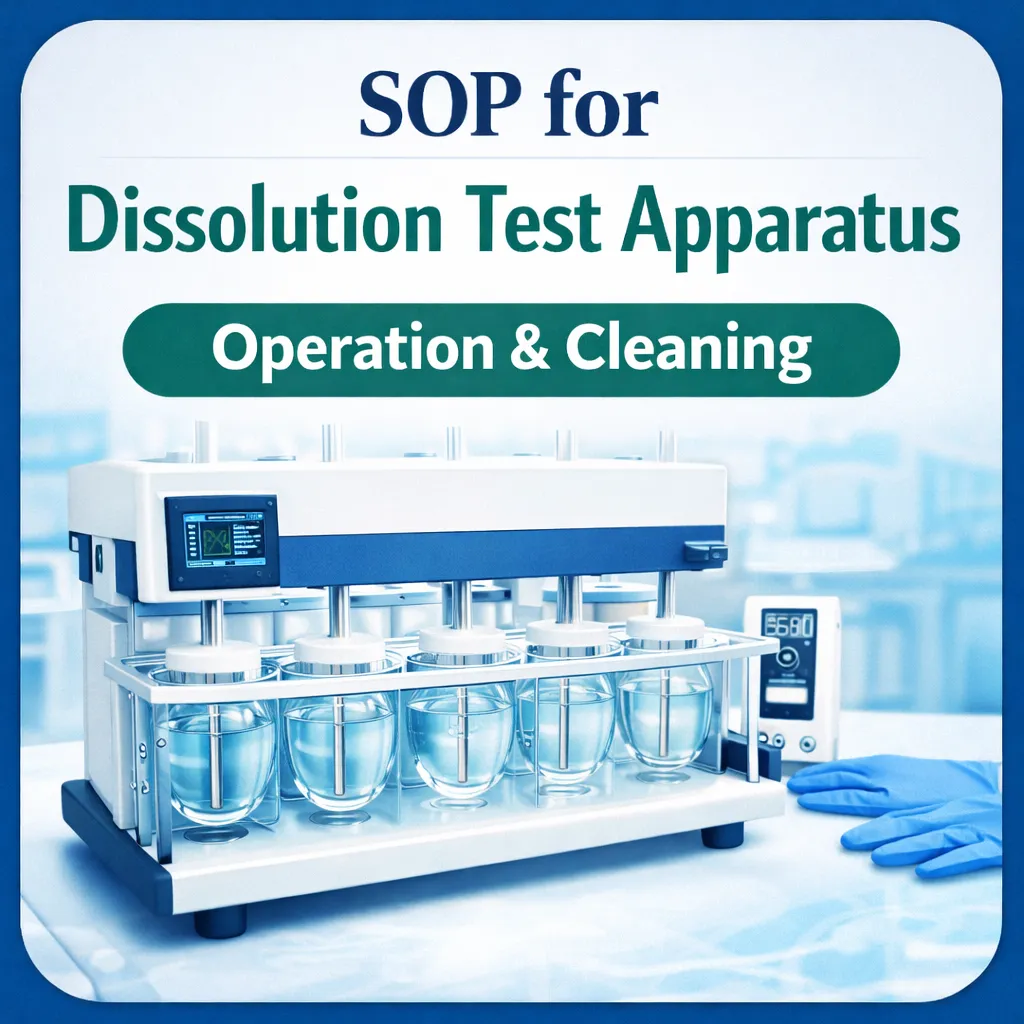

Learn SOP for dissolution test apparatus operation, calibration & cleaning with step-by-step procedures, safety tips, and best practices for QC labs.
Introduction
In pharmaceutical quality control, the dissolution test apparatus plays a critical role in evaluating drug release profiles. A well-defined SOP for dissolution test apparatus ensures accuracy, compliance with regulatory standards (USP/IP), and reproducibility of results.
This guide provides a complete, step-by-step SOP covering operation, calibration, cleaning, and maintenance—designed for QC analysts, auditors, and pharma professionals.
Objective
To establish a standardized procedure for the operation, calibration, and cleaning of the dissolution test apparatus to ensure consistent and reliable results.
Scope
Applicable to all dissolution test apparatus installed in the Quality Control (QC) laboratory.
Responsibility
- Execution: QC Analyst / Worker
- Verification: Executive / Manager
- Accountability: Head of Department
Step-by-Step SOP: Operation of Dissolution Apparatus
Preparation Before Operation
- Ensure the instrument is clean and calibrated
- Verify temperature (typically 37 ± 0.5°C)
- Check RPM settings (as per method)
- Confirm medium preparation and degassing
Operating Procedure
- Switch ON the main power supply
- Set required temperature and RPM
- Place dissolution medium in bowls
- Fix paddles/baskets properly
- Lower the shafts into the medium
- Allow system stabilization
- Introduce the sample (tablet/capsule)
- Start the timer immediately
- Withdraw samples at specified intervals
Calibration of Dissolution Test Apparatus
Calibration Parameters
- Temperature calibration
- RPM (rotation speed)
- Timer accuracy
- Vessel centering and alignment
Calibration Procedure
- Verify temperature using a calibrated thermometer
- Check RPM using tachometer
- Confirm timer accuracy
- Perform mechanical calibration (alignment, wobble check)
- Document all readings
✅ Perform calibration periodically or as per SOP schedule
Electrode Activation (If Applicable)
Some systems (with probes/sensors) require activation:
- Soak electrode in buffer solution
- Calibrate with standard solutions
- Rinse with purified water before use
SOP for Cleaning Dissolution Test Apparatus
Cleaning Objective
To ensure removal of residues and prevent cross-contamination.
Cleaning Frequency
- After every test: Apparatus cleaning
- Weekly: Water bath cleaning
Cleaning Procedure for Apparatus
- Raise motor drive using Up/Stop/Down switch
- Switch OFF the instrument
- Switch OFF the main power
Component Cleaning
- Remove bowls and discard medium
- Wash bowls with purified water
- Place bowls back in order
- Remove baskets/paddles using key
- Wash with purified water
- Dry with tissue paper
- Store properly
- Record cleaning in instrument logbook
Cleaning Procedure for Water Bath
- Remove all bowls
- Drain water from bath
- Wash with:
- Raw water
- Detergent solution
- Raw water (until no foam remains)
- Final rinse with purified water
- Reassemble apparatus
- Fill bath up to level mark
- Record cleaning activity
Safety Precautions
- Always switch OFF power before cleaning
- Use PPE (gloves, lab coat, goggles)
- Avoid water contact with electrical components
- Handle glass vessels carefully
- Follow GMP documentation practices
Common Mistakes to Avoid
- ❌ Improper alignment of paddles
- ❌ Incorrect RPM settings
- ❌ Skipping calibration
- ❌ Incomplete cleaning (residue left)
- ❌ Not recording in logbook
Best Practices for QC Labs
- Maintain calibration schedule
- Use only purified water
- Label cleaned components properly
- Train staff regularly
- Audit SOP compliance periodically
FAQs (SEO Optimized)
1. What is a dissolution test apparatus?
It is a laboratory instrument used to measure the rate of drug release from dosage forms.
2. Why is calibration important?
Calibration ensures accurate and reproducible dissolution results.
3. How often should cleaning be done?
After every test and water bath cleaning weekly.
4. What water is used for cleaning?
Purified water is recommended.
5. What happens if cleaning is skipped?
It may cause contamination and inaccurate results.
6. What are the main calibration parameters?
Temperature, RPM, timer, and alignment.
7. Can detergent be used?
Yes, for water bath cleaning followed by proper rinsing.
8. What is the ideal dissolution temperature?
Typically 37 ± 0.5°C.
9. Who is responsible for SOP compliance?
QC staff, with oversight from management.
10. What records should be maintained?
Instrument logbook, calibration records, and cleaning logs.