


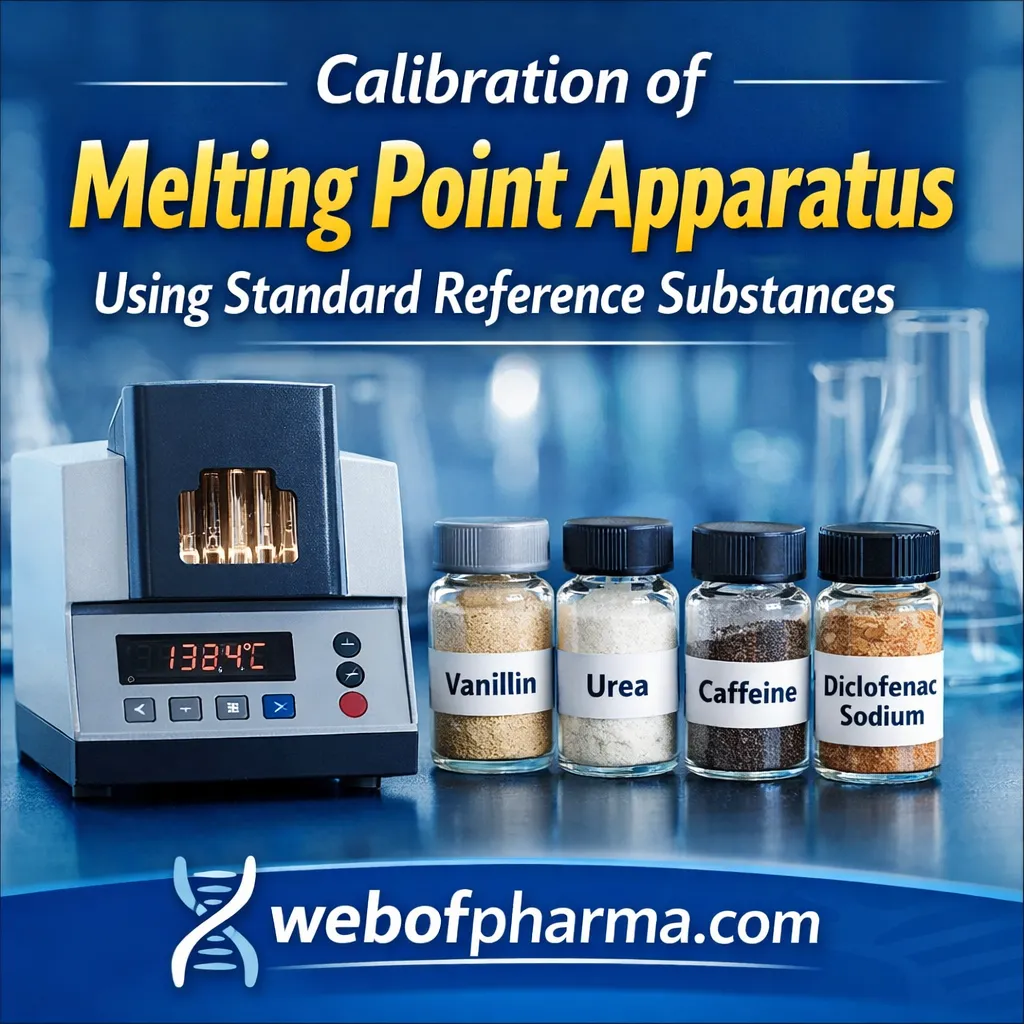

Learn how to calibrate the melting point apparatus using Vanillin, Acetanilide, Urea, Sulphanilamide, Caffeine, and Diclofenac Sodium. Step-by-step procedure, acceptance criteria, and FAQs included.
Calibration of analytical instruments is a critical part of pharmaceutical quality control. One such essential instrument is the melting point apparatus, which is widely used to determine the purity and identity of substances.
In this guide, we will explain how to calibrate the Melting Point Apparatus using Vanillin, Acetanilide, Urea, Sulphanilamide, Caffeine and Diclofenac Sodium, along with acceptance criteria, frequency, and maintenance requirements.
Why Calibration of Melting Point Apparatus is Important
Accurate melting point determination ensures:
- Reliable identification of pharmaceutical substances
- Verification of purity
- Compliance with regulatory standards (GMP/GLP)
Improper calibration can lead to incorrect results, affecting product quality and safety.
Reference Substances and Their Standard Melting Point Ranges
The following certified reference standards are used for calibration:
| Reference Substance | Standard Range |
|---|---|
| Vanillin | 81.0°C – 83.0°C |
| Acetanilide | 114.0°C – 116.0°C |
| Urea (finely crushed) | 132.0°C – 135.0°C |
| Sulphanilamide | 164.5°C – 166.5°C |
| Caffeine (dried at 100°C) | 234.0°C – 237.0°C |
| Diclofenac Sodium | 277.0°C – 283.0°C |
These substances cover a wide temperature range, ensuring proper calibration across the instrument’s working limits.
Step-by-Step Procedure to Calibrate the Melting Point Apparatus
Follow these steps carefully to calibrate the melting point apparatus using Vanillin, Acetanilide, Urea, Sulphanilamide, Caffeine and Diclofenac Sodium:
- Check Instrument Connections
Ensure all electrical and functional connections of the melting point apparatus are properly secured. - Start the Instrument
Operate the instrument according to the manufacturer’s standard operating procedure (SOP). - Select Reference Substances
Use certified reference standards for calibration. - Follow Temperature Sequence
Always start calibration from the lowest melting point substance and proceed to the highest:- Vanillin → Acetanilide → Urea → Sulphanilamide → Caffeine → Diclofenac Sodium
- Determine Melting Point
Record the observed melting point of each substance accurately. - Compare Results
Compare observed values with the standard melting point ranges.
Acceptance Criteria
- The observed melting point of each reference substance must fall within the specified standard range.
- Any deviation indicates calibration failure.
Calibration Frequency
- Calibration should be performed once every month to ensure consistent accuracy.
Maintenance and Repairs
- If the instrument fails to meet the acceptance criteria:
- Label it as “OUT OF CALIBRATION”
- Do not use it for analysis
- Send it for repair or servicing
- After maintenance:
- Perform re-calibration before reuse
Best Practices for Accurate Calibration
- Use high-purity reference standards
- Ensure proper sample preparation (e.g., finely crushed urea)
- Dry substances like caffeine before use
- Avoid contamination between samples
- Maintain proper heating rate as per SOP
Frequently Asked Questions (FAQs)
1. Why do we calibrate the melting point apparatus?
To ensure accurate temperature measurement and reliable determination of substance purity and identity.
2. Which substances are used to calibrate the melting point apparatus?
Common standards include Vanillin, Acetanilide, Urea, Sulphanilamide, Caffeine, and Diclofenac Sodium.
3. Why are multiple reference substances used?
They cover a wide temperature range, ensuring calibration accuracy across the instrument’s working limits.
4. What is the acceptance criteria for calibration?
The observed melting point must fall within the specified standard range for each reference substance.
5. How often should the melting point apparatus be calibrated?
It should be calibrated once a month.
6. What should be done if calibration fails?
Label the instrument as “Out of Calibration” and send it for repair or servicing.
7. Why is caffeine dried before calibration?
To remove moisture that may affect its melting point.
8. Why is urea required to be finely crushed?
To ensure uniform heating and accurate melting point determination.
9. Can calibration be performed in any order?
No, it should be done from lowest to highest melting point substances.
10. What happens if calibration is not performed regularly?
It may lead to inaccurate results, regulatory non-compliance, and compromised product quality.