


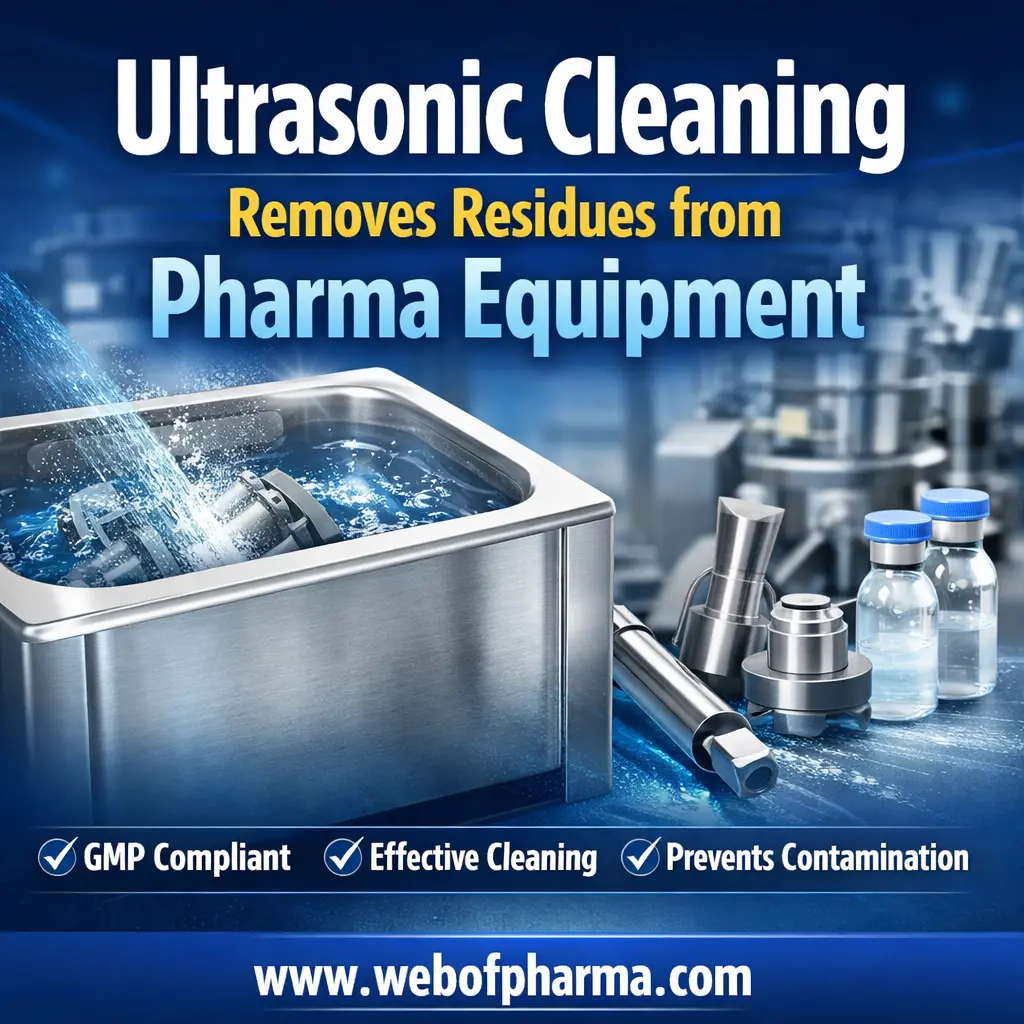

Discover how ultrasonic cleaning removes residues from pharma equipment to prevent contamination, improve cleaning efficiency, and ensure GMP compliance in pharmaceutical manufacturing. Learn the process, validation steps, benefits, and best practices.
Cleanliness in pharmaceutical manufacturing is not just a best practice—it is a regulatory necessity. Every piece of equipment used in drug production must be thoroughly cleaned to prevent cross-contamination, protect product integrity, and maintain compliance with Good Manufacturing Practices (GMP).
One of the most reliable and validated modern cleaning technologies is ultrasonic cleaning. This method uses high-frequency sound waves to remove contaminants from complex equipment surfaces that are difficult to clean manually. In fact, ultrasonic cleaning removes residues from pharma equipment with remarkable precision, consistency, and efficiency.
This article explains how ultrasonic cleaning works, its benefits in pharmaceutical operations, validation requirements, regulatory expectations, and practical best practices for implementation.
What Is Ultrasonic Cleaning in Pharmaceutical Manufacturing?
Ultrasonic cleaning is a precision cleaning method that uses high-frequency sound waves—typically between 20 kHz and 40 kHz—transmitted through a liquid cleaning solution to remove contaminants from equipment surfaces.
The process relies on a physical phenomenon called cavitation, where microscopic bubbles form and collapse rapidly in the liquid. These implosions create powerful micro-jets that dislodge residues, oils, particles, and contaminants—even from microscopic crevices.
This is why ultrasonic cleaning is widely trusted in regulated industries. It consistently demonstrates that ultrasonic cleaning removes residues from pharma equipment without damaging sensitive components.
How Ultrasonic Cleaning Works: Step-by-Step
Ultrasonic cleaning involves three fundamental stages.
1. Ultrasonic Wave Generation
Ultrasonic transducers convert electrical energy into high-frequency sound waves inside a cleaning tank.
Typical operating ranges:
- 20–25 kHz: Aggressive cleaning for heavy contamination
- 35–40 kHz: Gentle cleaning for delicate equipment
The selected frequency directly affects cleaning intensity and suitability for specific equipment.
2. Cavitation Bubble Formation and Collapse
As sound waves pass through the cleaning solution, alternating pressure cycles create microscopic bubbles.
These bubbles:
- Form rapidly
- Collapse violently
- Release localized energy
This energy generates extremely high localized pressure and temperature at a microscopic scale, enabling effective contaminant removal.
3. Removal of Contaminants
The collapsing bubbles create high-velocity liquid jets that scrub equipment surfaces.
This mechanism allows ultrasonic cleaning to reach:
- Internal channels
- Narrow tubing
- Threaded components
- Filling needles
- Filters
- Dies and punches
As a result, ultrasonic cleaning removes residues from pharma equipment that manual cleaning methods often miss.
Key Components of an Ultrasonic Cleaning System
A standard pharmaceutical ultrasonic cleaning system includes the following components:
1. Stainless Steel Tank (316L)
Provides corrosion resistance and compatibility with pharmaceutical cleaning chemicals.
2. Ultrasonic Transducer
Generates ultrasonic vibrations that create cavitation.
3. Ultrasonic Generator
Converts electrical energy into high-frequency sound waves.
4. Cleaning Solution
Typically consists of purified water and validated detergents or solvents.
5. Heating System (Optional)
Maintains solution temperature—usually between 40°C and 60°C—to enhance cleaning efficiency.
6. Rinse and Drying Units
Ensure removal of residual detergents and prepare equipment for reuse.
Cleaning Solutions Used in Ultrasonic Cleaning
Selecting the correct cleaning solution is critical for effective residue removal and regulatory compliance.
Common Cleaning Solutions
Alkaline Detergents
Used for:
- Oils
- Grease
- Organic residues
Acidic Solutions
Used for:
- Mineral deposits
- Inorganic residues
Neutral Detergents
Used for:
- Routine cleaning
- Sensitive materials
All cleaning agents must be:
- Compatible with equipment materials
- Validated for residue removal
- Fully rinsable
Proper solution selection ensures that ultrasonic cleaning removes residues from pharma equipment without causing corrosion or contamination.
Benefits of Ultrasonic Cleaning in the Pharmaceutical Industry
Ultrasonic cleaning offers significant operational and regulatory advantages.
1. Superior Cleaning Efficiency
Ultrasonic systems remove microscopic contaminants from:
- Threads
- Crevices
- Internal passages
- Complex geometries
This level of cleaning is difficult to achieve manually.
2. Time Savings
Manual cleaning can take hours.
Ultrasonic cleaning typically requires:
10–20 minutes per cycle
This reduces downtime and increases productivity.
3. Gentle Yet Effective Cleaning
Ultrasonic cleaning:
- Protects polished surfaces
- Prevents mechanical damage
- Maintains equipment integrity
4. Consistency and Repeatability
Automated cycles ensure:
- Standardized cleaning
- Reduced variability
- Reliable validation results
5. Reduced Human Error
Automation minimizes operator-dependent variability, improving reliability and compliance.
6. Material Compatibility
Ultrasonic cleaning works with:
- Stainless steel
- Glass
- Plastics
- Rubber components
- Precision tools
7. Environmentally Friendly Operation
Ultrasonic cleaning:
- Uses less water
- Requires fewer chemicals
- Produces less waste
This supports sustainable manufacturing practices.
Applications of Ultrasonic Cleaning in Pharmaceutical Facilities
Ultrasonic cleaning is widely used across pharmaceutical operations.
Production Areas
Used to clean:
- Tablet punches and dies
- Filling needles
- Nozzles
- Compression tooling
Quality Control Laboratories
Used to clean:
- Glassware
- Vials
- Syringes
- Sampling tools
Maintenance Departments
Used to clean:
- Filters
- Valves
- Seals
- Small mechanical components
Sterile Manufacturing Preparation
Ultrasonic cleaning removes particles before sterilization processes begin.
Ultrasonic Cleaning Validation Requirements
Ultrasonic cleaning must be validated to demonstrate consistent performance and regulatory compliance.
Key Validation Steps
1. Define Acceptance Criteria
Examples:
- Visual cleanliness
- Chemical residue limits
- Microbial limits
2. Develop Cleaning Protocols
Protocols should define:
- Cleaning cycle duration
- Solution concentration
- Temperature range
- Equipment loading limits
3. Perform Test Runs
Testing uses representative equipment and worst-case contaminants.
4. Conduct Sampling and Analysis
Common testing methods:
- Swab testing
- Rinse sampling
- Total Organic Carbon (TOC) testing
5. Document Results
Documentation must demonstrate:
- Repeatability
- Effectiveness
- Compliance
Regular revalidation ensures continued performance.
GMP and Regulatory Compliance Requirements
Regulatory agencies expect validated cleaning processes that consistently prevent contamination.
Key Regulatory Expectations
Cleaning systems must:
- Demonstrate residue removal
- Produce repeatable results
- Maintain documented evidence
- Support product safety
Major Regulatory Guidelines
Manufacturers typically follow:
- ICH Q7 — GMP for APIs
- FDA 21 CFR Part 211
- WHO GMP Guidelines
Failure to maintain validated cleaning systems is a frequent cause of regulatory observations.
Best Practice Guidelines for Ultrasonic Cleaning
Follow these practices to maintain effective cleaning performance.
- Use purified or deionized water
- Replace cleaning solutions regularly
- Monitor temperature and frequency
- Ensure full immersion of components
- Rinse thoroughly after cleaning
- Dry equipment using filtered air
- Document each cleaning cycle
These steps ensure that ultrasonic cleaning removes residues from pharma equipment consistently and safely.
Limitations of Ultrasonic Cleaning
While highly effective, ultrasonic cleaning has certain limitations.
Common Constraints
- Large equipment may not fit in cleaning tanks
- Highly viscous liquids reduce cavitation efficiency
- Transducers require routine maintenance
Despite these limitations, ultrasonic cleaning remains one of the most reliable cleaning methods in pharmaceutical manufacturing.
Conclusion
In modern pharmaceutical manufacturing, cleanliness is directly linked to product quality, regulatory compliance, and patient safety. Ultrasonic cleaning has become the industry standard for precision cleaning because it delivers consistent, validated results.
When properly implemented and validated, ultrasonic cleaning removes residues from pharma equipment efficiently, reduces contamination risks, and supports GMP compliance. Integrating ultrasonic cleaning into routine maintenance and validation programs improves operational reliability, reduces downtime, and strengthens confidence in product quality.
Ultimately, effective cleaning is not just about regulatory compliance—it is about protecting patients and maintaining trust in pharmaceutical products.
Frequently Asked Questions (FAQs)
1. What is ultrasonic cleaning in pharmaceutical manufacturing?
Ultrasonic cleaning is a process that uses high-frequency sound waves in a liquid solution to remove contaminants from pharmaceutical equipment surfaces.
2. How does ultrasonic cleaning remove residues from pharma equipment?
It uses cavitation bubbles that collapse and create microscopic cleaning forces capable of removing particles from difficult-to-reach areas.
3. What frequency is typically used in ultrasonic cleaning?
Ultrasonic cleaning systems usually operate between 20 kHz and 40 kHz, depending on cleaning intensity requirements.
4. Is ultrasonic cleaning GMP compliant?
Yes. Ultrasonic cleaning is GMP compliant when the process is validated, documented, and controlled.
5. What types of equipment can be cleaned using ultrasonic systems?
Common items include:
- Filling needles
- Punches and dies
- Filters
- Glassware
- Valves
- Precision tools
6. How long does an ultrasonic cleaning cycle take?
Most ultrasonic cleaning cycles take 10 to 30 minutes, depending on contamination levels and equipment size.
7. What tests are used to validate ultrasonic cleaning?
Typical validation tests include:
- Swab testing
- Rinse sampling
- Total Organic Carbon (TOC) analysis
8. What cleaning solutions are used in ultrasonic cleaning?
Common solutions include:
- Alkaline detergents
- Neutral detergents
- Mild acidic solutions
Selection depends on residue type and material compatibility.
9. Can ultrasonic cleaning damage pharmaceutical equipment?
No. When properly configured, ultrasonic cleaning is a gentle and non-destructive cleaning method suitable for sensitive components.
10. Why is ultrasonic cleaning widely used in pharmaceutical manufacturing?
Because it provides:
- Consistent cleaning
- High efficiency
- Reduced contamination risk
- Regulatory compliance
- Reliable validation results