



Learn enteric coating mechanisms, polymers, materials, advantages, drug release behavior, and pharmaceutical applications in oral dosage forms.
Definition of Enteric Coating
Enteric coating is a specialized polymeric coating applied to oral pharmaceutical dosage forms to prevent drug release in the acidic environment of the stomach while allowing dissolution and drug release in the intestine. It is primarily used to protect acid-sensitive drugs, minimize gastric irritation, and achieve site-specific or delayed drug delivery.
Introduction
Enteric coating is one of the most widely used modified-release technologies in pharmaceutical manufacturing. The technique plays a crucial role in protecting active pharmaceutical ingredients (APIs) from acidic degradation in the stomach while ensuring targeted release in the intestinal tract.
Modern enteric-coated dosage forms are extensively used for proton pump inhibitors, antibiotics, peptides, NSAIDs, probiotics, and colon-targeted therapies. Advances in polymer science and coating technologies have significantly improved the performance, stability, and bioavailability of enteric-coated formulations.
Despite its advantages, enteric coating can influence gastrointestinal transit time, dissolution behavior, drug absorption, and therapeutic response. Factors such as gastric pH variability, polymer type, gastric emptying, and coating thickness may affect in vivo drug release performance.
Recent pharmaceutical innovations combine enteric coating with multiparticulate systems, mucoadhesive polymers, nanoparticles, and multilayer technologies to improve oral bioavailability and site-specific delivery. https://www.sciencedirect.com/science/chapter/edited-volume/abs/pii/B9781845690700500047
What Is Enteric Coating?
Enteric coating is an outer protective layer made from pH-sensitive polymers that remain insoluble in acidic gastric conditions but dissolve at higher intestinal pH levels.
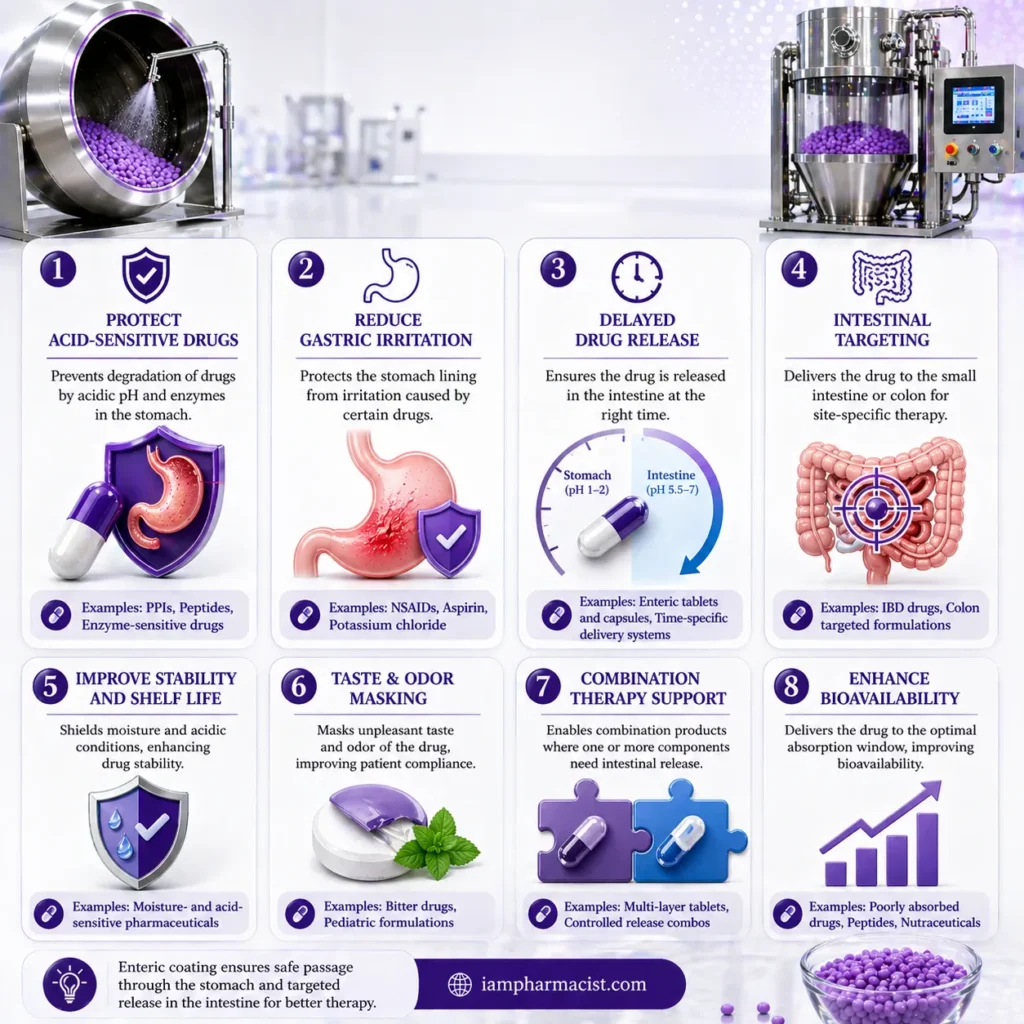
Primary Functions of Enteric Coating
- Protect acid-labile drugs
- Prevent gastric irritation
- Achieve delayed drug release
- Enable intestinal targeting
- Improve stability
- Enhance bioavailability
- Reduce degradation by gastric enzymes
Mechanism of Enteric Coating
Enteric coatings function through pH-dependent polymer solubility.
How Enteric Coating Works
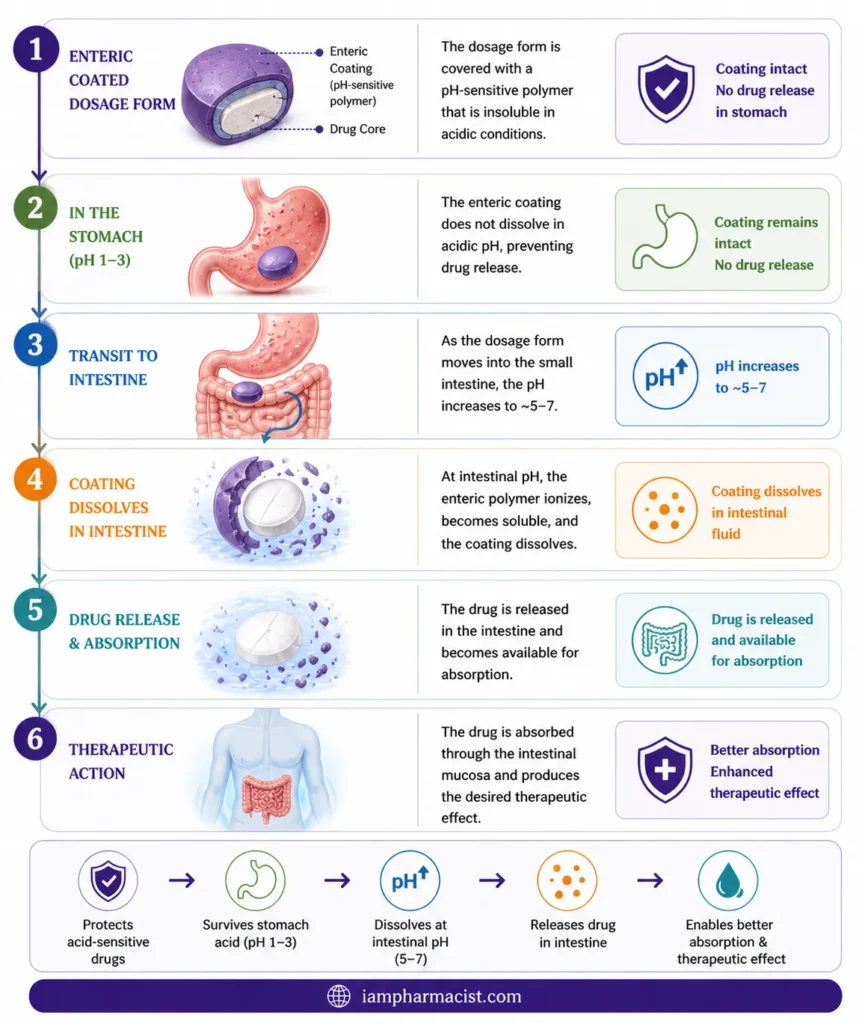
Step 1: Drug Remains Intact in Stomach
The enteric polymer remains insoluble at gastric pH (1–3), preventing premature drug release.
Step 2: Dosage Form Reaches Intestine
When the dosage form enters the small intestine, the environmental pH increases to approximately 5–7.
Step 3: Polymer Ionization and Dissolution
The polymer ionizes and dissolves at intestinal pH, allowing drug release.
Step 4: Drug Absorption
The released drug dissolves and becomes available for absorption in the intestinal tract.
pH-Dependent Drug Release in Enteric Coating
🟣 Enteric Coating Solubility Principle:
Enteric polymers remain insoluble in acidic gastric pH (1–3) and become soluble at intestinal pH (>5–6), enabling targeted drug release in the intestine.
Common Materials Used in Enteric Coating
Enteric Coating Polymers
| Polymer | Dissolution pH | Application |
|---|---|---|
| Cellulose Acetate Phthalate (CAP) | >6 | Delayed-release tablets |
| Hydroxypropyl Methylcellulose Phthalate (HPMCP) | 5–5.5 | Enteric film coating |
| Polyvinyl Acetate Phthalate (PVAP) | >5 | Acid protection |
| Methacrylic Acid Copolymers (Eudragit) | 5–7 | Intestinal targeting |
| Shellac | Variable | Traditional enteric coating |
Types of Enteric Coating Systems
1. Film Coating
Thin polymer films applied using spray systems.
Advantages
- Uniform coating
- Faster processing
- Better appearance
- Lower weight gain
2. Sugar Coating
Multiple layers of sugar and enteric materials applied sequentially.
Advantages
- Taste masking
- Improved aesthetics
Limitations
- Longer processing time
- Higher tablet weight
Applications of Enteric Coating
Role of Enteric Coating in Bioavailability Enhancement
Enteric coatings may improve bioavailability by protecting drugs from acidic degradation and delivering them to absorption sites within the intestine.
Benefits
- Reduced gastric degradation
- Increased intestinal concentration
- Improved drug stability
- Enhanced absorption window targeting
However, variability in gastric emptying and intestinal transit time may affect drug absorption and therapeutic response.
Enteric Coating in Multiparticulate Drug Delivery Systems
Multiparticulate systems include:
- Pellets
- Granules
- Beads
- Nanoparticles
- Microcapsules
Advantages of Multiparticulate Enteric Systems
- Reduced plasma variability
- Better GI distribution
- Lower dose dumping risk
- Improved absorption consistency
These systems often outperform monolithic tablets in biopharmaceutical behavior.
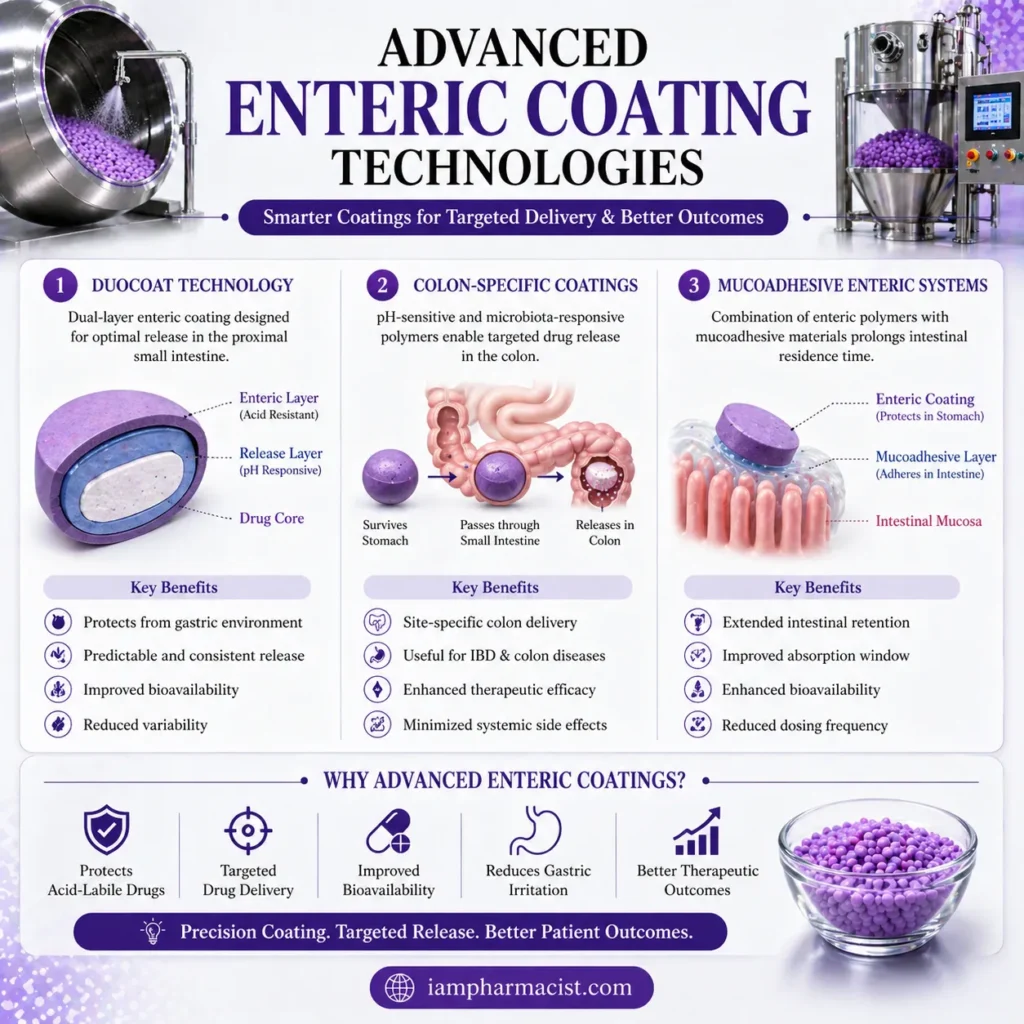
Advanced Enteric Coating Technologies
1. DuoCoat Technology
A double-layer coating system designed to improve release in the proximal small intestine.
2. Colon-Specific Coatings
Use pH-sensitive and microbiota-responsive polymers for targeted colonic drug delivery.
3. Mucoadhesive Enteric Systems
Combine enteric polymers with mucoadhesive materials to prolong intestinal residence time.
Factors Affecting Enteric Coating Performance
| Factor | Impact |
|---|---|
| Polymer Type | Determines dissolution pH |
| Coating Thickness | Influences release delay |
| Gastric Emptying | Alters onset of release |
| GI pH Variability | Affects dissolution |
| Spray Parameters | Controls film quality |
| Drying Conditions | Affects coating integrity |
Drug Release Testing for Enteric-Coated Products
Enteric-coated dosage forms require dual-stage dissolution testing.
Acid Stage
- Simulated gastric fluid (pH 1–2)
- Drug release typically limited to ≤10%
Buffer Stage
- Simulated intestinal fluid (pH 5–7)
- Polymer dissolves and releases drug
USP dissolution testing verifies enteric coating integrity and release performance.
Common Problems in Enteric Coating
Frequently Observed Defects
| Defect | Possible Cause |
|---|---|
| Cracking | Poor film flexibility |
| Blistering | Excessive drying |
| Roughness | Improper atomization |
| Peeling | Poor adhesion |
| Color Variation | Uneven coating |
| Delayed Dissolution | Excessive coating thickness |
How to Develop an Enteric-Coated Formulation
Step 1: Evaluate Drug Properties
Assess:
- Acid stability
- Solubility
- Absorption window
- Dose requirements
Step 2: Select Enteric Polymer
Choose polymer based on:
- Desired dissolution pH
- Drug compatibility
- Release location
Step 3: Develop Coating Formula
Optimize:
- Polymer concentration
- Plasticizer level
- Solvent system
- Pigments and additives
Step 4: Optimize Coating Process
Control:
- Spray rate
- Pan speed
- Drying temperature
- Atomization pressure
Step 5: Conduct Dissolution Testing
Verify:
- Acid resistance
- Intestinal release
- Release kinetics
Step 6: Perform Stability Studies
Evaluate:
- Film integrity
- Drug potency
- Moisture protection
- Dissolution consistency
Advantages of Enteric Coating
Major Benefits
- Protects acid-sensitive drugs
- Reduces gastric irritation
- Enables delayed release
- Improves patient tolerability
- Enhances stability
- Supports targeted delivery
Limitations of Enteric Coating
Common Challenges
- Variable gastric emptying
- Delayed therapeutic response
- Interpatient variability
- Complex formulation development
- Higher manufacturing cost
Quality Control Tests for Enteric-Coated Tablets
Essential QC Tests
| Test | Purpose |
|---|---|
| Appearance Evaluation | Detect coating defects |
| Dissolution Testing | Verify release profile |
| Disintegration Test | Confirm delayed release |
| Mechanical Strength | Evaluate durability |
| Adhesion Testing | Assess film integrity |
Regulatory Considerations for Enteric-Coated Products
Manufacturers must comply with:
- FDA guidance
- USP <711> dissolution requirements
- ICH Q8 Pharmaceutical Development
- ICH Q9 Quality Risk Management
- cGMP requirements
Proper validation and dissolution profiling are essential for regulatory approval.
FAQs
1. What is enteric coating in pharmaceuticals?
Enteric coating is a pH-sensitive polymer coating that prevents drug release in the stomach and allows release in the intestine.
2. Why is enteric coating used?
It protects acid-sensitive drugs and reduces gastric irritation caused by certain medications.
3. Which polymers are used in enteric coating?
Common polymers include CAP, HPMCP, PVAP, Eudragit, and shellac.
4. How does enteric coating work?
The coating remains insoluble in acidic stomach conditions and dissolves at intestinal pH.
5. What is the difference between film coating and enteric coating?
Film coating improves appearance and protection, while enteric coating specifically controls pH-dependent release.
6. What are enteric-coated tablets?
These are tablets coated with pH-sensitive polymers for delayed intestinal drug release.
7. Can enteric coating improve bioavailability?
Yes, it may improve bioavailability by protecting drugs from gastric degradation and targeting intestinal absorption.
8. What are common problems with enteric coating?
Cracking, blistering, delayed dissolution, roughness, and poor adhesion are common issues.
9. What tests are performed on enteric-coated products?
Dissolution testing, disintegration testing, appearance evaluation, and mechanical strength testing are commonly performed.
10. What is DuoCoat technology?
DuoCoat is a dual-layer enteric coating system designed for improved intestinal drug release.
Conclusion
Enteric coating remains one of the most important technologies in oral pharmaceutical drug delivery. By protecting drugs from gastric degradation and enabling targeted intestinal release, enteric-coated formulations improve stability, patient tolerability, and therapeutic effectiveness.
Modern advances in enteric polymers, multiparticulate systems, colon-targeted delivery, and dual-layer technologies continue to enhance the performance of delayed-release dosage forms. Careful polymer selection, coating optimization, dissolution testing, and process validation are essential for successful enteric-coated pharmaceutical products.
{ “@context”: “https://schema.org”, “@type”: “Article”, “headline”: “Enteric Coating: Mechanism, Materials, and Applications”, “description”: “Comprehensive guide to enteric coating mechanisms, polymers, materials, dissolution behavior, and pharmaceutical applications.”, “author”: { “@type”: “Person”, “name”: “Pharmaceutical Coating Expert” }, “publisher”: { “@type”: “Organization”, “name”: “iampharmacist.com” } } { “@context”: “https://schema.org”, “@type”: “FAQPage”, “mainEntity”: [ { “@type”: “Question”, “name”: “What is enteric coating in pharmaceuticals?”, “acceptedAnswer”: { “@type”: “Answer”, “text”: “Enteric coating is a pH-sensitive polymer coating that prevents drug release in the stomach and allows release in the intestine.” } }, { “@type”: “Question”, “name”: “Why is enteric coating used?”, “acceptedAnswer”: { “@type”: “Answer”, “text”: “It protects acid-sensitive drugs and reduces gastric irritation caused by certain medications.” } } ] } { “@context”: “https://schema.org”, “@type”: “HowTo”, “name”: “How to Develop an Enteric-Coated Formulation”, “step”: [ { “@type”: “HowToStep”, “name”: “Evaluate Drug Properties” }, { “@type”: “HowToStep”, “name”: “Select Enteric Polymer” }, { “@type”: “HowToStep”, “name”: “Develop Coating Formula” }, { “@type”: “HowToStep”, “name”: “Optimize Coating Process” }, { “@type”: “HowToStep”, “name”: “Conduct Dissolution Testing” } ] }