


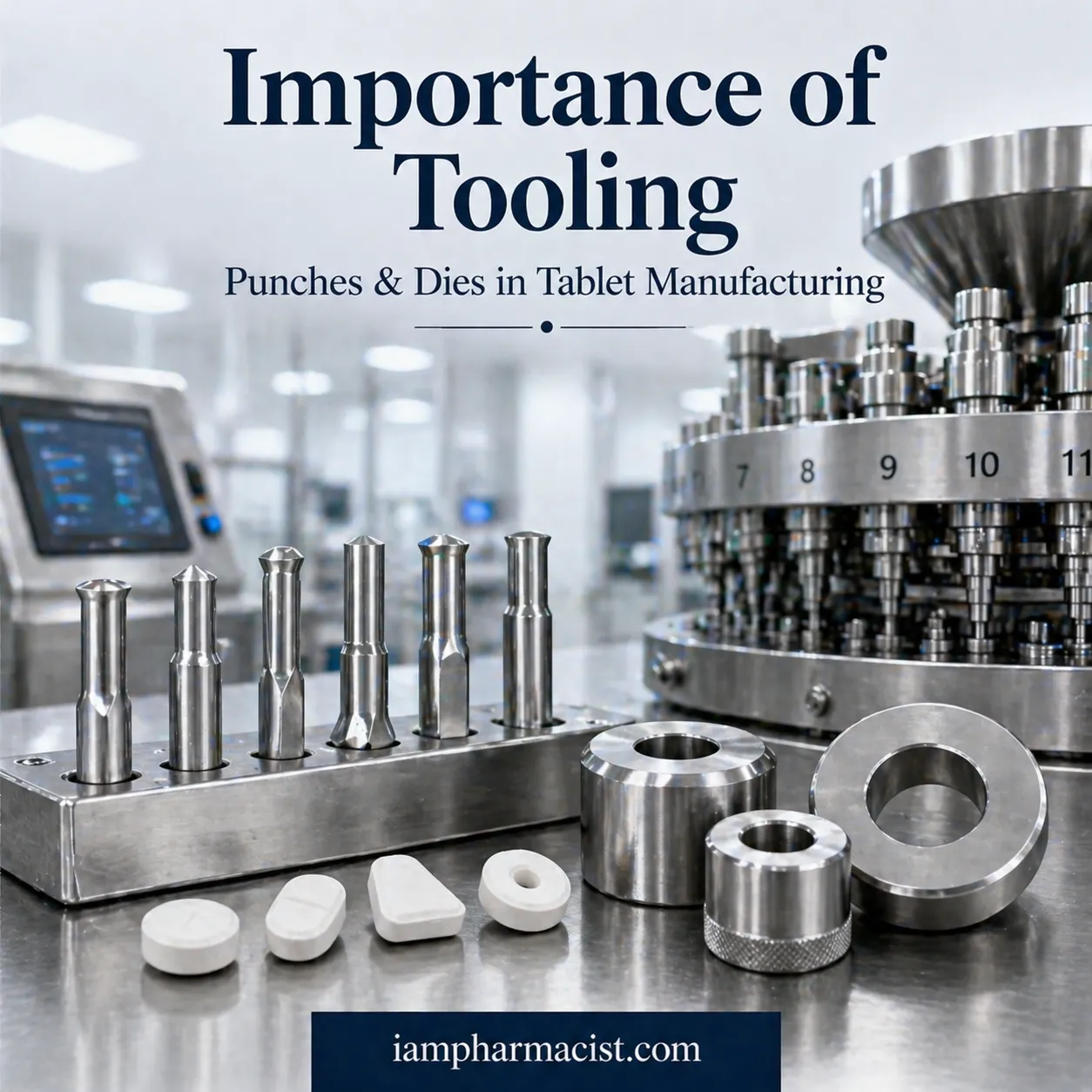

Discover the importance of Tooling (Punches & Dies) in tablet manufacturing, their types, design, and impact on quality, efficiency, and production.
Definition
Tablet tooling refers to the set of upper punch, lower punch, and die used in a tablet press machine to compress powder into tablets with defined shape, size, and quality.
Introduction
In tablet manufacturing, tooling is often underestimated—but it directly determines:
- Tablet quality
- Production efficiency
- Brand identity
Modern pharmaceutical companieshttps://iampharmacist.com/automation-in-tablet-compression/ invest heavily in advanced tooling because even a small defect in punches or dies can lead to:
❌ Tablet defects
❌ Production downtime
❌ Increased costs
On the other hand, optimized tooling ensures strong, uniform, and high-quality tablets.
Components of Tablet Tooling
1. Upper Punch
Applies downward compression force.
2. Lower Punch
Supports powder and controls tablet thickness.
3. Die
Defines tablet shape and size.
Together, they form the compression system inside a tablet press.
Types of Tablet Tooling
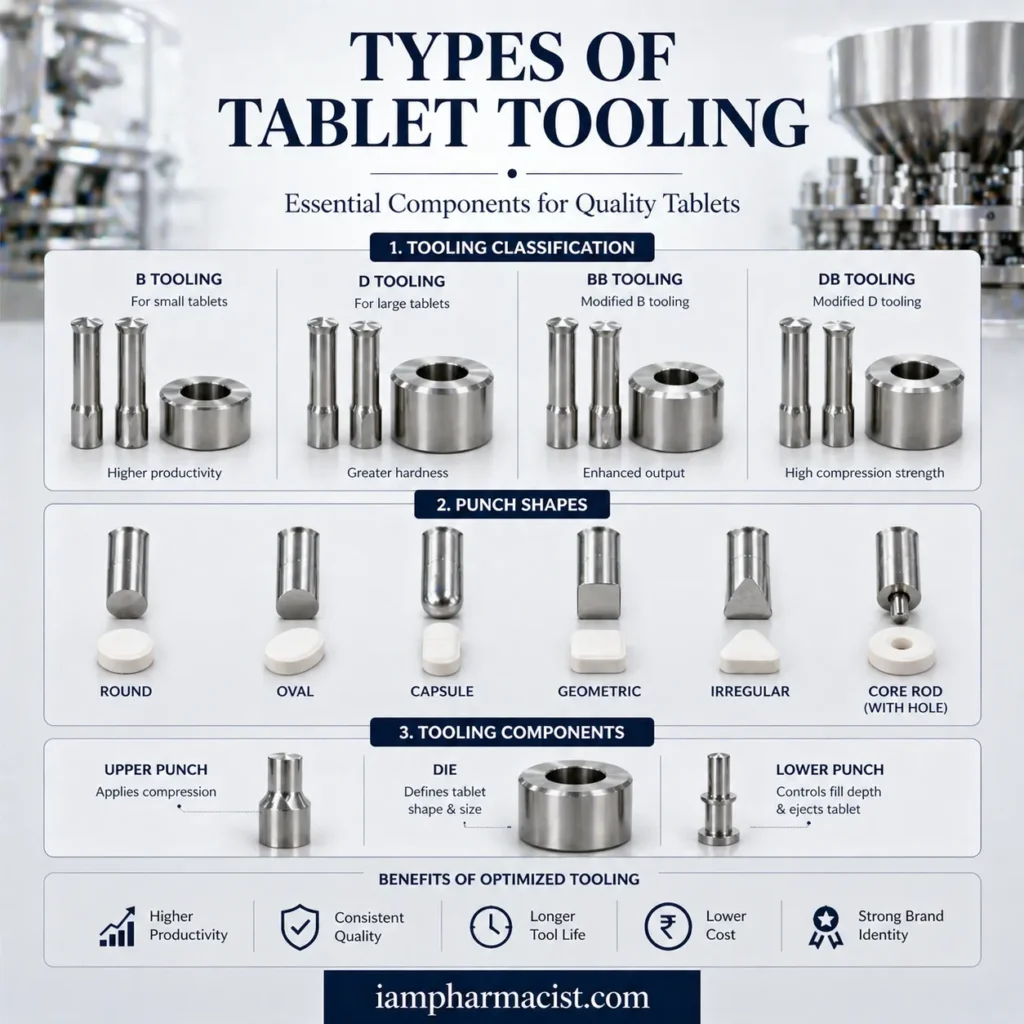
| Type | Description | Application |
|---|---|---|
| B Tooling | Smaller punch size | Small tablets |
| D Tooling | Larger punch head | Large tablets |
| BB Tooling | Modified B tooling | Higher output |
| DB Tooling | Modified D tooling | Strong tablets |
👉 B tooling offers 20–25% higher productivity, while D tooling provides greater hardness due to longer dwell time
Common Punch Shapes
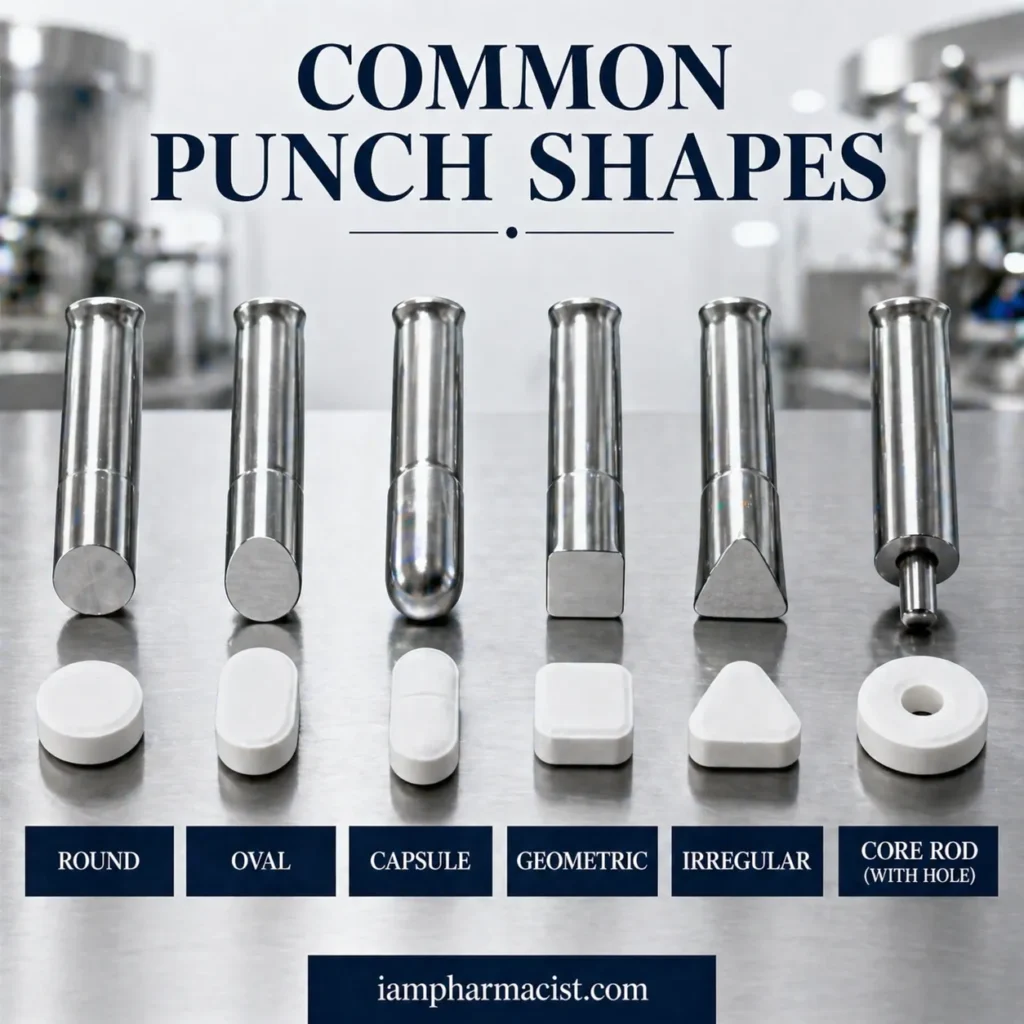
- Round (most common)
- Oval
- Capsule
- Geometric
- Irregular
- Core rod (for hole tablets)
How Tooling Impacts Tablet Manufacturing
1. Tablet Quality
- Surface finish
- Hardness
- Weight uniformity
2. Production Efficiency
- Faster compression cycles
- Reduced downtime
3. Cost Optimization
- Less material waste
- Longer tool life
4. Brand Identity
Unique shapes and embossing improve product recognition.
How Tooling Works in Tablet Compression
Step 1: Die Filling
Powder enters the die cavity.
Step 2: Positioning
Lower punch adjusts fill volume.
Step 3: Compression
Upper punch applies force to compress powder.
Step 4: Densification
Particles bond to form a compact tablet. https://www.webofpharma.com/2025/05/in-process-checks-and-failure-handling.html
Step 5: Decompression
Pressure is released gradually.
Step 6: Ejection
Lower punch pushes tablet out of the die.
Advanced Tooling Innovations
1. Multi-Tip Tooling
- Produces multiple tablets per cycle
- Increases productivity significantly
2. Coated Punches
- Reduce sticking and picking
- Improve tool durability
3. Quick-Release Tooling
- Faster setup and cleaning
- Ideal for R&D
4. Special Punch Tip Designs
- Reduce contamination
- Improve tablet finish
Common Problems Due to Poor Tooling
- Sticking & picking
- Capping & lamination
- Punch wear and corrosion
- Die ring formation
👉 Conventional tooling is more prone to these issues, increasing production costs
Key Benefits of Advanced Tooling
✔ Higher production rate
✔ Extended tool life
✔ Reduced maintenance
✔ Improved tablet consistency
✔ Lower operational costs
How to Choose the Right Tooling
Consider:
- Tablet size & shape
- Material properties
- Production scale
- Desired hardness
Pro Tip:
Use B tooling for speed and D tooling for strength.
FAQs
1. What is tablet tooling?
It is the set of punches and dies used to compress tablets.
2. Why are punches and dies important?
They determine tablet shape, size, and quality.
3. What is B and D tooling?
B is for small tablets; D is for larger, stronger tablets.
4. What causes tooling wear?
Friction, corrosion, and high pressure.
5. What is multi-tip tooling?
A design that produces multiple tablets per cycle.
6. How does tooling affect tablet quality?
It influences hardness, surface finish, and uniformity.
7. What are coated punches?
Punches with protective layers to reduce sticking.
8. Why do tablets stick to punches?
Due to poor surface finish or formulation issues.
9. How often should tooling be replaced?
Depends on usage and wear but requires regular inspection.
10. Can tooling improve productivity?
Yes, advanced tooling significantly increases output.
{ “@context”: “https://schema.org”, “@type”: “Article”, “headline”: “Importance of Tooling (Punches & Dies) in Tablet Manufacturing”, “description”: “Learn how punches and dies impact tablet quality, efficiency, and pharmaceutical production performance.”, “author”: { “@type”: “Organization”, “name”: “iampharmacist.com” }, “mainEntityOfPage”: { “@type”: “WebPage”, “@id”: “https://iampharmacist.com/importance-of-tablet-tooling-punches-dies” } } { “@context”: “https://schema.org”, “@type”: “HowTo”, “name”: “How Tablet Tooling Works”, “step”: [ {“@type”: “HowToStep”,”text”: “Fill die cavity with powder”}, {“@type”: “HowToStep”,”text”: “Adjust fill volume with lower punch”}, {“@type”: “HowToStep”,”text”: “Apply compression using upper punch”}, {“@type”: “HowToStep”,”text”: “Allow densification of particles”}, {“@type”: “HowToStep”,”text”: “Release compression force”}, {“@type”: “HowToStep”,”text”: “Eject tablet from die”} ] } { “@context”: “https://schema.org”, “@type”: “FAQPage”, “mainEntity”: [ {“@type”: “Question”,”name”: “What is tablet tooling?”,”acceptedAnswer”:{“@type”:”Answer”,”text”:”It consists of punches and dies used to compress tablets.”}}, {“@type”: “Question”,”name”: “Why is tooling important?”,”acceptedAnswer”:{“@type”:”Answer”,”text”:”It affects tablet quality, shape, and production efficiency.”}} ] }