


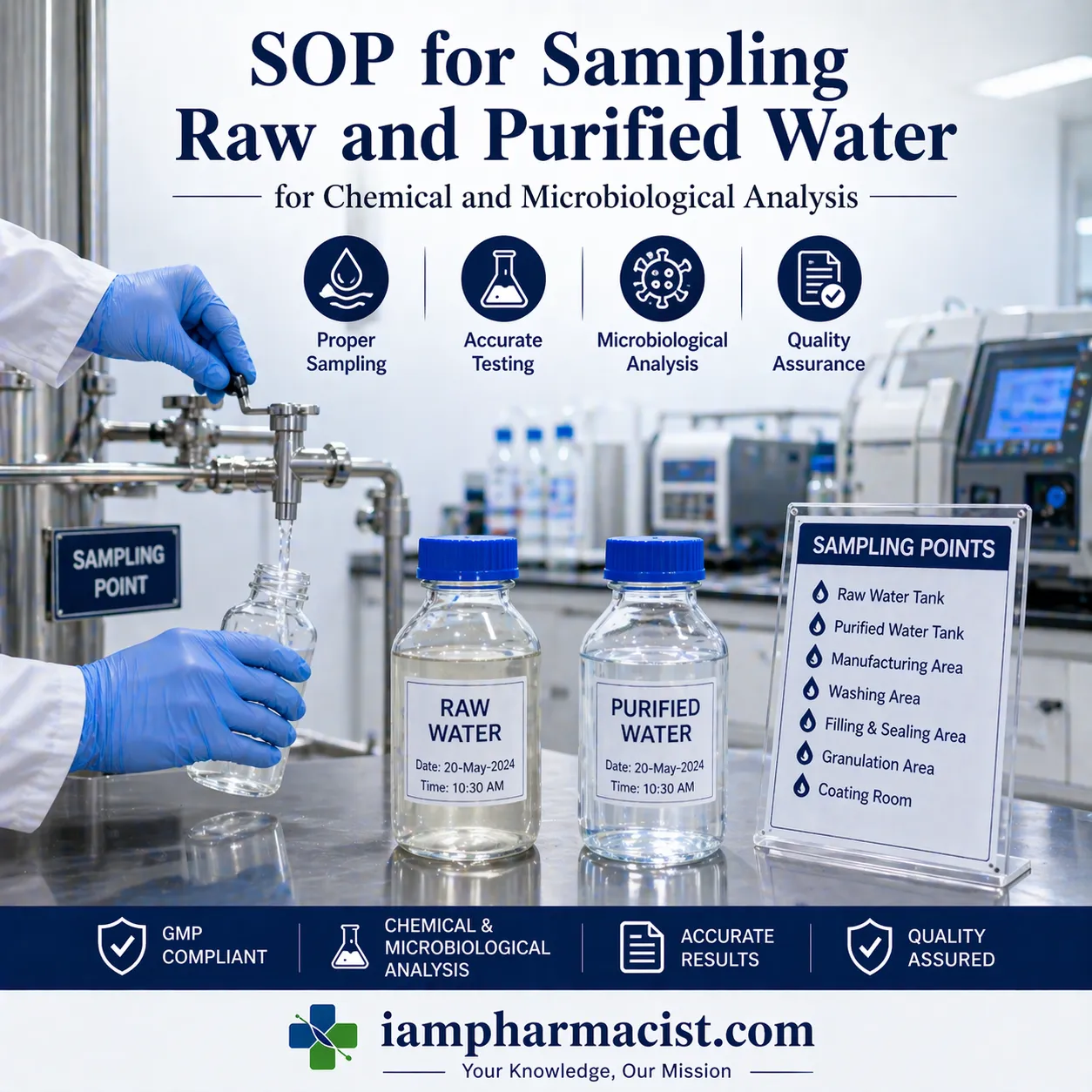

Learn SOP for sampling raw and purified water for chemical and microbiological analysis with GMP guidelines, sampling points, and testing limits.
Introduction
Water is one of the most critical utilities in pharmaceutical manufacturing and quality control. It is used in formulation, cleaning, and analytical testing. Therefore, ensuring its quality through proper sampling and analysis is essential.
A standardized SOP for water sampling ensures consistency, prevents contamination, and guarantees reliable chemical and microbiological results. This guide outlines a GMP-compliant procedure for sampling raw (potable) and purified water used in pharmaceutical processes.
Definition
Water sampling SOP is a standardized procedure for collecting water samples under controlled conditions to ensure accurate chemical and microbiological analysis in compliance with GMP standards.
| Water Type | Frequency | Volume | Analysis Type |
|---|---|---|---|
| Purified Water | Daily (Chemical), Weekly (Microbial) | 250–500 ml | Chemical & Microbial |
| Raw Water | Monthly | 250–500 ml | Chemical & Microbial |
| Sampling Points | Marked locations | Defined | Rotational |
Step-by-Step Process
- Select clean/sterile container
- Flush sampling point for 30 seconds
- Rinse container (chemical sampling)
- Collect required sample volume
- Seal and label immediately
- Transport to laboratory
- Perform analysis as per SOP
1.0 OBJECTIVE
To lay down the procedure for sampling and testing of potable and purified water for microbiological and chemical analysis.
2.0 SCOPE
This SOP is applicable to Microbiological and Chemical Section of Quality Control.
3.0 RESPONSIBILITY
Quality Control Chemist and Microbiologist
4.0 ACCOUNTABILITY
Sr. Manager – Quality Assurance
5.0 PROCEDURE
5.1 Chemical Analysis (Operation)
- Take clean, dry 500 ml conical flask
- Plug with cotton
Sampling Steps
- Carry flask to sampling point
- Open tap/valve and allow water to flow for 30 seconds
- Rinse flask with sample water
- Collect ~500 ml sample
- Plug immediately and label:
- Sampling point
- Date
5.2 Microbiological Analysis
- Use 250 ml sterile conical flask
- Sterilize by autoclaving:
- 121°C at 15 lbs for 15 minutes
Sampling Steps
- Take sterile flask to sampling point
- Flush water for 30 seconds
- Collect ~250 ml sample
- Plug immediately and label
Testing
- Perform microbiological analysis as per specifications
5.3 Purified Water Sampling
Sampling Frequency
- Chemical analysis: Daily
- Microbial analysis: Weekly (first working day)
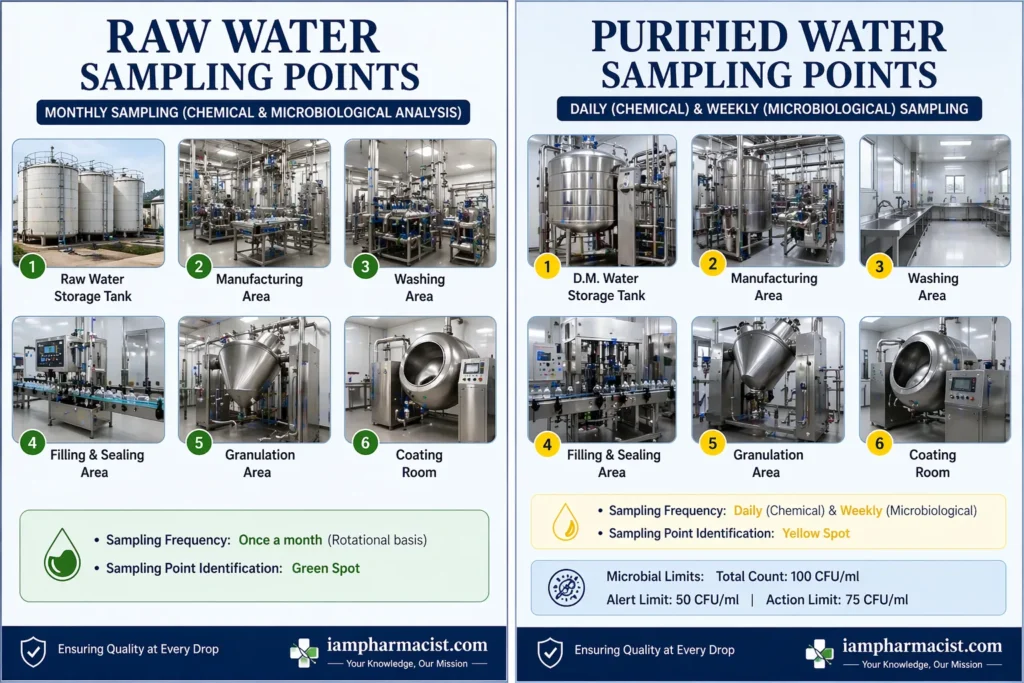
Sampling Points
- D.M Water Storage Tank
- Manufacturing Area
- Washing Area
- Filling & Sealing Area
- Granulation Area
- Coating Room
Identification
- Sampling points marked with Yellow color
Microbial Limits
- Total count: 100 CFU/ml
- Alert limit: 50 CFU/ml
- Action limit: 75 CFU/ml
Action
- If alert limit exceeded:
- Inform maintenance department
- Notify concerned department
5.4 Raw Water Sampling
Frequency
- Monthly sampling
Sampling Points (Rotational)
- Manufacturing Area
- Washing Area
- Filling & Sealing Area
- Granulation Area
- Coating Room
Identification
- Sampling points marked with Green color
5.5 Reporting of Results
- Record results in approved format
- Send report copies to concerned departments
5.6 Calibration / Compliance
- Ensure sampling equipment is clean and validated
- Follow GMP and QA guidelines
- Maintain calibration of analytical instruments
5.7 Cleaning / Contamination Control
- Use sterile containers for microbiological sampling
- Avoid touching inner surfaces
- Prevent external contamination
5.8 Documentation
- Maintain sampling records
- Record:
- Date
- Sampling point
- Analyst name
- Results
6.0 ABBREVIATIONS
- SOP – Standard Operating Procedure
- QA – Quality Assurance
- QC – Quality Control
- Dept. – Department
Technical Insight: Importance of Water Sampling
Water quality directly impacts product safety and efficacy. Regular sampling and testing help detect contamination early and ensure compliance with pharmacopeial standards.
FAQs
1. What is water sampling SOP?
Procedure for collecting water samples.
2. Why flush water before sampling?
To remove stagnant water.
3. What is sample volume for testing?
250–500 ml.
4. What is microbial limit for purified water?
100 CFU/ml.
5. What is alert limit?
50 CFU/ml.
6. What is action limit?
75 CFU/ml.
7. How often raw water is sampled?
Monthly.
8. How often purified water is tested?
Daily (chemical), weekly (microbial).
9. Why sterile flask is used?
To avoid contamination.
10. Who performs sampling?
QC Chemist or Microbiologist.