


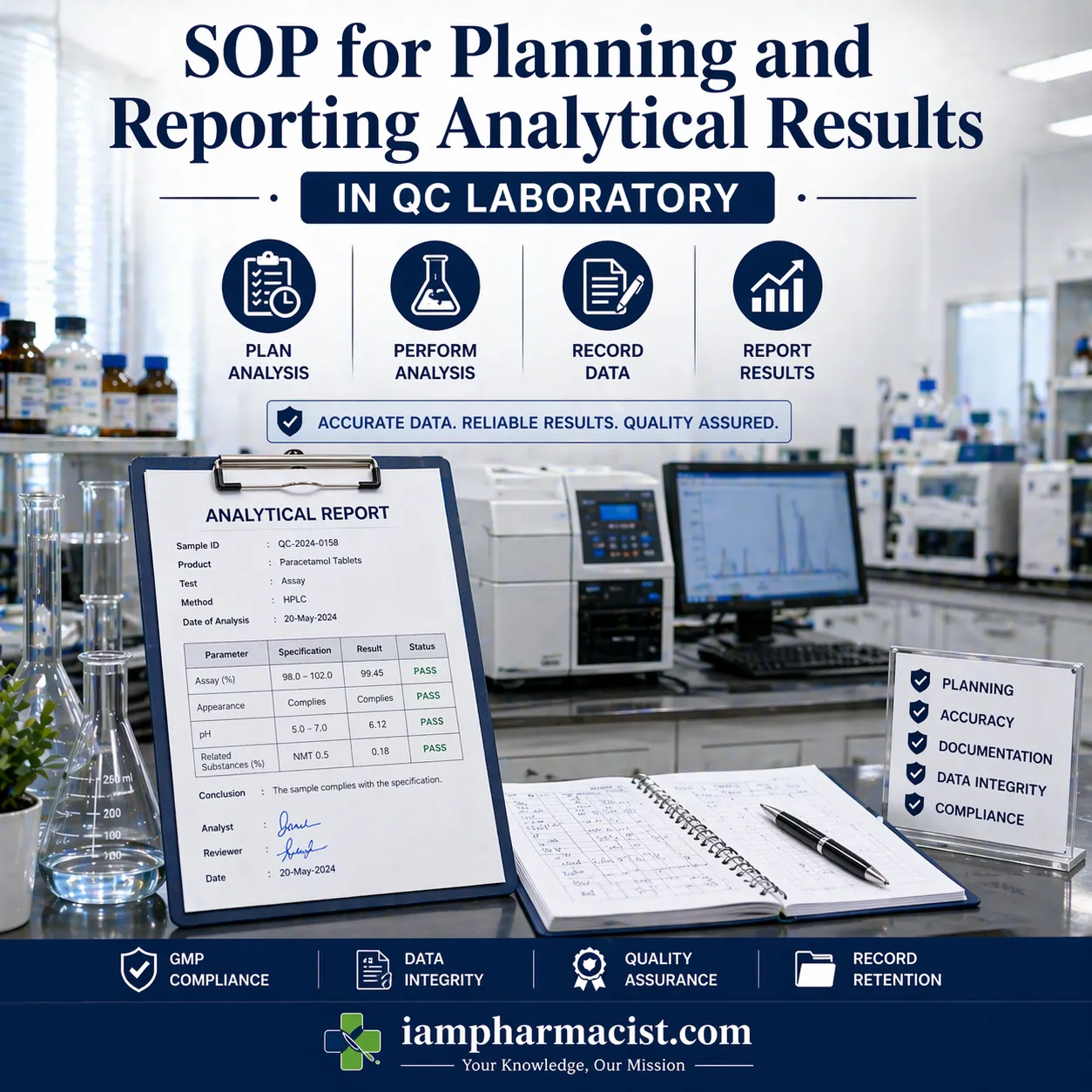

Learn SOP for planning and reporting analytical results in QC laboratory with GMP guidelines, data integrity practices, and documentation procedures.
Introduction
In pharmaceutical quality control laboratories, proper planning, accurate execution of analysis, and reliable reporting of results are essential to ensure product quality and regulatory compliance. Errors in planning or documentation can lead to incorrect conclusions and compliance risks.
A structured SOP ensures that analytical activities are performed efficiently, results are recorded accurately, and documentation follows GMP and data integrity principles. This guide provides a comprehensive procedure for planning analysis, conducting tests, and reporting results for further processing.
Definition
QC analysis and reporting SOP is a standardized procedure that defines how analytical work is planned, executed, recorded, and reported to ensure accuracy, traceability, and compliance with GMP standards.
| Stage | Key Activity |
|---|---|
| Planning | Preparation of reagents, equipment, workflow |
| Analysis | Execution as per validated methods |
| Documentation | Recording observations and calculations |
| Reporting | Final result entry and conclusion |
| Compliance | Data integrity and GMP adherence |
| Retention | Record storage for 5 years |
Step-by-Step Process
- Review specifications and methods
- Plan workflow and prepare materials
- Perform analysis as per SOP
- Record all observations
- Calculate and verify results
- Report final results accurately
- Store records securely
1.0 OBJECTIVE
To lay down the procedure for planning analysis and reporting of results.
2.0 SCOPE
This SOP is applicable to Quality Control Department.
3.0 RESPONSIBILITY
Quality Control Supervisor
4.0 ACCOUNTABILITY
Sr. Manager – Quality Assurance
5.0 PROCEDURE
5.1 Planning (Operation Stage)
- Carefully read specifications and method of analysis
- Understand techniques and underlying principles
Preparation
- Prepare required reagents in advance
- Ensure availability of dry glassware
- Arrange instruments and materials
Work Optimization
- Start with time-consuming tests
- Perform parallel operations (e.g., drying and titration simultaneously)
- Avoid delays during analysis
5.2 Analysis Procedure
- Perform analysis strictly as per documented methods
- Do not deviate from specified quantities or concentrations
Method Control
- Do not amend official methods
- Any modification must be:
- Validated
- Authorized by QC Officer
- Documented properly
Good Laboratory Practice
- Keep specifications in proper place after use
- Maintain clean work environment
5.3 Reporting of Results
Data Recording
- Record readings directly in pocket notebook
- Avoid using loose papers
Documentation
- Enter:
- Observations
- Calculations
- Results
Correction Rules
- Strike incorrect entries with a single line
- Enter correct value alongside
- Sign the correction
- No overwriting allowed
Result Reporting
- Report results as per specification limits
- Use appropriate decimal places
- Record replicate results if applicable
Date Recording
- Mention actual dates of testing
- Record separate dates for multi-day analysis
Data Protection
- Use plastic covers for documents
- Prevent damage or contamination
5.4 Record Retention
- Store analytical records for 5 years
- Ensure traceability and accessibility
5.5 Calibration / Compliance
- Ensure instruments are calibrated before use
- Follow validated methods
- Maintain compliance with GMP and QA guidelines
5.6 Cleaning / Data Integrity
- Maintain clean documentation
- Follow ALCOA+ principles:
- Attributable
- Legible
- Contemporaneous
- Original
- Accurate
6.0 ABBREVIATIONS
- SOP – Standard Operating Procedure
- QA – Quality Assurance
- QC – Quality Control
- Dept. – Department
Technical Insight: Importance of Proper Reporting
Accurate reporting ensures reliable decision-making for product release or rejection. Proper documentation supports audits, investigations, and regulatory compliance.
FAQs
1. What is QC analysis SOP?
A procedure for planning, testing, and reporting results.
2. Why planning is important in analysis?
To avoid delays and errors.
3. Can methods be modified?
Only after validation and approval.
4. How to record data?
Directly in notebook and reports.
5. What is ALCOA+?
Data integrity principles.
6. How long records are stored?
Five years.
7. Can overwriting be done?
No, only strike-through correction allowed.
8. What should be recorded?
Observations, calculations, results.
9. Who approves modifications?
QC Officer.
10. Why documentation is critical?
Ensures traceability and compliance.